Laser coaxial sensors represent a critical advancement in industrial measurement and detection technology. These sensors utilize a coaxial optical design where the laser emitter and receiver are aligned along the same axis, enabling highly precise and stable measurements even in challenging environments. Unlike traditional sensors where the emitter and detector are separated, the coaxial configuration minimizes errors caused by surface reflectivity variations, color changes, or angular misalignment. This makes them exceptionally reliable for applications requiring micron-level accuracy.
The core principle of a laser coaxial sensor involves emitting a focused laser beam onto a target surface. The reflected light, which travels back along the same optical path, is captured by the integrated receiver. By analyzing the properties of the returned light—such as intensity, phase, or time-of-flight—the sensor calculates precise distance, displacement, or presence data. This method ensures consistent performance regardless of the target's material composition or surface finish, a significant advantage over conventional triangulation-based sensors.
In industrial settings, laser coaxial sensors are indispensable for quality control and automation. They are extensively used for non-contact thickness measurement of materials like metal sheets, glass, and plastic films during continuous production processes. Their high-speed response capability allows real-time monitoring, enabling immediate adjustments to manufacturing parameters to maintain product specifications. Additionally, these sensors play a vital role in precision positioning tasks, such as aligning components in semiconductor fabrication or robotic assembly lines, where even minor deviations can lead to defects.

Another prominent application is in surface inspection systems. The sensor's ability to detect minute imperfections, scratches, or contaminants on surfaces ensures that only flawless products proceed down the line. In the automotive industry, for instance, laser coaxial sensors verify the integrity of painted surfaces or welded joints, enhancing overall safety and durability. Their robustness against ambient light interference and temperature fluctuations further solidifies their suitability for harsh factory environments.
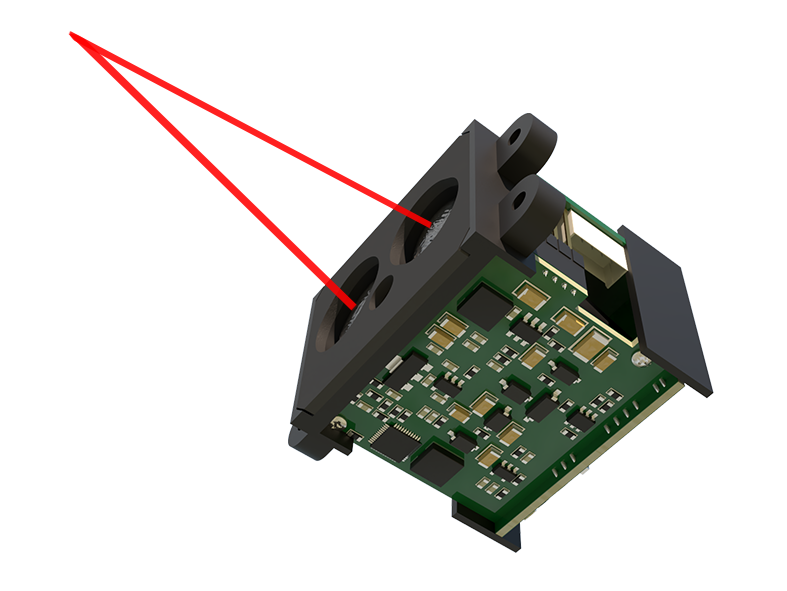
When selecting a laser coaxial sensor, engineers must consider several technical parameters. Resolution, defined as the smallest detectable change in measurement, is crucial for high-precision tasks. Measurement range, which indicates the minimum and maximum distances the sensor can accurately cover, should align with the specific application needs. Response time, or how quickly the sensor outputs data after detection, impacts system throughput in fast-paced production lines. Environmental factors like dust, moisture, or vibration resistance also dictate the choice of sensor housing and protection ratings.

Modern advancements have integrated smart features into laser coaxial sensors, such as Ethernet connectivity, programmable logic controller (PLC) compatibility, and self-diagnostic functions. These enhancements facilitate seamless integration into Industry 4.0 frameworks, allowing data collection for predictive maintenance and process optimization. As industries increasingly adopt automation and digital twins, the demand for reliable, high-performance sensors continues to grow.
Despite their advantages, challenges persist. Highly transparent or specular surfaces can sometimes cause measurement errors due to excessive light reflection or transmission. Manufacturers address this through adaptive algorithms and adjustable sensitivity settings. Regular calibration is recommended to maintain accuracy over extended periods, especially in high-usage scenarios.
In conclusion, laser coaxial sensors are transformative tools in modern engineering, offering unparalleled precision and reliability. Their versatility across diverse sectors—from manufacturing and electronics to aerospace and pharmaceuticals—underscores their importance in driving efficiency and innovation. As technology evolves, these sensors will likely become even more integral to smart industrial ecosystems, paving the way for enhanced productivity and quality assurance worldwide.