In the realm of industrial automation and control, inductive proximity sensors stand as a cornerstone technology for non-contact object detection. These robust and reliable devices are ubiquitous in manufacturing, packaging, material handling, and countless other sectors. Their primary function is to detect the presence or absence of metallic objects without any physical contact, thereby eliminating mechanical wear and enabling high-speed operation.
At the heart of an inductive proximity sensor lies a simple yet elegant operating principle based on electromagnetic induction. The core component is an oscillator circuit that generates a high-frequency alternating magnetic field via a coil wound around a ferrite core at the sensor's active face. When a conductive metal target enters this oscillating field, eddy currents are induced on the target's surface. These eddy currents draw energy from the oscillator, causing a reduction in its oscillation amplitude. An evaluation circuit within the sensor monitors this amplitude change. Once the amplitude drop exceeds a predefined threshold—corresponding to the sensor's sensing distance—the circuit triggers a switching action, changing the output state (e.g., from OFF to ON). When the target moves away, the oscillation amplitude recovers, and the output returns to its original state.
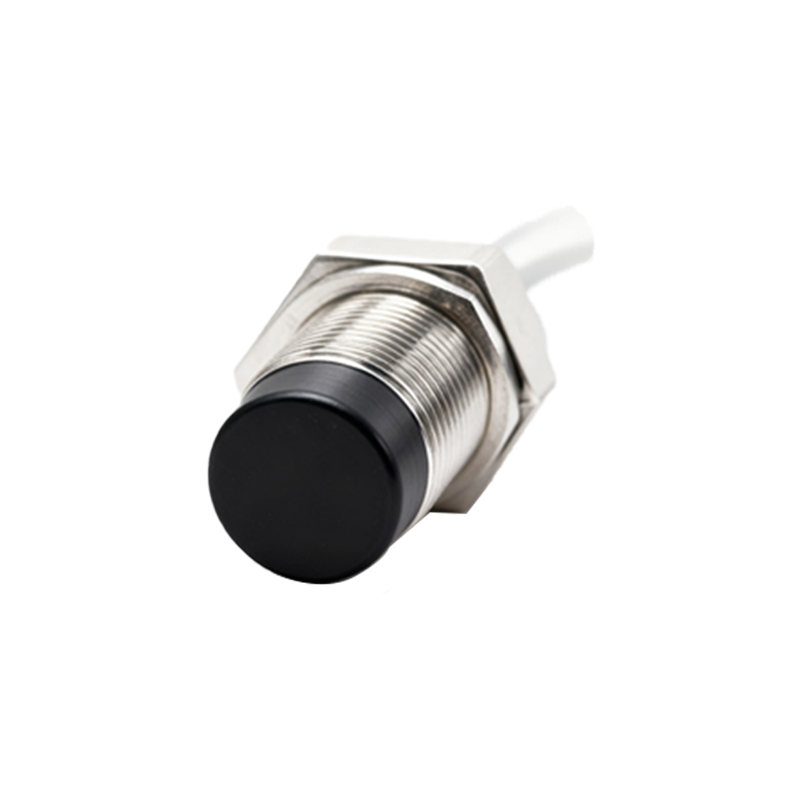
This fundamental principle dictates the key characteristic of inductive sensors: they are designed to detect ferrous metals like steel and iron most effectively, but they can also detect non-ferrous metals such as aluminum, copper, and brass, albeit with a reduced sensing range. The effective sensing distance, or 'Sn', is standardized and depends on the sensor's design and the target material. A standard target for calibration is typically a square of mild steel (Fe360) with a thickness of 1mm and side lengths equal to the sensor's diameter or three times the rated sensing distance.
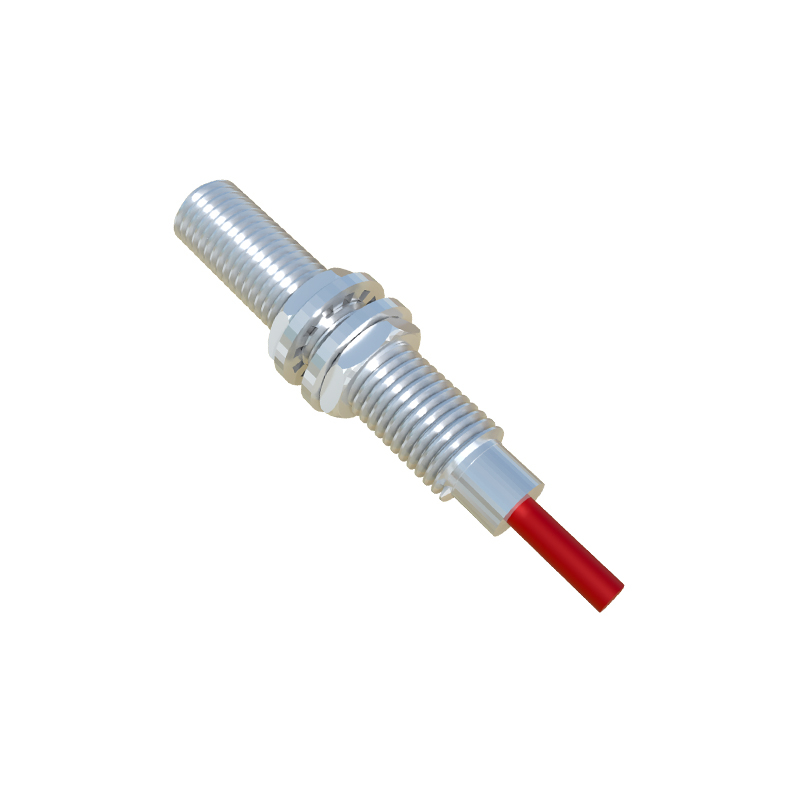
The advantages of using inductive proximity switches are numerous. Their solid-state design, with no moving mechanical parts, ensures exceptionally long service life and high reliability even in harsh environments. They are resistant to dust, dirt, oils, and coolants, with many models offering high IP (Ingress Protection) and NEMA ratings for use in washdown or outdoor applications. They provide fast response times, often in the microsecond range, suitable for high-speed counting or positioning tasks. Furthermore, they are immune to ambient light and, unlike capacitive sensors, are generally not affected by non-metallic materials like plastics, wood, or liquids, making their operation very stable and predictable.
When selecting an inductive proximity sensor for a specific application, several critical parameters must be considered. The first is the sensing distance and the associated safety margin or "derating" factor, especially for non-ferrous targets. The second is the housing style: cylindrical barrels in various thread sizes (e.g., M8, M12, M18, M30) are common, but rectangular and ring-shaped housings are also available for specialized tasks. The output configuration is another vital choice: two-wire AC/DC, three-wire NPN (sinking) or PNP (sourcing) DC, and four-wire versions with complementary outputs. The output type can be a simple digital switch (NO/NC) or an analog (4-20mA, 0-10V) signal proportional to distance. The operating voltage range, current rating, switching frequency, and environmental specifications like temperature range and protection class must align with the application's demands.
Typical applications are vast. They are used for part presence verification on assembly lines, end-of-travel detection on actuators, rotary speed monitoring via gear teeth counting, jam detection in conveyors, and precise positioning in machine tools. Specialized variants include factor-1 sensors (same range for all metals), all-metal sensors, weld-field immune models for use near welding equipment, and cylindrical sensors with extended ranges.
In conclusion, inductive proximity sensors are indispensable workhorses in modern industrial systems. Their durability, speed, and non-contact nature make them superior to mechanical limit switches for most metal detection tasks. A thorough understanding of their operating principle, key specifications, and application nuances is essential for engineers and technicians to design efficient, reliable, and maintainable control systems. Proper selection and installation ensure optimal performance, contributing to increased productivity and reduced downtime in automated processes.