In the realm of industrial automation and smart systems, sensing technology forms the backbone of precise control and operational safety. Among the diverse array of sensors available, photoelectric proximity sensors stand out for their versatility, reliability, and non-contact operation. This article delves into the working principles, key types, industry applications, and critical factors for selecting the right photoelectric proximity sensor for your needs.
At its core, a photoelectric proximity sensor operates by emitting a beam of light—typically infrared, visible red, or laser—and detecting changes in the received light signal caused by the presence or absence of a target object. The fundamental components include an emitter (light source), a receiver (photodetector), and associated signal processing circuitry. The detection principle is not based on physical contact but on the modulation of light, making these sensors ideal for detecting a wide variety of materials, including glass, plastic, metal, and liquids, without causing wear or contamination.
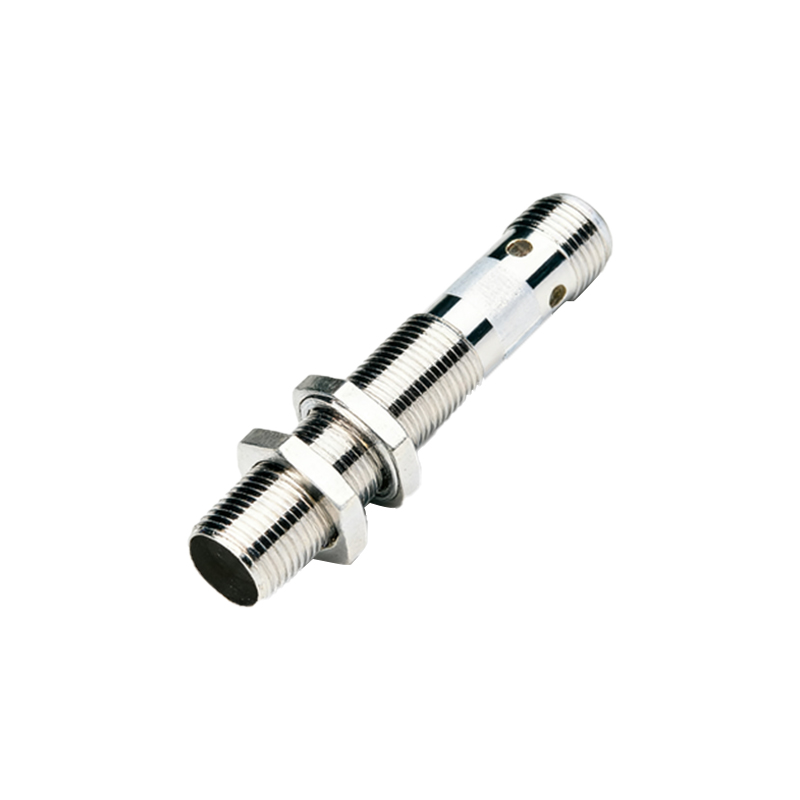
There are three primary operating modes for photoelectric sensors: through-beam, retro-reflective, and diffuse reflective. Through-beam sensors, also known as opposed mode sensors, consist of separate emitter and receiver units placed opposite each other. Detection occurs when the target object interrupts the light beam traveling from the emitter to the receiver. This mode offers the longest sensing range and highest reliability, as it is largely immune to target color, reflectivity, or surface finish. It is commonly used in material handling for break detection and in safety systems for perimeter guarding.
Retro-reflective sensors house both the emitter and receiver in a single housing. They rely on a reflector, typically a corner-cube prism, placed opposite the sensor. The emitted light beam is reflected back to the receiver by this reflector. A target object is detected when it interrupts this reflected beam. This mode provides a good balance between sensing distance and installation simplicity, as it requires wiring only on one side. However, it can be confused by highly reflective targets that might bounce the light back to the receiver even when present. Modern versions often feature polarization filters to mitigate this issue.
Diffuse reflective sensors, or proximity mode sensors, also integrate the emitter and receiver. They detect a target when the emitted light reflects off the target's surface and returns to the receiver. The sensing distance is heavily dependent on the target's size, color, and surface texture—light-colored, matte surfaces reflect better than dark, shiny ones. This mode is highly versatile for short-range detection and is widely used in packaging, assembly, and object counting applications.
Recent advancements have led to the development of background suppression and foreground suppression sensors, which are specialized types of diffuse sensors. These use triangulation principles to detect objects only within a specific, defined distance range, effectively ignoring objects beyond (background) or before (foreground) the set point. This makes them exceptionally useful for precise positioning and detecting objects on conveyor belts regardless of the belt's color or background variations.
The applications of photoelectric proximity sensors span virtually every industry. In automotive manufacturing, they ensure precise part placement and robot guidance. In food and beverage, they detect transparent bottles and control filling levels. In logistics and warehousing, they count boxes, monitor conveyor speeds, and manage automated storage and retrieval systems. Their non-contact nature makes them indispensable in cleanroom environments for semiconductor and pharmaceutical production.
When selecting a photoelectric sensor, several key parameters must be considered. Sensing range is paramount; it must accommodate the required working distance. The target characteristics—material, color, size, and surface—dictate the most suitable operating mode and sensor type. Environmental conditions such as ambient light, dust, fog, temperature extremes, and potential for washdown (requiring high IP ratings like IP67 or IP69K) are critical for ensuring long-term reliability. Output type (e.g., NPN/PNP transistor, analog, or IO-Link for smart sensors) must be compatible with the control system. Finally, form factor and mounting options must align with the spatial constraints of the application.
The evolution towards Industry 4.0 has further integrated photoelectric sensors into the Industrial Internet of Things (IIoT). Sensors with IO-Link communication provide not just a simple on/off signal but a wealth of diagnostic data, such as signal strength, operating temperature, and contamination levels, enabling predictive maintenance and smarter process optimization.
In conclusion, photoelectric proximity sensors are a fundamental and flexible technology for modern automation. Understanding their operating principles, varieties, and application requirements is essential for engineers and system integrators to design efficient, robust, and intelligent systems. As technology progresses, these sensors will continue to evolve, offering greater precision, connectivity, and resilience to meet the ever-growing demands of industrial automation.