Micro proximity sensors represent a critical advancement in industrial automation, enabling non-contact detection of objects with high precision and reliability. These compact devices are engineered to operate in diverse environments, from manufacturing assembly lines to robotic systems, by leveraging sophisticated structural components. The core architecture of a micro proximity sensor typically comprises several key elements: the sensing element, oscillator circuit, signal processing unit, output stage, and housing.
The sensing element, often based on inductive, capacitive, or photoelectric principles, serves as the primary interface for detecting target objects. Inductive sensors, for instance, utilize a coil wound around a ferrite core to generate an electromagnetic field. When a metallic object enters this field, eddy currents are induced, altering the oscillation amplitude. This change is precisely monitored by the oscillator circuit, which converts physical proximity into an electrical signal. Capacitive sensors, on the other hand, rely on changes in capacitance caused by the presence of any material, making them versatile for non-metallic targets. Photoelectric sensors employ infrared LEDs and phototransistors to detect light beam interruptions or reflections, offering long-range sensing capabilities.
The oscillator circuit is integral to maintaining stable operation. It generates a high-frequency signal that drives the sensing element, with frequency typically ranging from 100 kHz to 1 MHz depending on the sensor type. Any disturbance in the electromagnetic or capacitive field modulates this signal, which is then fed into the signal processing unit. This unit consists of amplifiers, filters, and comparators that refine the raw signal, eliminating noise and environmental interference. Advanced microcontrollers or application-specific integrated circuits (ASICs) are often embedded to enhance sensitivity and response time, allowing for programmable detection thresholds and adaptive calibration.
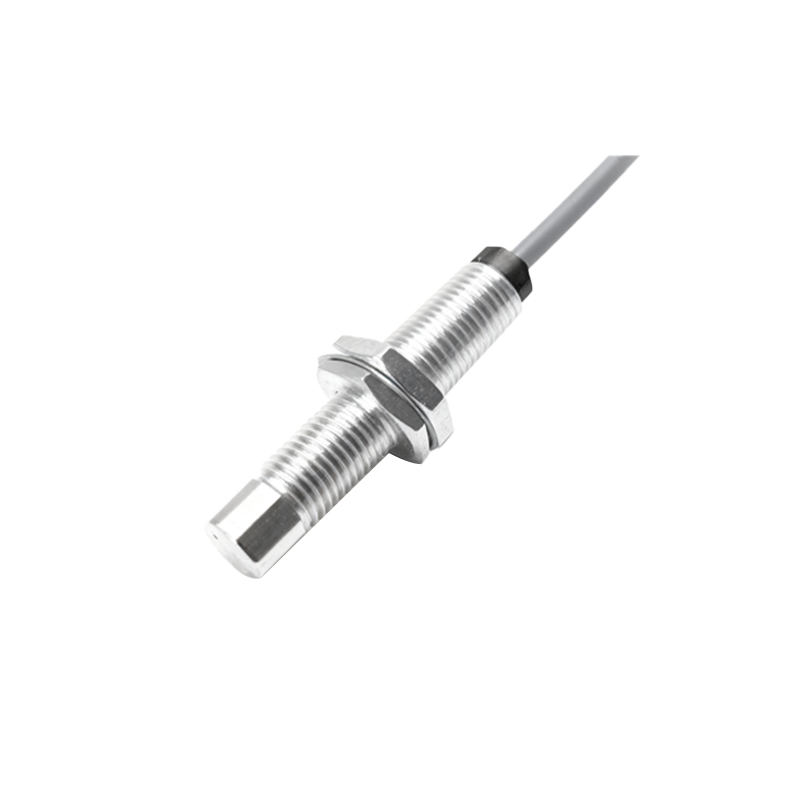
Following signal conditioning, the output stage translates the processed data into actionable commands. Common output configurations include NPN/PNP transistors for switching applications, analog outputs (0-10V or 4-20mA) for continuous distance measurement, and digital interfaces like IO-Link for smart factory integration. The housing, constructed from materials such as stainless steel, PBT plastic, or nickel-plated brass, provides mechanical protection and environmental sealing. IP67 or IP69K ratings are standard for resistance to dust, water, and chemical exposure, ensuring durability in harsh industrial settings.
Design considerations for micro proximity sensors emphasize miniaturization without compromising performance. Engineers optimize coil geometry and shielding to reduce electromagnetic interference, while surface-mount technology (SMT) enables compact circuit board layouts. Thermal management is addressed through efficient power dissipation designs, as excessive heat can drift sensor accuracy. Additionally, compliance with international standards like IEC 60947-5-2 ensures safety and interoperability in global markets.
In practice, the structural integration of these components determines sensor performance metrics such as sensing range, repeatability, and response frequency. For example, a typical inductive micro proximity sensor might offer a detection distance of 2 mm to 15 mm, with repeatability within ±0.5% and response times under 1 ms. These parameters are critical for high-speed automation tasks, where milliseconds impact throughput. Emerging trends include the incorporation of MEMS (Micro-Electro-Mechanical Systems) technology to further reduce size and power consumption, as well as wireless connectivity for IoT-enabled predictive maintenance.
Ultimately, the structural composition of micro proximity sensors reflects a balance of electrical engineering, materials science, and application-specific demands. By understanding each component's role, engineers can select or design sensors that optimize reliability, efficiency, and cost-effectiveness for modern industrial systems. As automation evolves toward greater precision and connectivity, micro proximity sensors will continue to underpin innovations in smart manufacturing, robotics, and beyond.