Proximity sensors are indispensable components in modern automation, robotics, and countless industrial applications. Their primary function is to detect the presence or absence of an object without physical contact. A fundamental and often critical specification for any proximity sensor is its sensing distance. This parameter, also known as the nominal sensing distance (Sn), is not a fixed, absolute value but a carefully defined characteristic under specific standardized conditions. Understanding what influences this distance is crucial for selecting the right sensor and ensuring reliable operation in the field.
The rated or nominal sensing distance (Sn) is the theoretical detection range specified by the manufacturer. It is typically determined under ideal laboratory conditions: using a standard target, at a defined temperature (usually 20°C or 68°F), and with a stable supply voltage. For inductive sensors, the standard target is a square of mild steel (like ST37) with a thickness equal to the sensor's face diameter or 1mm, whichever is greater. For capacitive sensors, it's often a grounded metal plate. It is vital to note that this is a reference value. The effective operating distance in a real application is often less, typically 70% to 90% of Sn, to account for variables like temperature drift, voltage fluctuations, and target material variations.
Several key factors directly influence the actual sensing distance achieved in practice. The first and most significant is the target material. Inductive sensors, which generate an electromagnetic field, are primarily sensitive to metals. However, different metals affect the sensing range dramatically. While mild steel is the reference, the detection distance for stainless steel (austenitic grades like 304/316) can be reduced to 60-80% of Sn. For copper or aluminum, the reduction can be even more substantial, often to 30-50% of Sn, due to lower permeability and different eddy current effects. Capacitive sensors, which detect changes in an electrostatic field, respond to a wider range of materials including metals, liquids, plastics, and wood, but the dielectric constant of the material will alter the effective range.
The target size and shape also play a critical role. For optimal performance, the target should be at least as large as the sensor's active sensing face. If the target is smaller, the sensing distance decreases. A round target should have a diameter equal to or greater than the diameter of the sensor's sensing face. For rectangular sensors, the target should cover the active area. The target should also approach the sensor perpendicularly to its face; angular approaches can reduce the effective distance.
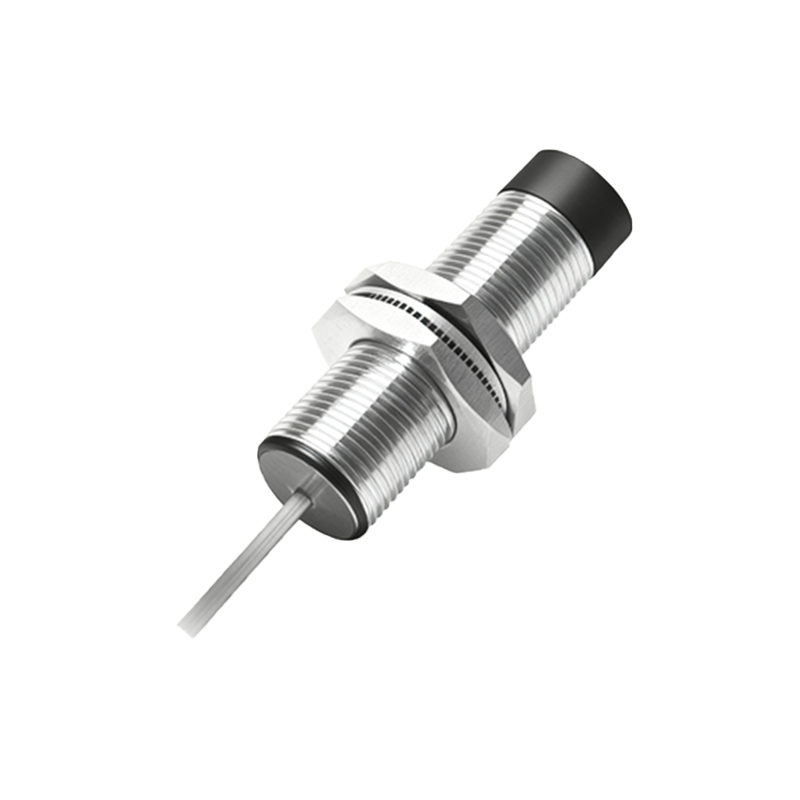
Environmental conditions are another major consideration. Temperature variations cause expansion/contraction of mechanical parts and affect the electronic components inside the sensor. Most sensors specify an operational temperature range and a temperature drift coefficient, often around ±10% of Sn over the entire range. Voltage supply tolerances also matter; operating at the lower end of the specified voltage range can slightly reduce the sensing distance. Furthermore, the presence of other metals or sensors in close proximity can cause mutual interference, potentially shielding the field or causing false triggering. Installing sensors with adequate spacing (as per manufacturer guidelines) is essential.
For certain sensor types, like ultrasonic or photoelectric proximity sensors, additional factors come into play. The surface texture, color, and angle of the target significantly affect reflective photoelectric or ultrasonic sensors. A dark, matte, or angled surface will reflect less energy back to the receiver, shortening the range. The ambient medium is also crucial; ultrasonic sensors are affected by air temperature and pressure, while photoelectric sensors can be hindered by dust, fog, or intense ambient light.
To ensure reliable system design, engineers must apply a safety factor. It is standard practice to derate the nominal sensing distance. A common rule is to design the application so that the target operates within 50-80% of the sensor's rated Sn. This margin accommodates all the aforementioned variables—material, temperature, voltage, wear, and mounting tolerances—preventing false triggers or missed detections over the sensor's lifetime. Always consult the manufacturer's datasheet for detailed derating curves, correction factors for different materials, and specific mounting instructions.
In conclusion, the sensing distance on a proximity sensor datasheet is a vital starting point, but it is not the whole story. Successful implementation requires a thorough understanding of the application's specific conditions: the target's composition, size, and approach; the environmental extremes; and potential sources of interference. By carefully considering these factors and applying prudent design margins, you can leverage proximity sensors to create robust, reliable, and efficient automated systems.