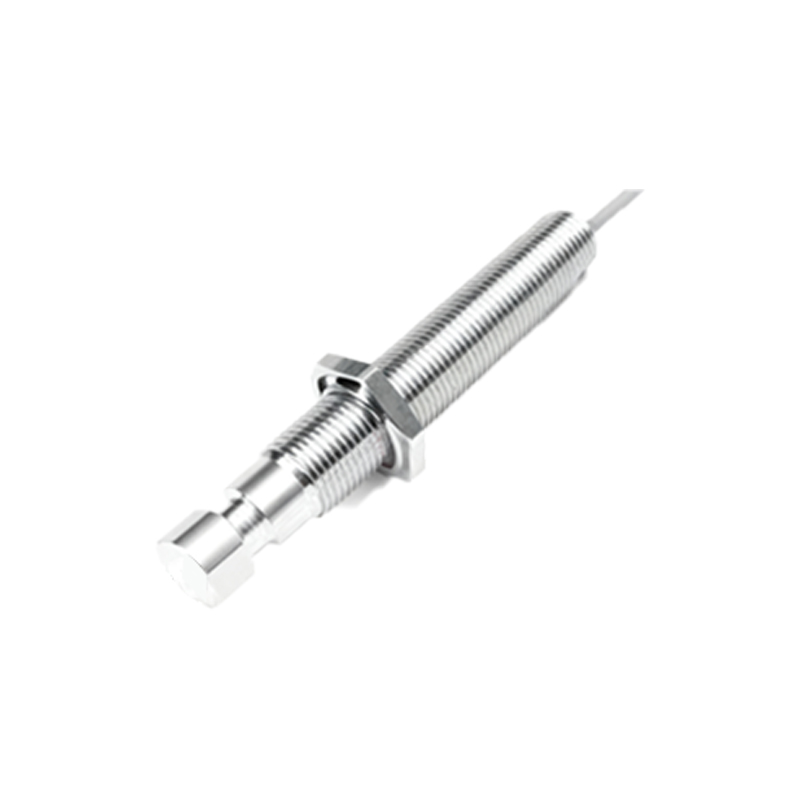
In the realm of industrial automation and electronic control systems, proximity sensors stand as fundamental components for non-contact object detection. Among the various operating voltages available, the 5V DC proximity sensor has carved out a significant niche, particularly in applications interfacing directly with microcontrollers, single-board computers, and low-voltage digital logic circuits. This article delves into the operational principles, key specifications, application considerations, and comparative advantages of 5V proximity sensors, providing a technical overview for design and implementation.
The core function of a proximity sensor is to detect the presence or absence of an object within its sensing range without physical contact. 5V sensors typically utilize one of three primary technologies: Inductive, Capacitive, or Photoelectric (often infrared). Inductive sensors are the most common for 5V applications involving metal detection. They operate by generating an electromagnetic field. When a metallic object enters this field, it induces eddy currents within the object, which in turn dampens the oscillator's amplitude or changes its frequency. This change is detected by the sensor's circuitry, which then switches its output state. These sensors are robust, immune to environmental factors like dust or oil (provided they are appropriately sealed), and ideal for detecting ferrous and non-ferrous metals in machinery.
Capacitive 5V sensors function by generating an electrostatic field. They can detect both metallic and non-metallic materials (liquids, plastics, wood, etc.) by sensing changes in capacitance caused by the target object. This makes them versatile for level detection, material handling, and applications involving non-conductive substances. Photoelectric 5V sensors, comprising an emitter (usually an IR LED) and a receiver, detect objects by interpreting changes in the transmitted light beam (through-beam), reflected light (retro-reflective), or diffused reflection (diffuse). They offer longer sensing ranges and can detect objects of any material, but their performance can be affected by ambient light and the color/reflectivity of the target.
A critical aspect of integrating a 5V sensor is understanding its output configuration. The two primary types are NPN (sinking) and PNP (sourcing) outputs, representing the transistor type used in the output stage. An NPN output switches the negative (ground) line to the load, while a PNP output switches the positive voltage line. The choice depends on the input configuration of the controller (e.g., PLC, Arduino, Raspberry Pi). Many modern 5V sensors also feature digital outputs (high/low logic levels) or even analog outputs (voltage or PWM) for distance-proportional sensing, providing greater flexibility. The sensing range, typically from a few millimeters up to several centimeters, is a key specification and must be derated for different target materials, especially for inductive types.
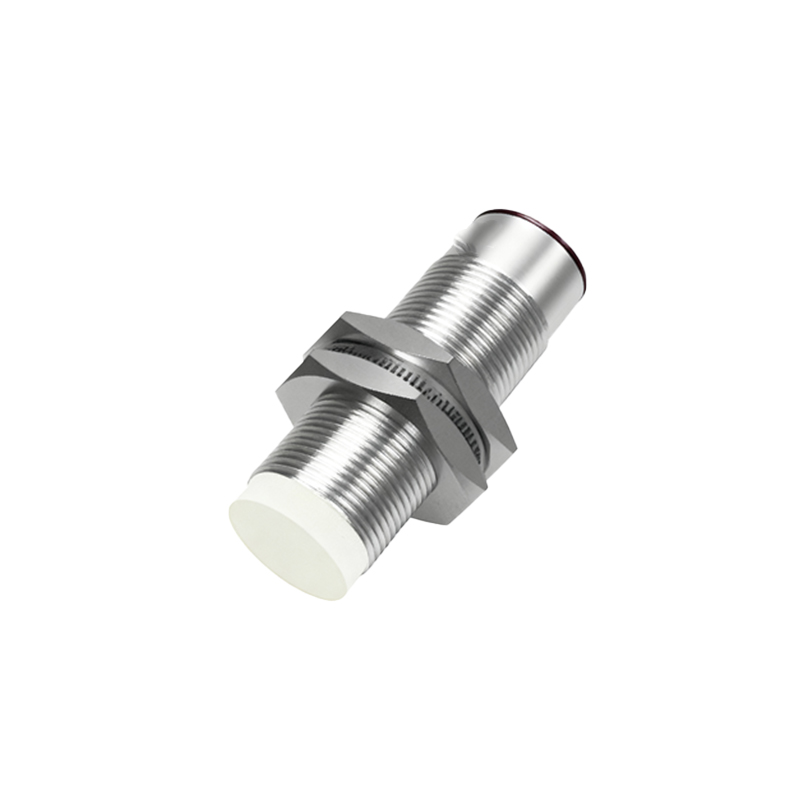
The primary advantage of using a 5V proximity sensor lies in its direct compatibility with the logic levels of TTL and CMOS circuits and the standard 5V supply rails of most microcontrollers (Arduino, AVR, PIC, etc.). This eliminates the need for additional level-shifting circuitry or external power supplies, simplifying design, reducing component count, and minimizing potential noise introduction. They are perfect for prototyping, educational projects, robotics, and compact embedded systems where space and power budgets are constrained.
However, engineers must consider several factors for reliable operation. First is the current sourcing/sinking capability. The output current of a 5V sensor is often limited (e.g., 20-100mA). If the connected load (like a relay coil or an indicator LED) requires more current, an external driver transistor or optocoupler is necessary. Second, voltage tolerance and regulation are crucial. While nominally 5V, the sensor's operating range might be specified as 4.5V to 5.5V. Poor power supply regulation or voltage drops across long wires can push the voltage outside this range, causing erratic behavior. Using local decoupling capacitors and adequately sized wiring is essential. Third, for inductive sensors, the sensing distance is reduced for non-ferrous metals like aluminum or copper compared to steel. Always consult the manufacturer's derating curves.
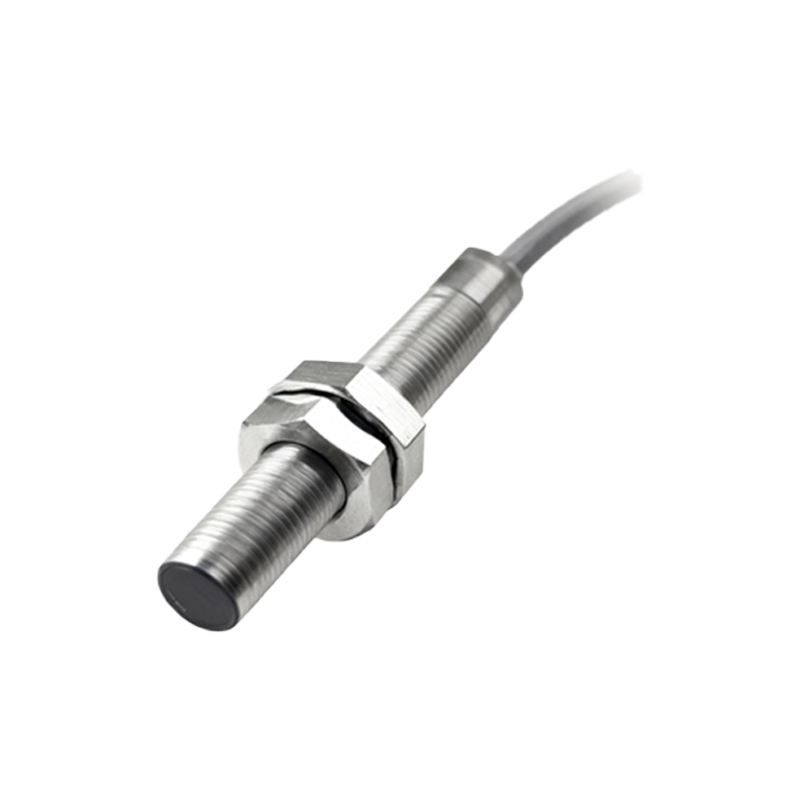
In industrial settings, 5V sensors are often deployed in localized control modules, data acquisition systems, or as part of a sensor network connected to a central processor. While 12-24V DC sensors remain the industrial standard for heavy machinery due to their longer transmission distance and higher noise immunity, the 5V variant is indispensable in the bridge between the digital control world and the physical sensing environment. When selecting a 5V proximity sensor, key parameters to evaluate include: sensing technology (inductive/capacitive/photoelectric), sensing distance, output type (NPN/PNP/analog), response time, housing material (e.g., brass, stainless steel, PBT plastic),