In the intricate world of industrial automation and smart electronics, proximity sensor chips stand as silent sentinels, enabling machines to perceive their environment without physical contact. These sophisticated integrated circuits (ICs) are the core intelligence behind devices that detect the presence, absence, or position of an object within a defined sensing field. Their operation hinges on various physical principles, primarily electromagnetic, capacitive, or optical sensing, each tailored for specific applications and environmental challenges.
The most prevalent type is the inductive proximity sensor chip, designed to detect metallic objects. At its heart lies an oscillator circuit that generates a high-frequency electromagnetic field. When a conductive metal enters this field, eddy currents are induced on the object's surface, causing a measurable change in the oscillation amplitude or frequency. The chip's internal circuitry detects this shift, processes the signal, and triggers a clean, digital output. This technology is indispensable in factory automation for tasks like part counting on conveyor belts, precise position verification in robotic arms, and end-of-travel detection in actuators. Its robustness against dust, oil, and non-conductive materials makes it a workhorse in harsh industrial settings.
Capacitive proximity sensor chips, on the other hand, can detect both metallic and non-metallic materials, including liquids, plastics, and wood. They function by measuring changes in capacitance between the sensor's electrode and the target object. The chip generates an electric field, and any object with a different dielectric constant entering this field alters the capacitance. Advanced chips can differentiate between materials and even measure levels through non-metallic containers, making them perfect for liquid level control, material handling, and touch-sensitive interfaces in consumer appliances.
The optical proximity sensor chip, often paired with an infrared LED and photodiode, detects objects by interpreting reflected light. These chips are masters of miniaturization, commonly found in smartphones to disable touchscreens during calls or adjust display brightness. In industrial contexts, they offer very high precision and fast response times for object detection, color differentiation, and even gesture recognition. Modern versions integrate ambient light sensing to compensate for environmental lighting conditions, ensuring reliable operation.
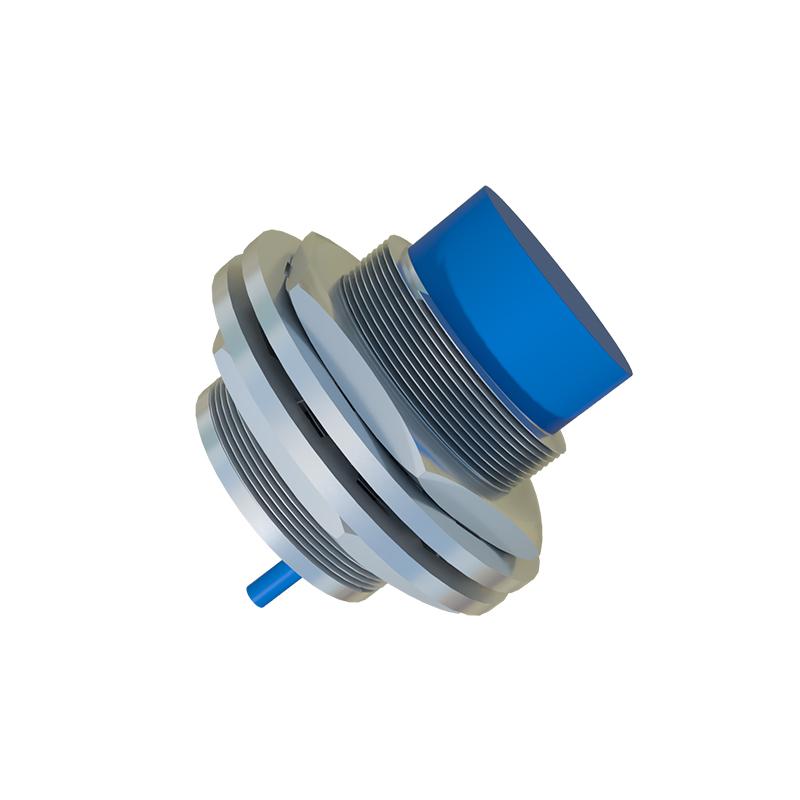
Designing and integrating these chips present significant engineering challenges. Key parameters include sensing range, repeatability, response time, and immunity to electrical noise (EMI). Engineers must carefully consider the target material, environmental factors like temperature extremes and contaminants, and the required output interface (e.g., NPN/PNP, analog, IO-Link). The latest generation of proximity sensor chips incorporates smart features like built-in diagnostics, condition monitoring, and digital communication protocols. This shift towards Industry 4.0 enables predictive maintenance, where a sensor can report its health status or warn of gradual performance degradation before a failure occurs, drastically reducing downtime.
The applications are vast and growing. Beyond traditional factory floors, these chips are enabling the Internet of Things (IoT), finding roles in smart buildings for occupancy detection, in automotive systems for safety and comfort, and in medical devices for non-contact sensing. As technology advances, we are seeing trends toward higher integration, lower power consumption for battery-operated devices, and enhanced sensing fusion—where proximity data is combined with other sensor inputs for more complex contextual awareness.
In conclusion, proximity sensor chips are fundamental components that bridge the physical and digital worlds. Their continuous evolution in sensitivity, intelligence, and robustness is a critical driver for smarter, safer, and more efficient automated systems across every sector of industry and consumer technology. Their "invisible" work is what allows machines to interact seamlessly and intelligently with their surroundings.