Proximity sensors are indispensable components in modern hydraulic systems, particularly for monitoring and controlling the position of hydraulic cylinders. These non-contact sensing devices provide critical feedback for automation, safety, and precision in a wide range of industrial applications, from heavy machinery and injection molding to robotics and material handling. Unlike limit switches that require physical contact, proximity sensors detect the presence or absence of a metallic target—typically the cylinder piston or a specially mounted actuator—through an electromagnetic field. This fundamental characteristic eliminates mechanical wear, reduces maintenance, and enhances reliability in harsh environments where oil, vibration, and contaminants are prevalent.
For hydraulic cylinders, the selection of an appropriate proximity sensor hinges on several key engineering parameters. First, the sensing distance, or nominal range, must be carefully matched to the cylinder's stroke and mounting configuration. Inductive proximity sensors, the most common type for this application, are designed to detect ferrous metals (like steel pistons) within a defined range, usually from a few millimeters up to about 60 mm. The sensor must be positioned so that the target reliably enters its active sensing zone at the desired detection point, whether for end-of-stroke confirmation, mid-stroke positioning, or collision avoidance. Second, the sensor's housing and construction are paramount. Cylinders operate in demanding conditions, necessitating sensors with robust, often stainless steel or nickel-plated brass housings, high IP (Ingress Protection) ratings (e.g., IP67, IP69K for washdown areas), and exceptional resistance to hydraulic fluids, shock, and vibration.
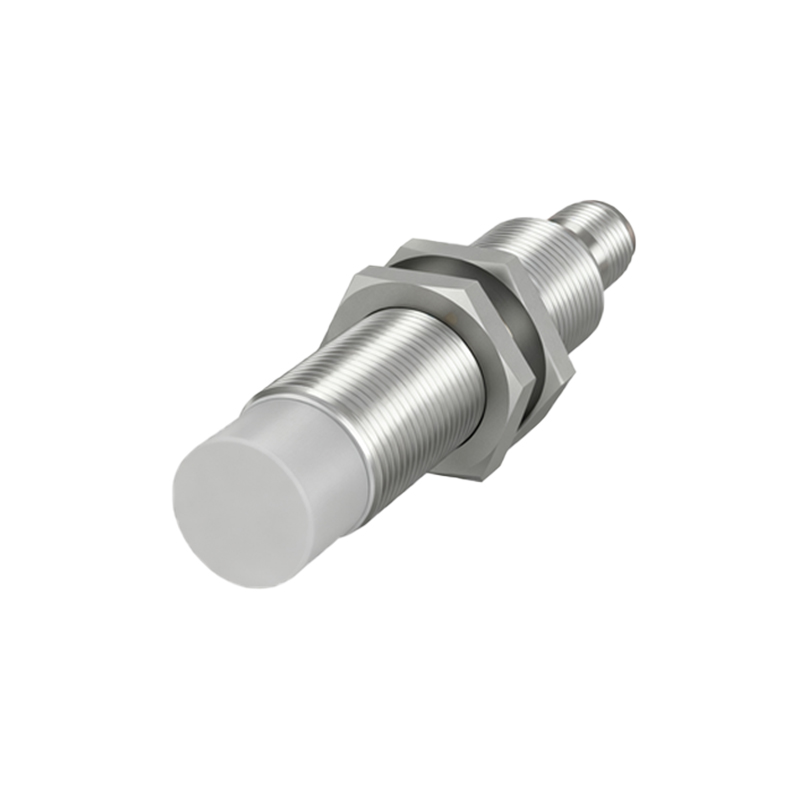
The integration of these sensors into cylinder design has evolved significantly. Traditional methods involved external mounting via brackets, which could be susceptible to misalignment. Modern solutions increasingly favor embedded or "in-cylinder" sensors. These are integrated directly into the cylinder barrel or end caps, providing a cleaner, more protected installation. Reed switches, though a mature technology, are still used in some low-cost or low-speed applications, where a magnet on the piston actuates the switch. However, solid-state inductive sensors offer superior switching frequency, precision, and longevity. For non-ferrous cylinders (e.g., aluminum bodies), or for applications requiring very long sensing ranges, capacitive or ultrasonic proximity sensors may be specified, though they are less common in standard hydraulic cylinder setups.
Electrical output and connectivity form another critical consideration. Most industrial proximity sensors for cylinders provide a discrete DC PNP (sourcing) or NPN (sinking) output signal, compatible with programmable logic controllers (PLCs). The choice between normally open (NO) and normally closed (NC) contacts depends on the fail-safe logic of the control system. Increasingly, sensors with analog current (4-20 mA) or voltage (0-10 V) outputs are employed for proportional position feedback, enabling continuous monitoring of piston travel rather than simple limit detection. This is essential for applications like press brake depth control or synchronous movement of multiple cylinders. Wiring and connectors must be rated for the environment; molded, sealed M12 or M8 connectors are industry standards for ensuring a reliable electrical connection resistant to moisture and oil ingress.
From an application engineering perspective, proper installation and commissioning are vital for optimal performance. Factors such as target material, size, and approach direction can affect the effective sensing range. For instance, a sensor's rated sensing distance is typically defined for a standard mild steel square target. Using a different material or a smaller target may require derating. Engineers must also account for electromagnetic interference (EMI) from variable frequency drives (VFDs) or welding equipment, which can cause false triggering. Shielding sensor cables and maintaining proper separation from power lines are standard mitigation practices. Furthermore, in high-cycle applications, the sensor's switching frequency must exceed the cylinder's maximum reciprocation speed to ensure every stroke is accurately counted.
Looking forward, the role of proximity sensors in hydraulic cylinders is being augmented by trends in Industry 4.0 and predictive maintenance. Smart sensors with integrated IO-Link communication can transmit not just a state signal but also diagnostic data like operating temperature, signal strength, or switch cycle count to higher-level control systems. This facilitates condition monitoring, allowing for the prediction of cylinder seal wear or impending sensor failure before a breakdown occurs. The fusion of robust sensing technology with digital intelligence is transforming hydraulic cylinders from simple actuators into smart, data-generating components of interconnected industrial systems.
In conclusion, specifying and applying proximity sensors for hydraulic cylinders is a nuanced task that directly impacts system performance, uptime, and safety. A thorough understanding of sensor technologies, environmental constraints, electrical interfaces, and installation best practices enables engineers to design reliable, efficient, and intelligent fluid power systems. As hydraulics continue to coexist and integrate with electric motion in hybrid systems, the precision and data provided by advanced proximity sensing will remain a cornerstone of industrial automation.
SEO关键词