In the realm of industrial automation and control systems, proximity sensors play a pivotal role in detecting the presence or absence of objects without physical contact. Among the critical specifications that engineers must consider, the maximum sensing distance stands out as a fundamental parameter influencing sensor selection and application performance. This article delves into the factors affecting the maximum sensing distance, its practical implications, and best practices for optimization.
The maximum sensing distance, often referred to as the nominal range, is defined as the farthest distance at which a proximity sensor can reliably detect a standard target under specified conditions. This distance varies significantly based on sensor technology, with common types including inductive, capacitive, ultrasonic, and photoelectric sensors. For instance, inductive sensors, which detect metallic objects, typically offer ranges from a few millimeters to about 60 millimeters, while capacitive sensors can sense non-metallic materials at similar short ranges. In contrast, ultrasonic sensors may achieve distances up to several meters, and photoelectric sensors can extend even further, depending on the light source and environmental factors.
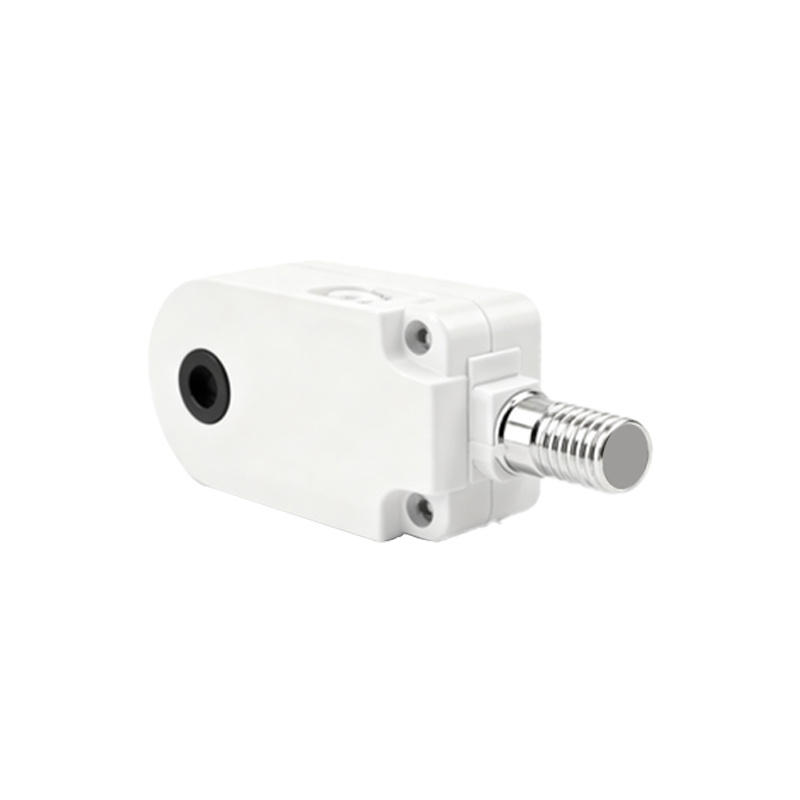
Several key factors influence the maximum sensing distance. First, the sensor's design and internal components, such as coil size in inductive sensors or lens quality in photoelectric models, directly impact range. Larger coils or more powerful emitters generally enable greater distances. Second, the target characteristics—including material, size, shape, and surface properties—play a crucial role. A standard target, often defined by manufacturers as a square of mild steel for inductive sensors, serves as a benchmark; deviations from this standard can reduce effective range. For example, non-ferrous metals may decrease inductive sensor range by up to 50%, while dark or absorbent surfaces can diminish photoelectric sensor performance.
Environmental conditions also pose significant challenges. Temperature fluctuations, humidity, dust, and ambient light can attenuate sensor signals, leading to reduced maximum distance. Industrial settings with high electromagnetic interference (EMI) may further compromise inductive and capacitive sensors. To mitigate these issues, manufacturers specify derating factors or provide correction curves in datasheets, advising engineers to adjust expected ranges based on real-world conditions.
Practical applications demand careful consideration of the maximum sensing distance to ensure reliability and safety. In assembly lines, for instance, sensors must be positioned within their effective range to detect parts accurately, avoiding false triggers or missed detections. Exceeding the nominal range can lead to unstable operation, increased error rates, and potential system failures. Therefore, it is advisable to maintain a safety margin—often 10-20% below the stated maximum—to account for variances in target alignment, environmental shifts, and sensor aging.
Optimizing maximum sensing distance involves both selection and installation practices. Engineers should choose sensors with ranges exceeding the application's minimum requirements, considering future adjustments. Regular calibration and maintenance, such as cleaning lenses or checking for mechanical drift, help sustain performance. Additionally, leveraging sensors with adjustable sensitivity or built-in diagnostics can enhance adaptability in dynamic environments.
In summary, the maximum sensing distance is not a static value but a dynamic parameter shaped by technology, target properties, and environmental factors. By understanding these influences and adhering to best practices, engineers can deploy proximity sensors effectively, ensuring robust and efficient automation solutions. As sensor technology evolves, with advancements in materials and signal processing, we can anticipate improvements in range and reliability, further expanding their industrial applications.