In the realm of industrial automation and precision engineering, laser distance sensors have emerged as a cornerstone technology, enabling unprecedented levels of accuracy, speed, and reliability in measurement applications. These sophisticated devices operate on the principle of emitting a focused laser beam toward a target object and analyzing the reflected light to calculate distance with exceptional precision. Unlike traditional contact-based measurement tools, laser sensors offer non-contact operation, eliminating the risk of damage to both the sensor and the measured object, which is particularly crucial for delicate or high-speed production lines.
The core technology behind laser distance measurement typically involves one of two primary methods: time-of-flight (ToF) or triangulation. Time-of-flight sensors calculate distance by measuring the time it takes for a laser pulse to travel to the target and back, a method highly effective for long-range measurements, often up to several hundred meters, with typical accuracies in the millimeter range. This makes ToF sensors ideal for applications such as warehouse automation, construction site monitoring, and large-scale logistics. On the other hand, triangulation-based sensors use a laser emitter, a receiver lens, and a position-sensitive detector. The laser dot is projected onto the target, and the reflected light is focused onto the detector at an angle; the position of the light spot on the detector changes with the target's distance, allowing for calculations with micron-level resolution. This approach is predominantly used in high-precision manufacturing, such as semiconductor inspection, automotive assembly, and robotics alignment, where sub-millimeter accuracy is non-negotiable.
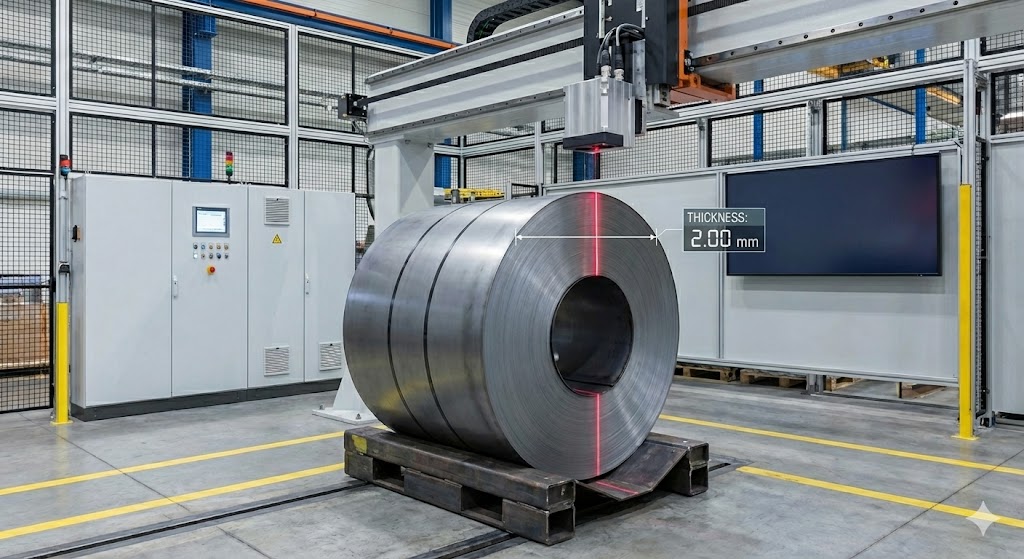
One of the most significant advantages of modern laser distance sensors is their integration capability with digital industrial ecosystems. Equipped with various output interfaces like analog voltage/current, RS-232, Ethernet, or industrial fieldbuses (e.g., PROFINET, EtherCAT), these sensors seamlessly communicate with PLCs, SCADA systems, and data analytics platforms. This connectivity facilitates real-time process control, predictive maintenance, and quality assurance, contributing to the overarching goals of Industry 4.0. For instance, in automated guided vehicle (AGV) systems, laser sensors provide continuous positioning data, enabling precise navigation and collision avoidance without physical guides. Similarly, in 3D scanning and profiling, arrays of laser sensors capture detailed surface contours, essential for reverse engineering and quality inspection in aerospace and medical device manufacturing.
Environmental robustness is another critical feature. High-quality laser distance sensors are designed to withstand harsh industrial conditions, including temperature fluctuations, vibration, dust, and ambient light interference. Many models feature IP67 or higher ingress protection ratings, ensuring reliable operation in challenging environments like metalworking shops, food processing plants, or outdoor installations. Advanced models incorporate algorithms to filter out background noise and compensate for material surface variations—such as color, reflectivity, or texture—which historically posed challenges for consistent measurement accuracy.

Looking ahead, the evolution of laser distance sensing is closely tied to advancements in laser diode technology, miniaturization, and computational power. Emerging trends include the development of multi-function sensors that combine distance measurement with other parameters like height, width, or presence detection, reducing the need for multiple discrete sensors. Furthermore, the integration of artificial intelligence and machine learning algorithms enables adaptive sensing, where the sensor can self-calibrate or identify anomalies in real-time, pushing the boundaries of autonomous systems.
In conclusion, laser distance sensors represent a transformative force in industrial measurement, bridging the gap between physical processes and digital control. Their ability to deliver fast, accurate, and non-contact data empowers industries to enhance efficiency, ensure quality, and drive innovation. As technology continues to advance, these sensors will undoubtedly play an even more pivotal role in shaping the future of smart manufacturing and beyond, solidifying their status as an indispensable tool for engineers and technicians worldwide.