In the rapidly evolving landscape of industrial automation and precision engineering, the demand for reliable, accurate, and robust distance measurement solutions has never been higher. Qianjiang laser distance sensors have emerged as a pivotal technology, offering unparalleled performance across a diverse range of applications. These sensors operate on the fundamental principle of time-of-flight or phase-shift measurement, where a laser diode emits a focused beam of light towards a target. The sensor's sophisticated photodetector then captures the reflected light, and an internal processor calculates the distance based on the time delay or phase difference between the emitted and received signals. This method ensures non-contact measurement, which is critical for preserving the integrity of delicate surfaces and enabling high-speed dynamic measurements.
The core advantages of Qianjiang laser sensors lie in their exceptional specifications. They typically offer high measurement accuracy, often down to sub-millimeter levels, across significant ranges. Their resolution is finely tuned to detect even the most minute positional changes. Furthermore, advanced models feature high sampling rates, making them ideal for real-time process control on fast-moving production lines. Unlike traditional mechanical or ultrasonic sensors, laser sensors are largely immune to environmental factors such as ambient light interference, dust (within specified limits), and color or surface texture variations of the target object, thanks to focused beam characteristics and intelligent signal processing algorithms.
Industrial integration of Qianjiang laser distance sensors is remarkably versatile. In manufacturing, they are indispensable for precise positioning of robotic arms, dimensional gauging of components, and controlling fill levels in packaging machinery. The logistics and warehousing sector utilizes them for palletizing, warehouse vehicle guidance, and inventory management through volume scanning. In construction and civil engineering, they facilitate alignment, deformation monitoring, and area calculation. Their ruggedized housings, often rated with high IP (Ingress Protection) codes for dust and water resistance, ensure reliable operation in harsh industrial environments, from automotive assembly plants to outdoor agricultural machinery.

When selecting a Qianjiang laser sensor for a specific application, several technical parameters require careful consideration. The measuring range must align with the operational distance. The required accuracy and repeatability will dictate the sensor's class. The response time or sampling frequency must match the process speed. The type of output interface—be it analog (4-20mA, 0-10V), digital (RS232, RS485), or industrial bus protocols (PROFIBUS, IO-Link)—must be compatible with the existing control system. Additionally, factors like laser safety class (typically Class 2, which is eye-safe under normal operating conditions), housing material, and mounting options are crucial for seamless integration.
The future trajectory for Qianjiang and similar laser distance sensing technology points towards greater miniaturization, enhanced intelligence, and network connectivity. The integration of onboard diagnostics, predictive maintenance features, and direct cloud connectivity for data analytics is becoming standard. Furthermore, the development of multi-point sensors and laser profile scanners that can measure not just a single distance but an entire contour line is expanding their application horizon into 3D inspection and quality control. As Industry 4.0 and smart factory concepts mature, the role of the laser sensor as a critical data acquisition node will only solidify, driving efficiencies and enabling new levels of automation precision.
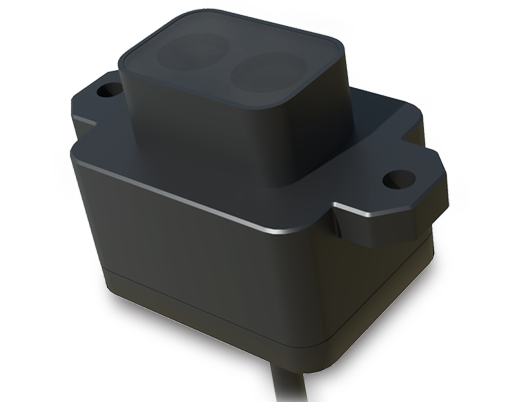
In conclusion, Qianjiang laser distance sensors represent a mature yet continuously advancing technology that forms the backbone of modern precision measurement. Their ability to deliver fast, accurate, and reliable distance data in challenging conditions makes them an essential tool for engineers and system integrators across the globe. By understanding their operating principles, key specifications, and application best practices, industries can leverage these sensors to optimize processes, improve product quality, and achieve higher levels of operational autonomy and intelligence.