In the realm of industrial automation and machine design, proximity sensors are indispensable components, providing non-contact detection of objects. Understanding their diverse types and operating principles is crucial for selecting the right sensor for any application. This guide presents a detailed classification chart and explores the core technologies behind these vital devices.
The primary classification of proximity sensors is based on their underlying detection technology. The major categories include Inductive, Capacitive, Ultrasonic, Photoelectric, and Magnetic (Reed Switch/Hall Effect) sensors. Each type interacts with the target object in a distinct physical manner, defining its ideal use case, advantages, and limitations.
1. Inductive Proximity Sensors
These sensors generate an electromagnetic field. They detect only ferrous and non-ferrous metals (like aluminum, copper). When a metallic object enters this field, it induces eddy currents, causing a change in the sensor's oscillation amplitude. This change triggers the output switch. Key characteristics:
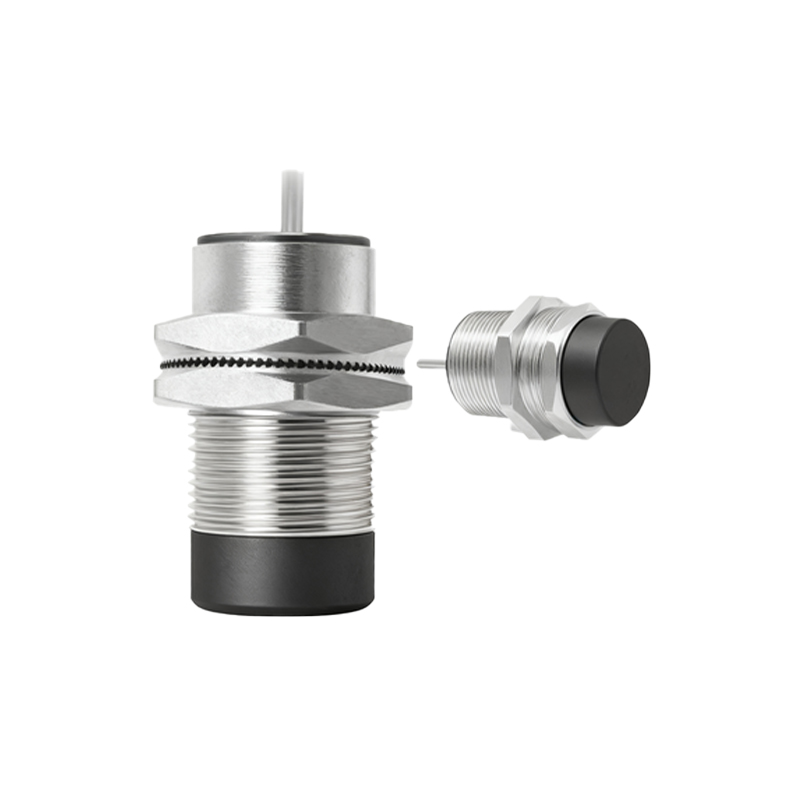
Target: Metallic objects only.
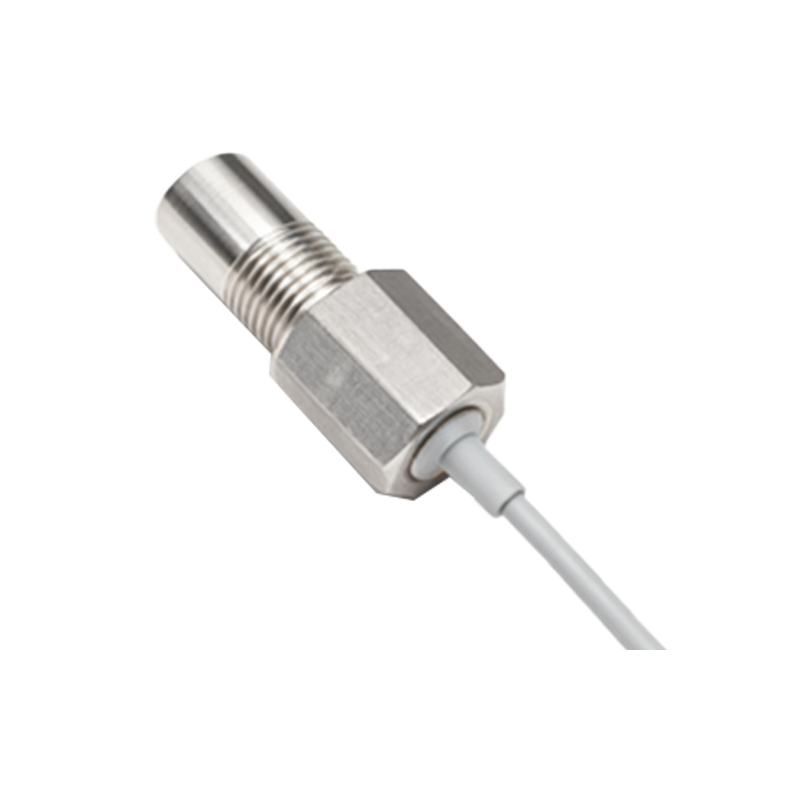
Operating Principle: Electromagnetic induction.
Typical Range: Up to 60mm, depending on size and material.
Applications: Metal detection, position sensing in machinery, counting metal parts, limit switching.
Chart Note: Sub-categories often include shielded (flush-mountable) and unshielded (longer range) types, and models tuned for different metals (e.g., steel vs. aluminum).
2. Capacitive Proximity Sensors
Capacitive sensors can detect almost any material: solids, liquids, powders, metals, and plastics. They function by generating an electrostatic field. The presence of any object with a dielectric constant different from air alters the capacitance of the sensor's circuit, triggering detection.
Target: All materials (metal, wood, glass, liquid, granules).
Operating Principle: Change in capacitance.
Typical Range: Up to 25mm.
Applications: Level detection of liquids or granular materials, material composition analysis, non-metallic object detection.
Chart Note: Sensitivity is often adjustable to ignore certain materials (like a container wall) and sense the target material inside.
3. Ultrasonic Proximity Sensors
These sensors emit high-frequency sound waves (ultrasound) and evaluate the echo received back. They measure the time interval between sending the signal and receiving the echo to calculate the distance to the target. This technology is used for both presence detection and precise distance measurement.
Target: Most solid and liquid surfaces, independent of color, transparency, or material.
Operating Principle: Sound wave reflection (time-of-flight).
Typical Range: From a few cm up to several meters.
Applications: Distance measurement, level sensing in tanks, pallet detection, loop control.
Chart Note: Performance can be affected by temperature, air turbulence, and the object's sound-absorbing properties.
4. Photoelectric Sensors
This is a broad category where light is the medium. They are further sub-classified into three main types, a critical branch on any classification chart:
Through-beam (Opposed): Consists of a separate transmitter and receiver. Detection occurs when the target object interrupts the light beam. Offers the longest sensing range and highest reliability.
Retro-reflective: Uses a single unit and a reflector. The sensor's light beam is reflected back by a reflector. The target object is detected when it breaks this beam. Range is less than through-beam.
Diffuse (Proximity-mode): The sensor and target are on the same side. The sensor emits light, and detection occurs when enough light is reflected back from the target itself. Range is shortest and depends on the target's color, texture, and reflectivity.
Target: Virtually any object, but performance varies with surface properties.
Applications: Object detection on conveyors, bottle/can counting, web break detection, registration mark sensing.
5. Magnetic Proximity Sensors
These sensors detect the presence of a permanent magnet. The two main types are:
Reed Switch: A sealed glass tube containing two ferromagnetic reeds. When a magnet approaches, the reeds attract and close the contact.
Hall Effect Sensor: A semiconductor device that produces a voltage (Hall voltage) when exposed to a magnetic field. This voltage is processed by integrated electronics.
Target: Permanent magnets only.
Applications: Cylinder position sensing (with piston magnets), door/window position sensing in security, speed sensing.
Selection Chart & Key Parameters
A practical classification chart should allow for cross-comparison based on key parameters: