In the realm of industrial automation and precision measurement, selecting the optimal sensing technology is paramount for ensuring efficiency, accuracy, and reliability. Two prominent contenders in this field are capacitive sensors and laser sensors. While both serve the fundamental purpose of non-contact detection and measurement, their underlying principles, applications, and performance characteristics differ significantly. This article provides a detailed technical comparison to guide engineers and system integrators in making informed decisions.
Capacitive sensors operate on the principle of capacitance change. They generate an electrostatic field from the sensing face. When a target object enters this field, it alters the capacitance of the system. The sensor's internal circuitry detects this change and triggers an output signal. A key characteristic of capacitive sensors is their ability to detect virtually any material, including metals, plastics, glass, wood, and even liquids or granular materials through certain non-metallic containers. This material versatility is a major advantage. However, this sensitivity is also a potential drawback; capacitive sensors can be influenced by environmental factors such as humidity, dust, or the presence of other objects near the sensing field, potentially leading to false triggers. They are typically used for level detection, presence sensing of non-metals, and thickness measurement where the target material is non-conductive. Their sensing range is generally limited, often to a few tens of millimeters, and the effective range is highly dependent on the target material's dielectric constant.
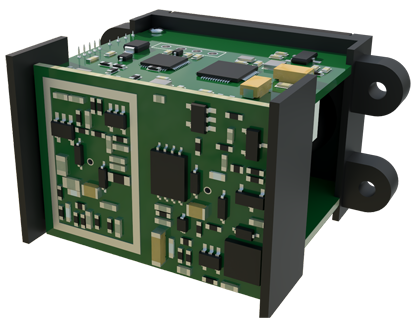
In contrast, laser sensors, specifically laser triangulation sensors, function on an optical principle. They emit a focused beam of coherent light (laser) onto the target surface. The reflected light is focused onto a position-sensitive detector (e.g., a CCD or CMOS array). By calculating the angle of the reflected beam, the sensor precisely determines the distance to or displacement of the target. Laser sensors excel in applications demanding high precision and resolution, often down to the micrometer level. They offer much longer sensing ranges compared to capacitive sensors, from a few centimeters up to several meters, depending on the model. Their performance is largely independent of the target material's electrical properties but can be affected by the surface characteristics. Highly reflective, transparent, or absorbent surfaces (like black rubber) can pose challenges, though advanced models with background suppression or specialized algorithms mitigate these issues. Common applications include precise dimensional gauging, contour profiling, vibration analysis, and alignment tasks.
The choice between these two technologies hinges on specific application requirements. For detecting the presence of a plastic bottle cap, a liquid level inside a non-metallic tank, or the thickness of a paper sheet, a capacitive sensor is often the superior and more cost-effective choice. Its insensitivity to color and surface finish is beneficial here. Conversely, for measuring the precise height of a component on a conveyor, profiling a complex machined part, or monitoring the runout of a rotating shaft, a laser sensor is indispensable due to its superior accuracy, speed, and stand-off distance.
Environmental robustness is another critical factor. Capacitive sensors, with their sealed housings, can handle many industrial environments but must be carefully installed to avoid interference from surrounding materials. Laser sensors require a clean optical path; airborne dust, oil mist, or heavy condensation can scatter or block the laser beam, rendering the sensor ineffective. Many industrial-grade laser sensors are housed in rugged enclosures with air purge options for harsh environments.
Finally, cost considerations play a role. Generally, basic capacitive sensors are less expensive than laser sensors. However, the total cost of ownership must include installation, calibration, and long-term reliability. For a simple presence detection task, a capacitive sensor provides excellent value. For a critical measurement application where precision directly impacts product quality, the investment in a laser sensor is justified.
In conclusion, there is no universal "best" sensor. Capacitive sensors are the material-agnostic workhorses for presence and level detection across diverse substances. Laser sensors are the precision instruments for demanding metrology and displacement measurement. A thorough analysis of the target material, required precision, environmental conditions, and budget will lead to the correct technological selection, ensuring optimal performance in any automated system.