Proximity sensor switches are essential components in modern industrial automation, offering non-contact detection of objects without physical interaction. These devices are widely used in manufacturing, robotics, and safety systems due to their reliability, durability, and precision. Understanding their structure and working principle is crucial for engineers and technicians in the electrical and automation fields.
Structurally, proximity sensor switches consist of several key components. The core element is the sensing element, which varies depending on the type of sensor. Common types include inductive, capacitive, and photoelectric proximity sensors. Inductive sensors, for instance, are designed to detect metallic objects and typically comprise a coil, oscillator, demodulator, and output circuit. The coil is wound around a ferrite core, generating an electromagnetic field when energized. The oscillator produces a high-frequency alternating current that powers the coil, creating an oscillating magnetic field around the sensor's face. The demodulator analyzes changes in the oscillation, while the output circuit translates these changes into a switch signal, such as a digital ON/OFF output.

The housing of a proximity sensor is usually made from robust materials like stainless steel, nickel-plated brass, or engineering plastics, ensuring protection against environmental factors such as dust, moisture, and mechanical impact. This enclosure also includes mounting threads or brackets for easy installation in industrial settings. Additionally, many sensors feature LED indicators to show operational status, aiding in troubleshooting and maintenance.
The working principle of proximity sensors revolves around the detection of changes in an electromagnetic or electrostatic field. In inductive proximity sensors, when a metallic object enters the sensor's magnetic field, eddy currents are induced on the object's surface. These eddy currents draw energy from the oscillator, causing a reduction in oscillation amplitude. The demodulator detects this amplitude drop and triggers the output circuit to switch states—for example, from OFF to ON. Once the object moves away, the oscillation returns to its normal level, and the sensor reverts to its original state. This process allows for rapid and accurate detection without physical contact, minimizing wear and tear.

Capacitive proximity sensors operate on a similar non-contact principle but are capable of detecting both metallic and non-metallic materials, such as liquids, plastics, or wood. They consist of two conductive plates forming a capacitor, with an oscillator generating an electrostatic field between them. When an object enters this field, it alters the capacitance, changing the oscillation frequency. The sensor's circuitry monitors this change and activates the output when a threshold is reached. This makes capacitive sensors versatile for applications like level detection or material handling.
Photoelectric proximity sensors use light beams, typically infrared or laser, to detect objects. They include an emitter that projects light and a receiver that senses reflected or interrupted beams. When an object breaks or reflects the light path, the receiver detects the variation, and the output switches accordingly. These sensors are ideal for long-range detection or transparent materials, though they may be affected by ambient light or surface properties.
Key parameters influencing sensor performance include sensing distance, response time, and environmental tolerance. Sensing distance, or the maximum range at which an object can be detected, varies by sensor type and size. Response time refers to how quickly the sensor reacts to an object's presence, critical in high-speed automation. Engineers must also consider factors like temperature ranges, electrical noise immunity, and output compatibility (e.g., NPN vs. PNP configurations) when selecting sensors for specific applications.
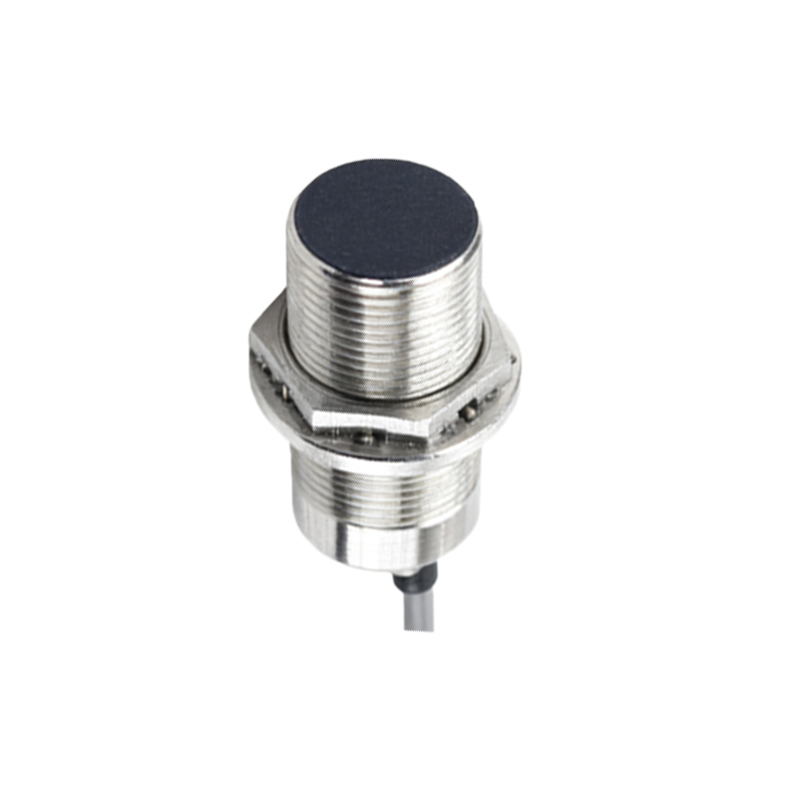
In practice, proximity sensor switches are integral to systems like conveyor belt control, machine safety interlocks, and object counting. Their non-contact nature reduces maintenance needs and enhances operational efficiency. Regular calibration and adherence to manufacturer guidelines ensure optimal performance and longevity. As technology advances, innovations such as smart sensors with IoT connectivity are emerging, enabling predictive maintenance and data integration in Industry 4.0 environments.
Overall, proximity sensor switches exemplify the synergy of electrical engineering and automation, providing reliable solutions for diverse industrial challenges. By mastering their structure and principles, professionals can design and maintain systems that boost productivity and safety.