In the realm of precise measurement and automation, few tools are as critical as the industrial-grade laser rangefinder sensor. Far removed from consumer-grade handheld devices, these robust instruments are engineered to deliver unwavering accuracy, durability, and performance in the most challenging environments. From sprawling factory floors to outdoor construction sites and harsh logistical hubs, they form the invisible backbone of modern industrial processes, enabling machines to see, judge distance, and act with pinpoint precision.
At its core, an industrial laser rangefinder operates on the time-of-flight (ToF) principle. It emits a focused pulse of laser light towards a target and measures the time it takes for the reflection to return. Given the constant speed of light, the sensor's sophisticated internal circuitry calculates the distance with exceptional accuracy. Industrial variants enhance this basic principle with advanced signal processing, noise filtering, and often multiple measurement modes to handle diverse surface types and environmental interference. Unlike their consumer counterparts, these sensors are built to resist dust, moisture, vibration, and extreme temperatures, often boasting IP67 or higher ingress protection ratings.

The applications for these powerful sensors are vast and transformative. In material handling and logistics, they are indispensable for automated guided vehicles (AGVs) and autonomous mobile robots (AMRs), providing real-time navigation and obstacle avoidance. They ensure precise positioning for robotic arms in assembly lines, enabling tasks like bin picking, welding, and component placement. In the construction and mining sectors, laser rangefinders are used for volume measurement, crane positioning, and monitoring structural deformations with millimeter-level accuracy. Furthermore, they play a vital role in industrial automation for level monitoring in silos and tanks, controlling roll diameters in paper and steel mills, and ensuring proper spacing in storage systems.
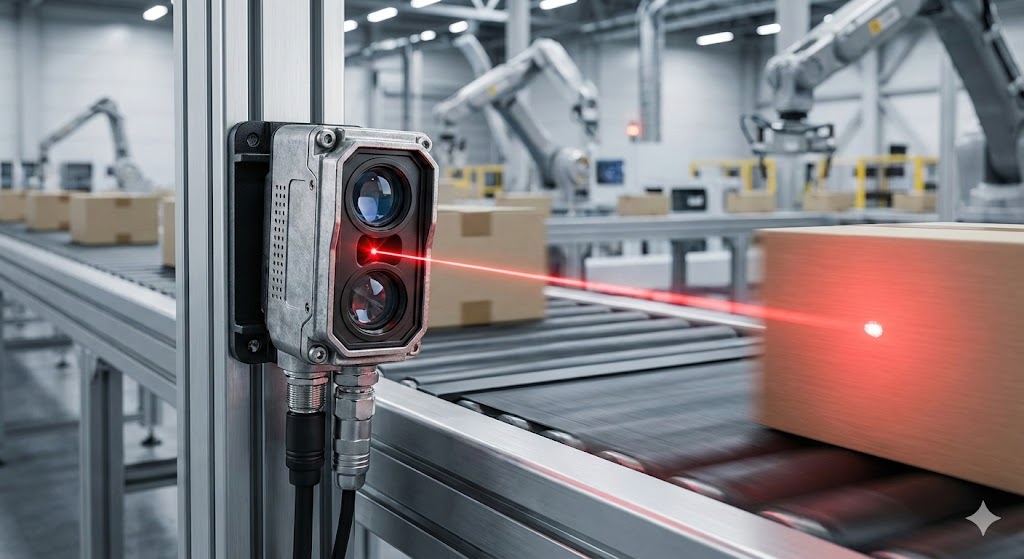
Selecting the right industrial-grade sensor requires careful consideration of several key parameters. Measurement range and accuracy are paramount; while some sensors excel at sub-millimeter precision over short distances, others are designed for long-range detection up to several hundred meters. The response time, or how quickly the sensor can take and output a measurement, is crucial for high-speed automation. The type of output—analog voltage, current (4-20 mA), or digital protocols like RS-485, Ethernet/IP, or PROFINET—must integrate seamlessly with existing PLCs and control systems. Finally, the physical design, including housing material, beam visibility (visible red laser vs. invisible infrared), and mounting options, must suit the operational environment.
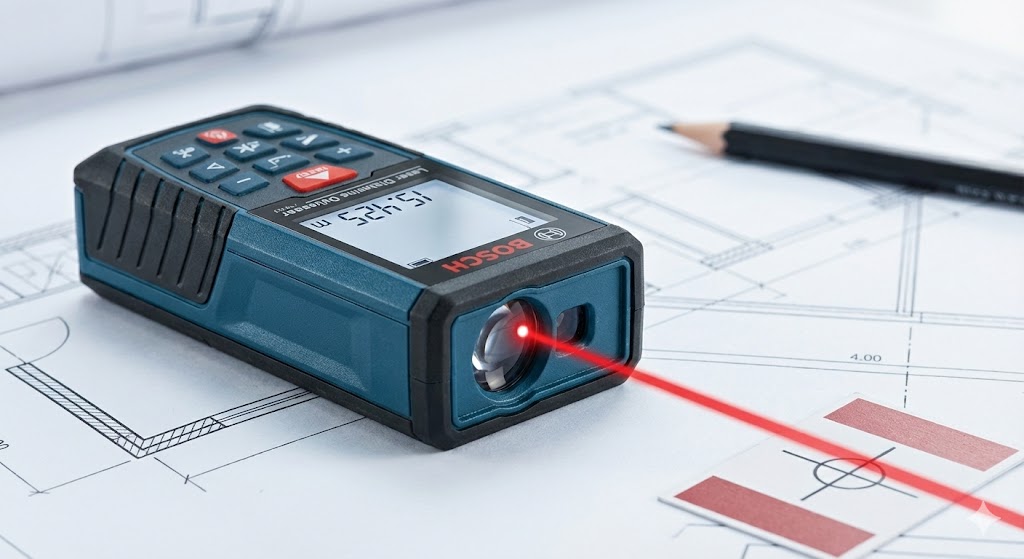
The integration of these sensors into the Industrial Internet of Things (IIoT) ecosystem marks a significant evolution. Modern industrial laser rangefinders are increasingly equipped with smart features and connectivity, allowing for remote configuration, predictive maintenance through self-diagnostics, and seamless data integration into cloud platforms for centralized monitoring and analytics. This connectivity transforms raw distance data into actionable intelligence, optimizing entire workflows and enabling proactive system management.
In conclusion, the industrial-grade laser rangefinder sensor is more than just a measuring device; it is a fundamental enabler of precision, efficiency, and safety in automation. Its robust design, coupled with relentless accuracy and growing intelligence, makes it an essential component for industries striving to enhance productivity, reduce waste, and navigate the complexities of modern manufacturing and infrastructure management. As technology advances, these sensors will continue to push the boundaries of what is possible in automated spatial awareness.