In the rapidly evolving landscape of industrial automation and precision measurement, laser optical film sensors have emerged as a cornerstone technology. These sophisticated devices, which utilize the principles of laser light interaction with thin-film materials, offer unparalleled accuracy, reliability, and versatility for a wide range of sensing applications. Unlike conventional photoelectric sensors, laser optical film sensors are engineered to detect minute changes in the optical properties of a film layer, such as its thickness, refractive index, or the presence of specific coatings or contaminants. This capability makes them indispensable in sectors demanding extreme precision, including semiconductor manufacturing, pharmaceutical production, and high-quality printing.
The fundamental operating principle of a laser optical film sensor revolves around the emission of a highly focused, coherent laser beam onto a target surface. This surface is typically coated with or consists of a specialized thin film. The sensor then meticulously analyzes the characteristics of the reflected or transmitted light. Key parameters measured include intensity, phase shift, polarization, and interference patterns. For instance, in thickness measurement applications, the sensor exploits the phenomenon of optical interference. When the laser light reflects off both the top and bottom surfaces of a transparent or semi-transparent film, the two reflected beams interfere with each other. The sensor's photodetector and advanced signal processing unit analyze this interference pattern to calculate the film's thickness with nanometer-level precision. This non-contact method is critical for processes where physical contact could damage delicate materials.
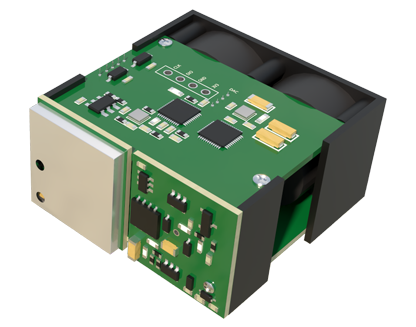
Another critical application is in defect detection and quality control. A laser optical film sensor can scan a moving web of material, such as polymer film or metal foil, at high speeds. Any anomaly—a pinhole, a scratch, a variation in coating uniformity, or a foreign particle—alters the way the laser light is reflected or scattered. The sensor's high-resolution detection system identifies these deviations in real-time, triggering alarms or automated rejection mechanisms. This ensures product consistency and minimizes waste, which is paramount in cost-sensitive and quality-driven industries.
The integration of these sensors into modern Industrial Internet of Things (IIoT) frameworks has further amplified their value. Equipped with digital interfaces like IO-Link, Ethernet/IP, or PROFINET, laser optical film sensors can transmit rich diagnostic data and process parameters directly to central control systems or cloud platforms. This enables predictive maintenance, where trends in sensor signal quality or component performance can forecast potential failures before they cause downtime. Furthermore, data analytics can optimize entire production lines by correlating sensor readings with final product quality, allowing for continuous process improvement.
When selecting a laser optical film sensor for a specific application, engineers must consider several technical specifications. The wavelength of the laser source is paramount; different materials absorb and reflect light differently at various wavelengths. Common choices include red visible lasers (around 650 nm) for general-purpose alignment and detection, and infrared lasers for applications involving specific materials or to reduce the effects of ambient light. The spot size of the laser beam determines the spatial resolution—a smaller spot allows for the detection of finer defects. Measurement range, repeatability, and response time are other crucial factors. Environmental robustness is also essential; sensors deployed in harsh industrial settings often require high Ingress Protection (IP) ratings to withstand dust, moisture, and mechanical vibrations.
Looking ahead, the future of laser optical film sensor technology is geared towards even greater miniaturization, intelligence, and multifunctionality. The development of compact, chip-based laser sources and detectors is paving the way for smaller sensor footprints without compromising performance. Advances in machine learning algorithms are being integrated directly into sensor firmware, enabling them to not only detect anomalies but also classify defect types autonomously. Additionally, the combination of laser sensing with other technologies, such as spectroscopy, could allow a single sensor to simultaneously measure thickness, composition, and surface texture.
In conclusion, laser optical film sensors represent a critical fusion of optics, electronics, and software engineering. Their ability to provide precise, non-contact, and real-time feedback on film properties has revolutionized quality assurance and process control across numerous industries. As manufacturing processes become more complex and quality standards more stringent, the role of these advanced sensors will only become more central, driving efficiency, innovation, and reliability in the automated factories of today and tomorrow.