Eddy current proximity sensors are fundamental components in modern industrial automation, renowned for their non-contact detection capabilities, high precision, and reliability. These sensors operate based on the principle of electromagnetic induction, a phenomenon first described by Michael Faraday. At their core, they consist of an oscillator circuit that generates a high-frequency alternating current, which flows through a coil located at the sensor's active face. This alternating current produces a high-frequency electromagnetic field that extends from the coil into the surrounding space.
When a conductive target object enters this electromagnetic field, eddy currents are induced on the surface of the target. According to Lenz's law, these eddy currents generate their own opposing magnetic field, which interacts with the original field from the sensor coil. This interaction alters the impedance of the coil—specifically, it increases the coil's effective resistance (due to energy loss from the eddy currents) and changes its inductance. The sensor's integrated electronic circuitry is designed to detect these precise changes in the coil's impedance or, more commonly, the resulting change in the amplitude of the oscillator's oscillation.
The detection circuit monitors the oscillation amplitude. As the target approaches, the energy loss increases, causing the amplitude to decrease. Once the amplitude falls below a predefined threshold, the sensor's output state switches—typically from "off" to "on" for a normally open configuration. The point at which this switch occurs is the rated operating distance or sensing distance, a key specification determined by the sensor's design, coil size, and the target material's properties.
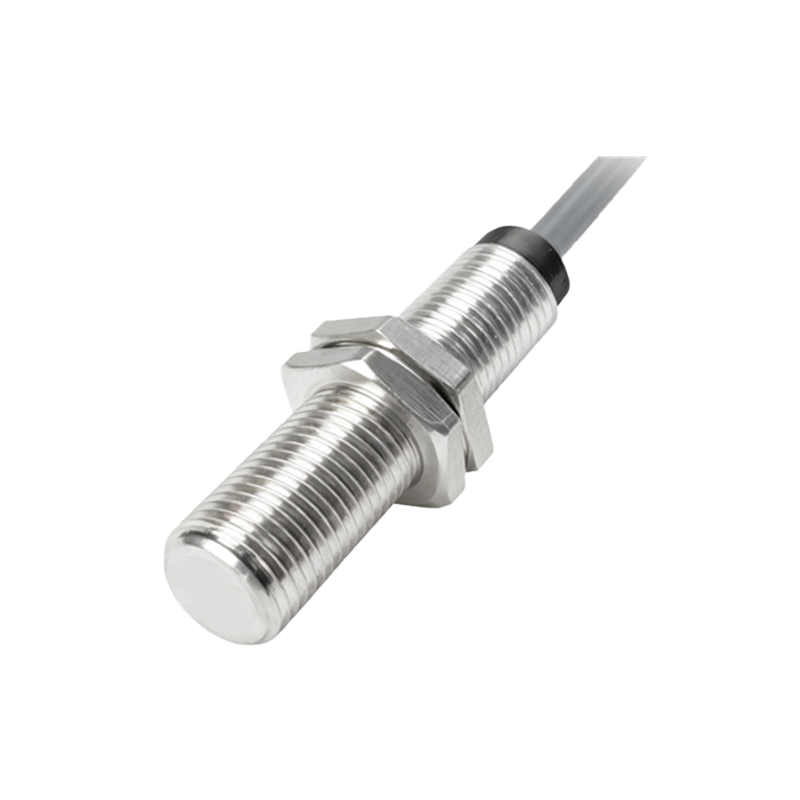
Several critical factors influence sensor performance. The target material's conductivity and permeability are paramount. High-conductivity materials like copper and aluminum induce strong eddy currents, resulting in a longer effective sensing range. Ferromagnetic materials like iron and steel, due to their high permeability, concentrate the magnetic field, which can also allow for good detection but may alter the sensing characteristics compared to non-ferrous metals. Target size and thickness are also crucial; the target should generally be larger than the sensor's sensing face and of sufficient thickness to support the full development of eddy currents (typically a standard minimum thickness is specified).
These sensors offer significant advantages. Their non-contact nature eliminates mechanical wear, ensuring a long operational life. They are capable of detecting only conductive metals, providing inherent material discrimination. They exhibit high switching frequency, allowing them to detect very fast-moving objects or measure rapid vibrations. Furthermore, they are largely unaffected by environmental factors like dust, oil, moisture, or non-conductive contaminants, making them ideal for harsh industrial environments found in machine tools, automotive assembly, and metal processing.
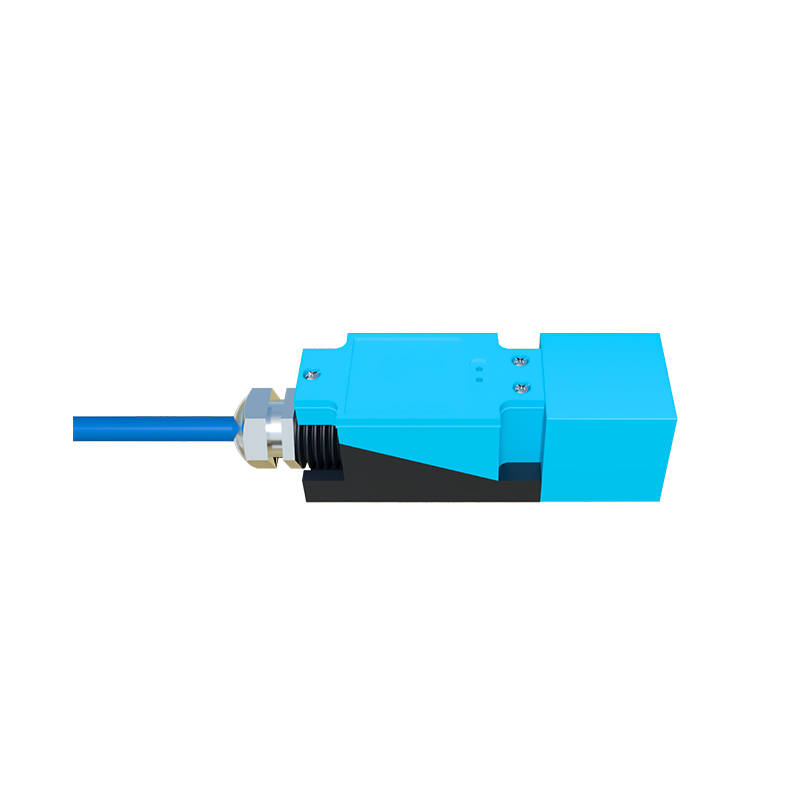
However, limitations exist. The sensing distance is relatively short compared to some other technologies like ultrasonic or capacitive sensors. Performance is inherently tied to the target material, requiring calibration or model selection for specific applications. Extreme temperatures can affect the oscillator's stability, though many industrial models are rated for wide temperature ranges.
In application, eddy current proximity sensors are extensively used for position detection, limit switching, vibration monitoring of shafts, and counting metal parts. Advanced versions are employed in precision displacement and thickness measurement systems, where the analog output signal is proportional to the distance to the target. Understanding the underlying electromagnetic principles allows engineers to select the correct sensor type, size, and mounting for optimal, reliable performance in demanding automation and control systems.