Proximity sensors have become indispensable components in modern industrial automation, offering non-contact detection of objects within a specific range. Their unique characteristics enable reliable operation in harsh environments where mechanical switches would fail. Unlike traditional limit switches, proximity sensors detect the presence or absence of an object without physical contact, thereby eliminating mechanical wear and tear. This fundamental advantage translates to significantly longer service life and reduced maintenance requirements, making them a cost-effective solution for high-cycle applications.
One of the most prominent features is their diverse sensing technologies. Inductive proximity sensors are the workhorses for detecting metallic objects, generating an electromagnetic field to sense ferrous and non-ferrous metals. Capacitive sensors, on the other hand, can detect a wider range of materials, including liquids, plastics, and wood, by measuring changes in capacitance. Ultrasonic sensors use sound waves to detect objects and measure distance, excelling in applications requiring precise positioning or level detection. Photoelectric sensors utilize light beams, offering the longest sensing ranges and the ability to detect virtually any material that interrupts the light path. Each technology offers distinct advantages in terms of sensing range, target material, environmental immunity, and response speed.
Robustness and reliability stand out as critical features. High-quality proximity sensors are typically housed in rugged, sealed enclosures rated for IP67, IP68, or IP69K, protecting them from dust, water, oils, and coolants commonly found in industrial settings. They are designed to withstand significant shock and vibration, ensuring stable performance in demanding applications like machine tools, material handling, and automotive assembly lines. Many models feature built-in protection against short-circuits, overload, and reverse polarity, safeguarding both the sensor and the control system from electrical faults.
The output configuration is another key aspect. Sensors are available with various output types, including DC NPN/PNP transistor outputs, analog current (4-20mA) or voltage (0-10V) outputs, and IO-Link digital communication. NPN (sinking) and PNP (sourcing) are standard digital outputs for simple on/off detection, seamlessly integrating with Programmable Logic Controllers (PLCs). Analog outputs provide continuous distance information, enabling precise positioning control. IO-Link, a growing standard, transforms a simple sensor into a smart device, enabling parameter setting, real-time diagnostics, and process data monitoring directly from the control cabinet.
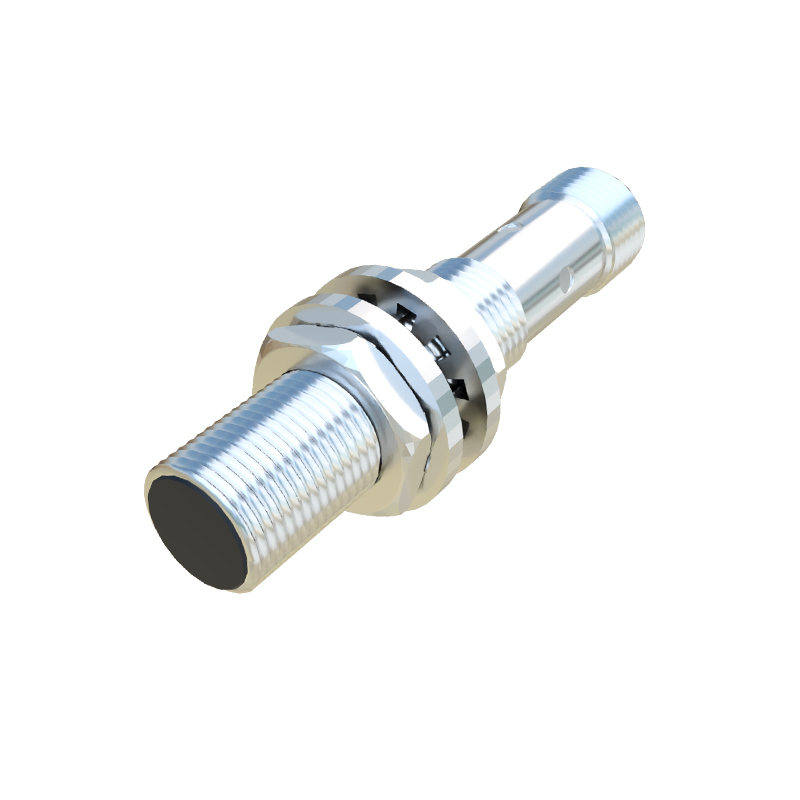
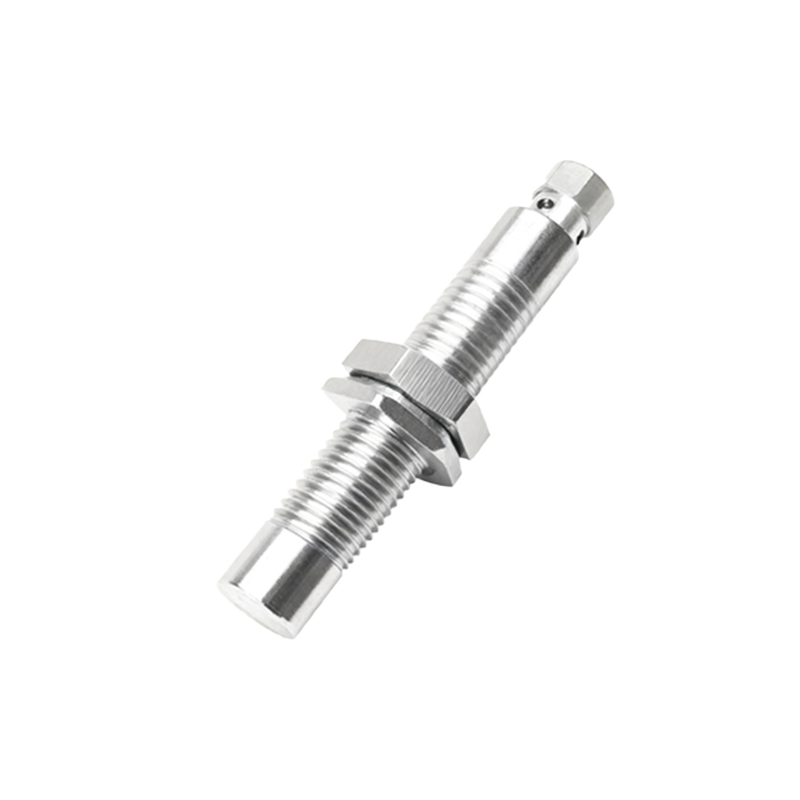
Installation and setup flexibility further enhance their utility. Many modern sensors feature compact, cylindrical or rectangular form factors that allow for easy integration into tight spaces. Advanced models come with innovative designs like factor-1 housings, where the sensing face is flush with the housing, enabling side-by-side mounting without mutual interference. LED status indicators provide clear visual feedback for operational state and diagnostics, simplifying commissioning and troubleshooting. The ability to operate across a wide voltage range (e.g., 10-30V DC) adds to their versatility across different electrical systems.
Application areas are vast and varied. In manufacturing, they are used for part presence verification, end-of-travel detection, and robotic guidance. In the automotive industry, they ensure precise positioning of components during assembly. Packaging machinery relies on them for counting, fill-level control, and label detection. Their non-contact nature makes them ideal for food and pharmaceutical applications where hygiene is paramount, as they can be easily cleaned and do not contaminate products. Furthermore, their fast response times, often in the microsecond range, are crucial for high-speed sorting and inspection tasks.
Looking forward, the integration of smart features is a defining trend. Intelligent proximity sensors with self-diagnostic capabilities can monitor their own health, predict potential failures, and communicate this data via industrial networks. This shift towards Industry 4.0 and predictive maintenance maximizes uptime and optimizes production processes. In conclusion, the combination of non-contact operation, technological diversity, environmental robustness, and evolving intelligence solidifies the proximity sensor's role as a fundamental enabler of efficient, reliable, and advanced industrial automation.