In the realm of industrial automation and precision manufacturing, metal laser sensors have emerged as indispensable tools for non-contact detection, measurement, and quality control. These advanced optoelectronic devices utilize focused laser beams to interact with metallic surfaces, providing unparalleled accuracy, speed, and reliability in harsh industrial environments. Unlike conventional proximity sensors, metal laser sensors excel in applications requiring high precision, long sensing ranges, and the ability to detect极小 targets or complex geometries.
The core operating principle of a metal laser sensor typically involves triangulation or time-of-flight (ToF) measurement. In triangulation-based sensors, a laser diode projects a visible or infrared spot onto the target metal surface. The reflected light is captured by a receiving lens at a specific angle and focused onto a position-sensitive detector (PSD) or a CMOS/CCD array. The displacement of the light spot on the detector is directly proportional to the distance or position of the target. This method offers exceptional resolution, often in the micron range, making it ideal for precise height profiling, thickness gauging, and vibration analysis on metal components. Time-of-flight sensors, on the other hand, measure the round-trip time of a pulsed laser beam to calculate distance. They are particularly suited for longer-range applications, such as large-scale part positioning or level monitoring in metal silos.
Key advantages of modern metal laser sensors include their high resistance to environmental interference. Industrial settings often present challenges like ambient light, dust, oil mist, electromagnetic noise, and temperature fluctuations. Premium metal laser sensors are housed in rugged, IP67-rated enclosures and incorporate sophisticated filtering algorithms and temperature compensation circuits to ensure stable performance. Furthermore, the coherent, monochromatic nature of laser light allows for precise focusing, enabling the detection of very small objects, sharp edges, or fine patterns on metal surfaces—tasks where diffuse reflection sensors would fail.
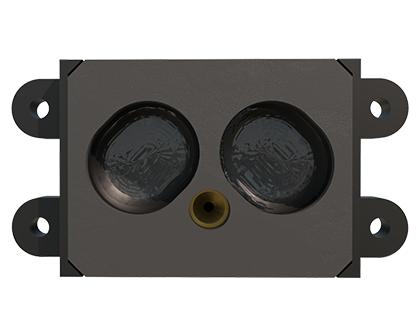
Application areas are vast and critical across multiple sectors. In automotive manufacturing, these sensors verify the presence and correct seating of engine components, measure piston protrusion, and inspect weld seam quality on chassis parts. In the metal fabrication and machining industry, they are deployed for real-time monitoring of sheet metal thickness, detection of burrs or defects on stamped parts, and precise positioning of robotic welding arms. The electronics industry relies on them for lead coplanarity inspection on metal connectors and solder paste height measurement on PCBs. Additionally, in logistics and packaging involving metal containers, laser sensors ensure precise fill-level control and label placement verification.
When selecting a metal laser sensor, engineers must consider several parameters. The sensing range and spot size are primary; a smaller spot allows for higher resolution but may require more precise alignment. The type of output (analog, digital, or IO-Link) must integrate with the existing control system. Response time is crucial for high-speed production lines, with modern sensors offering frequencies up to several kilohertz. The surface properties of the target metal also significantly influence performance. While laser sensors generally work well on most metals, highly reflective or mirror-like surfaces can cause saturation of the receiver, and dark, oxidized, or rough surfaces may absorb or scatter too much light. Many sensors feature adjustable sensitivity or specialized modes to handle such variations. Some advanced models even incorporate background suppression功能 to ignore objects beyond the set sensing distance.
Installation and maintenance best practices are straightforward but vital. Ensuring a stable mounting platform free from vibration, aligning the sensor perpendicular to the target surface under normal operating conditions, and keeping the lens clean from contaminants are essential steps. Regular calibration checks against a master reference are recommended to maintain long-term accuracy. The integration of these sensors with PLCs and industrial networks via protocols like PROFINET or EtherNet/IP has further simplified system setup and data acquisition, enabling predictive maintenance and seamless integration into Industry 4.0 frameworks.
In conclusion, metal laser sensors represent a critical technological advancement for modern industry. Their ability to deliver precise, non-contact measurements on metallic objects under demanding conditions enhances productivity, ensures stringent quality standards, and reduces machine downtime. As laser technology and embedded processing continue to evolve, future sensors will likely offer even greater intelligence, miniaturization, and connectivity, solidifying their role as the eyes of automated systems in the metalworking and broader industrial landscape.