Laser sensors have become indispensable tools in modern industrial automation, offering unparalleled precision and reliability for a wide range of applications, from distance measurement and object detection to quality control and alignment. Understanding their key performance indicators (KPIs) is crucial for engineers and system integrators to select the optimal sensor for a specific task and ensure the efficiency and accuracy of automated processes. This article delves into the essential technical specifications that define laser sensor performance.
One of the most fundamental KPIs is measurement range. This specifies the minimum and maximum distances over which the sensor can operate effectively. Selecting a sensor with an appropriate range is critical; a range too short may not cover the required working distance, while an excessively long range might compromise resolution and accuracy for close-up measurements. Closely related is the stand-off distance, which is the recommended operating distance from the sensor to the target for optimal performance.
Accuracy and repeatability are paramount for precision applications. Accuracy refers to the closeness of a measured value to the true value of the target, often expressed as a percentage of the full-scale reading or an absolute value (e.g., ±0.1 mm). Repeatability, sometimes called precision, indicates the sensor's ability to consistently produce the same measurement result under unchanged conditions. A high-accuracy, high-repeatability sensor is essential for tasks like dimensional gauging or precise positioning.
Resolution defines the smallest change in the measured distance that the sensor can detect. It determines the sensor's sensitivity to minute variations. For instance, in surface profiling or vibration analysis, a high resolution is necessary to capture fine details. The sampling rate or response time is another critical parameter, indicating how quickly the sensor can take and output measurements. High-speed production lines, such as those in electronics manufacturing, require sensors with very fast response times to keep pace with rapid processes.
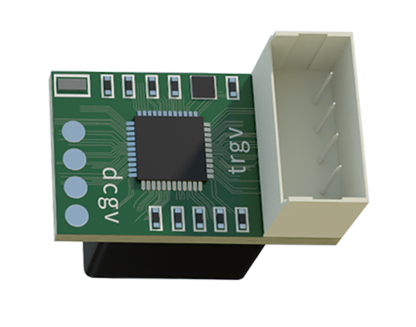
The laser spot size and beam shape significantly impact measurement capability. A small, focused spot allows for precise measurement on small features or edges. The beam shape (e.g., point, line, or cross-hair) must be chosen based on the application—a line laser is ideal for profiling, while a point sensor is suited for single-point distance measurement.
Environmental robustness is often encapsulated in KPIs like temperature stability and ingress protection (IP) rating. Industrial environments can be harsh, with temperature fluctuations, dust, moisture, and vibrations. A sensor with good temperature stability maintains its accuracy across a specified temperature range. The IP rating (e.g., IP67) certifies the level of protection against solid particles and liquids, ensuring reliable operation in challenging conditions.
Finally, output interfaces and compatibility are practical KPIs. Common outputs include analog (4-20 mA, 0-10 V), digital (RS-232, RS-485, USB), and industrial fieldbus protocols (EtherNet/IP, PROFINET, EtherCAT). The choice depends on the control system architecture. Some advanced sensors also offer integrated switching outputs or teach-in functions for simplified setup.
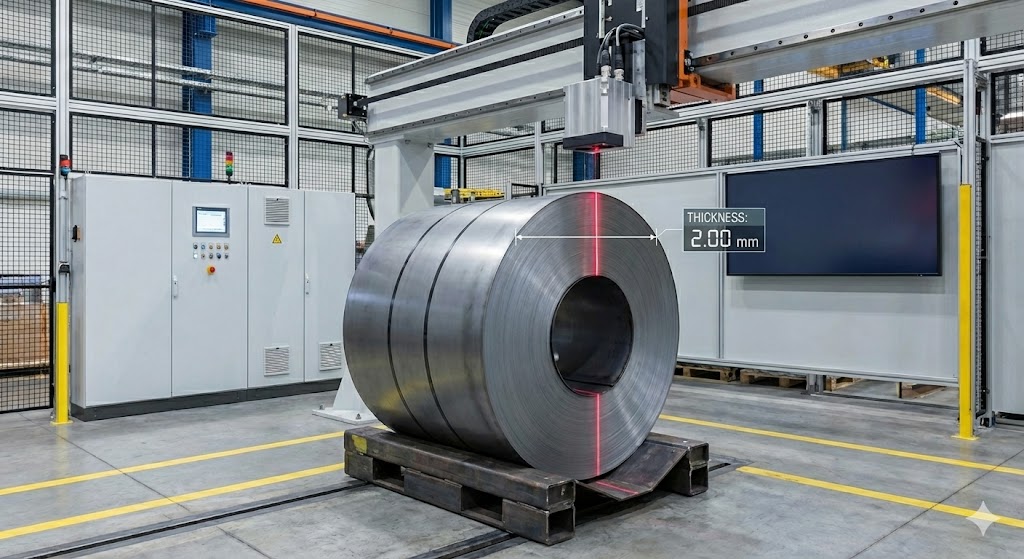
In conclusion, a thorough evaluation of laser sensor KPIs—measurement range, accuracy, repeatability, resolution, response time, spot characteristics, environmental ratings, and output options—is essential for successful integration. By matching these technical specifications to the specific demands of the application, engineers can leverage the full potential of laser sensing technology to enhance automation, improve quality, and boost productivity.