Laser focus sensors represent a critical advancement in precision measurement and automation technology. Operating on the principle of triangulation or confocal measurement, these devices project a laser beam onto a target surface. The reflected light is captured by a sensitive detector, and through sophisticated algorithms, the exact distance or position of the target is calculated with micron-level accuracy. Unlike traditional contact probes, laser focus sensors offer non-contact measurement, eliminating the risk of surface damage or mechanical wear. This makes them indispensable in industries where delicate materials or high-speed processes are involved.
The core technology behind these sensors can be broadly categorized into two types: triangulation-based and confocal chromatic. Triangulation sensors are highly effective for a wide range of materials and surface conditions, providing fast and reliable measurements for tasks like height profiling, thickness gauging, and vibration analysis. Confocal chromatic sensors, on the other hand, utilize a multi-wavelength light source. By analyzing the wavelength of the reflected light that is precisely in focus, they can achieve exceptional resolution and are capable of measuring on transparent, reflective, or highly textured surfaces where other optical methods fail. This versatility solves numerous challenging measurement problems in research and development as well as in harsh industrial environments.
In practical applications, laser focus sensors are the backbone of modern manufacturing. In semiconductor fabrication, they ensure precise wafer alignment and film thickness control. In automotive assembly, they verify component gap and flushness with incredible speed. The electronics industry relies on them for solder paste inspection and micro-component placement. Furthermore, they are pivotal in quality control processes, enabling 100% inline inspection for defects, warpage, or dimensional inaccuracies without slowing down production lines. Their integration with robotic systems and programmable logic controllers (PLCs) allows for fully automated, adaptive manufacturing cells.
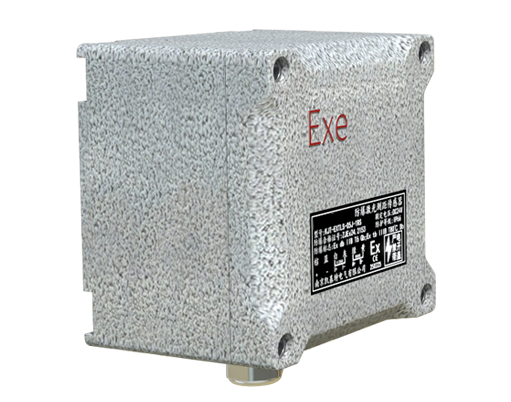
Selecting the appropriate laser focus sensor requires careful consideration of several key parameters. Measurement range, stand-off distance, and spot size are fundamental geometric factors. The required resolution and repeatability will dictate the sensor's grade and cost. Environmental factors such as ambient light, temperature fluctuations, and the presence of dust or coolant must be accounted for; many industrial-grade sensors feature robust housings and protective ratings (like IP67). The target material's properties—its color, reflectivity, transparency, and surface roughness—are perhaps the most critical. Manufacturers often provide application notes and testing services to ensure sensor compatibility. Finally, the output interface (analog, digital, or fieldbus) must seamlessly integrate with the existing data acquisition and control system.
Looking ahead, the evolution of laser focus sensors is closely tied to trends in Industry 4.0 and smart manufacturing. The next generation of sensors incorporates embedded intelligence, such as onboard data processing and condition monitoring, feeding directly into digital twin models. Advancements in miniaturization are enabling their use in increasingly confined spaces, while improvements in speed and multi-point measurement capabilities are opening new frontiers for real-time process control. For engineers and system integrators, mastering the capabilities and limitations of laser focus sensors is no longer a niche skill but a fundamental requirement for designing competitive, precise, and efficient automated systems. Their role in enabling higher quality, reducing waste, and driving innovation across the electrical and industrial engineering landscape continues to expand.
