In the realm of industrial automation and precision measurement, laser sensors have become indispensable tools, offering non-contact, high-accuracy detection capabilities. The performance and suitability of these sensors for specific applications are largely determined by their grade or class, which is a classification based on key technical parameters, safety standards, and intended use cases. Understanding these grades is crucial for engineers and system integrators to select the optimal sensor, ensuring both operational efficiency and compliance with international regulations.
The grading of laser sensors primarily revolves around output power, wavelength, beam characteristics, and most importantly, safety classifications as defined by international standards such as IEC 60825-1. The most common framework is the Laser Safety Class system (Class 1, Class 2, Class 3R, Class 3B, and Class 4). Class 1 lasers are considered inherently safe under all conditions of normal use, often because the laser is enclosed within a protective housing. These are frequently found in consumer electronics and some factory automation equipment where user access to the beam is impossible. Class 2 lasers are low-power visible lasers (typically 400-700 nm); the human blink reflex is considered sufficient protection against brief exposure. They are common in alignment tools and simple distance measurement devices.
For industrial sensing applications demanding higher power for longer ranges or challenging surfaces, Class 3R and Class 3B lasers are prevalent. Class 3R lasers have a power output slightly above the exemption limits for Class 1 and Class 2 but pose a low risk if handled briefly. Many industrial laser distance sensors and profile scanners fall into this category, requiring some caution labels but not elaborate safety systems in controlled environments. Class 3B lasers can cause immediate eye injury from direct or specular reflection. Their use necessitates strict safety measures, including controlled access, warning signs, and protective eyewear. They are employed in material processing guidance, high-precision metrology, and research.
The highest grade, Class 4, includes high-power lasers that can cause skin injuries and eye damage from diffuse reflections, and may also pose a fire hazard. These are predominantly used in manufacturing processes like cutting, welding, and marking, rather than pure sensing. However, some advanced LIDAR systems for autonomous vehicles or topographic surveying may utilize Class 4 laser sources, mandating rigorous engineering controls.
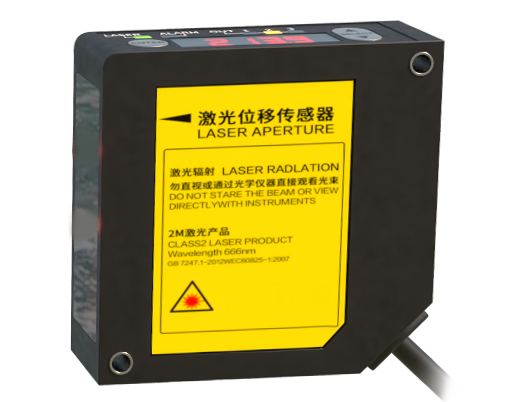
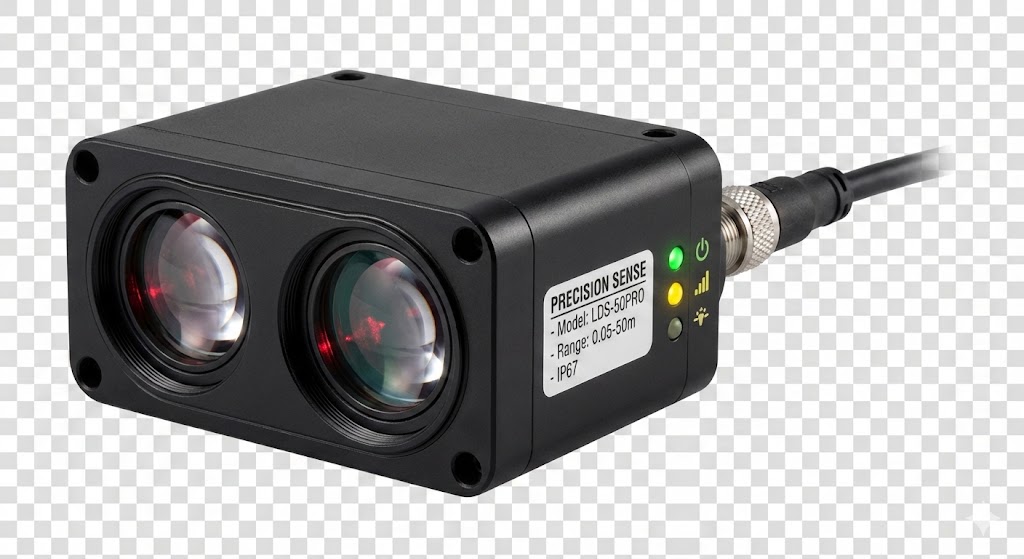
Beyond safety class, the "grade" of a laser sensor in an engineering context also refers to its performance tier based on specifications like accuracy, resolution, repeatability, sampling rate, and environmental robustness (IP rating, temperature range). A high-grade sensor for semiconductor inspection, for instance, might offer sub-micron accuracy, ultra-high sampling speeds, and immunity to ambient light interference, while a lower-grade sensor for basic object detection on a conveyor may prioritize cost-effectiveness and durability over extreme precision.
Factors such as the type of laser (e.g., red laser, blue laser, infrared laser diode) and the detection principle (triangulation, time-of-flight, confocal) further differentiate sensor capabilities. A high-grade triangulation sensor provides exceptional resolution for profile measurement, whereas a time-of-flight sensor is graded on its ability to measure long distances quickly but with slightly lower accuracy.
Selecting the wrong grade of laser sensor can lead to measurement errors, system downtime, safety violations, or unnecessary capital expenditure. Therefore, a thorough analysis of the application requirements—required measurement range, target surface properties, speed, environmental conditions, and necessary safety protocols—is the first step. Consulting the sensor's datasheet for its laser class, key performance indicators, and compliance certifications (CE, FDA, RoHS) is non-negotiable.
In conclusion, the concept of laser sensor grades encompasses a dual perspective: regulatory safety classification and performance-based engineering tiers. A Class 1 or Class 2 sensor is chosen for applications where user safety is paramount with minimal risk, while Class 3 sensors dominate industrial sensing where power and precision are needed. Simultaneously, the engineering grade dictates the sensor's ability to solve a specific technical challenge. As technology advances, the trend is towards smarter sensors that integrate higher performance into safer, more user-friendly packages, blurring the lines between grades while expanding the horizons of automated systems. Making an informed choice requires balancing these technical, safety, and economic factors to achieve reliable and compliant system integration.