In the realm of industrial automation and control systems, the reliable detection of objects is paramount. Among the diverse array of sensing technologies, variable flux proximity sensors stand out for their robustness, precision, and versatility in demanding environments. Unlike standard inductive proximity sensors that rely on the damping of an oscillator's amplitude by a metallic target, variable flux sensors operate on a fundamentally different principle, offering distinct advantages for specific applications.
The core operating principle of a variable flux proximity sensor is based on electromagnetic induction and the change in magnetic flux. The sensor contains a coil wound around a ferrite core, which generates a low-frequency alternating magnetic field. When a ferromagnetic or conductive target enters this field, it causes a change in the magnetic flux through the coil. This change in flux induces a voltage in a secondary sensing coil or alters the characteristics of the primary coil's circuit. This induced signal is then processed by the sensor's integrated electronics to generate a clean, binary output signal (typically PNP or NPN). The key distinction lies in its sensitivity to the rate of change of the magnetic field rather than just its presence or amplitude damping. This makes it particularly responsive to moving targets.
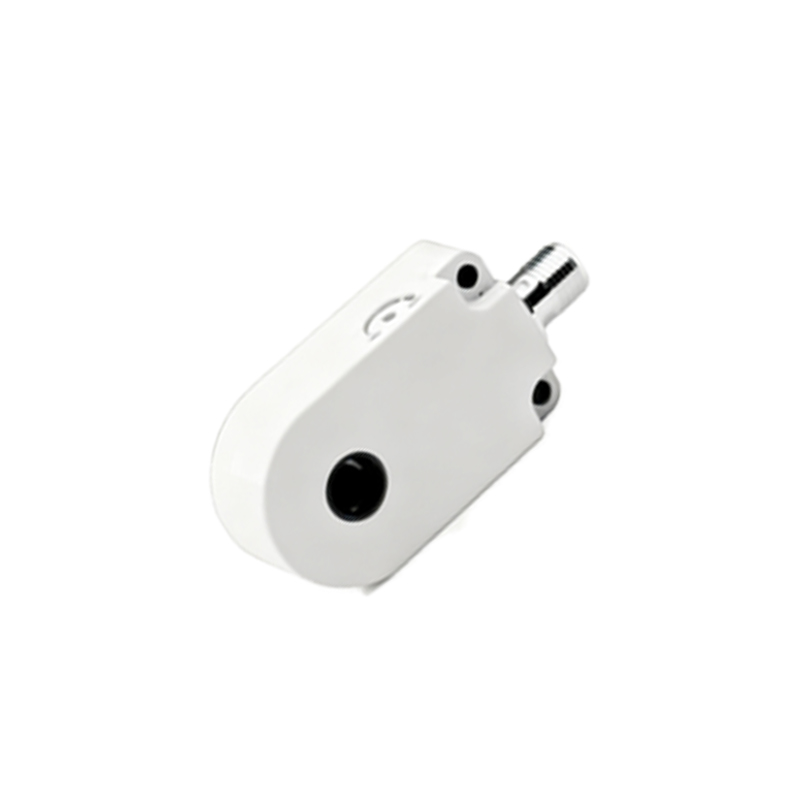
One of the most significant advantages of variable flux sensors is their exceptional sensing range relative to their physical size. They can detect objects at distances several times greater than conventional inductive sensors of comparable diameter. This extended range provides greater flexibility in machine design and installation. Furthermore, these sensors exhibit remarkable consistency in performance. They are largely unaffected by factors that plague other sensors, such as target material composition variations (e.g., different grades of steel), surface conditions (rust, paint, oil), and even the presence of non-ferrous metals like aluminum or copper, albeit at a reduced range. This consistency ensures reliable operation without the need for frequent recalibration.
The applications for variable flux proximity sensors are extensive across heavy industry and precision automation. They are indispensable in metal fabrication for detecting sheets, blanks, or finished parts on conveyors, regardless of surface scale or coating. In the automotive industry, they are used for precise position sensing of pistons, crankshafts, and other critical rotating or reciprocating components. Their ability to function reliably in the presence of heavy contaminants like metal chips, coolants, and dirt makes them ideal for machine tool monitoring, saw blade run-out detection, and gear tooth sensing. They are also commonly employed in speed monitoring systems, replacing traditional mechanical encoders in harsh environments.
When selecting a variable flux proximity sensor for a project, several critical criteria must be evaluated. First, the required sensing distance must be carefully considered, factoring in a safety margin. The sensor's data sheet will specify a nominal sensing distance (Sn) under ideal conditions; real-world installation should use 60-80% of this value. Second, the target material and size are crucial. While ferrous metals provide the maximum range, the sensor's response to non-ferrous targets should be verified if applicable. The target must also be large enough to adequately influence the magnetic field. Third, environmental conditions dictate the housing material and protection rating. Stainless steel housings with IP67, IP68, or IP69K ratings are essential for washdown areas, machining centers, or outdoor use. Fourth, the electrical characteristics must match the control system: the output type (e.g., 3-wire DC, 2-wire DC, AC/DC), voltage range, current rating, and output state (normally open or normally closed). Finally, physical form factors—such as cylindrical barrels (M8, M12, M18, M30), rectangular shapes, or specialized designs—must suit the mechanical constraints of the installation.
Installation and wiring practices are vital for optimal performance. Maintaining the recommended clearance around the sensor's active face is necessary to prevent interference from surrounding metal (the "flush-mountable" characteristic is common but not universal). Using shielded cables in electrically noisy environments and ensuring proper grounding can prevent erratic switching. Regular maintenance, though minimal, should include periodic checks for physical damage, buildup of ferrous debris on the sensing face (which can reduce effective range), and verification of the output signal under operational conditions.
In conclusion, variable flux proximity sensors represent a sophisticated and highly reliable solution for object detection in challenging industrial settings. Their unique operating principle grants them superior range, material independence, and environmental resilience compared to standard inductive sensors. By understanding their fundamentals, advantages, and proper selection methodology, engineers and technicians can effectively leverage this technology to enhance the reliability, safety, and efficiency of automated systems. As industrial processes grow more complex, the role of precise and durable sensing components like the variable flux proximity sensor will only become more critical.