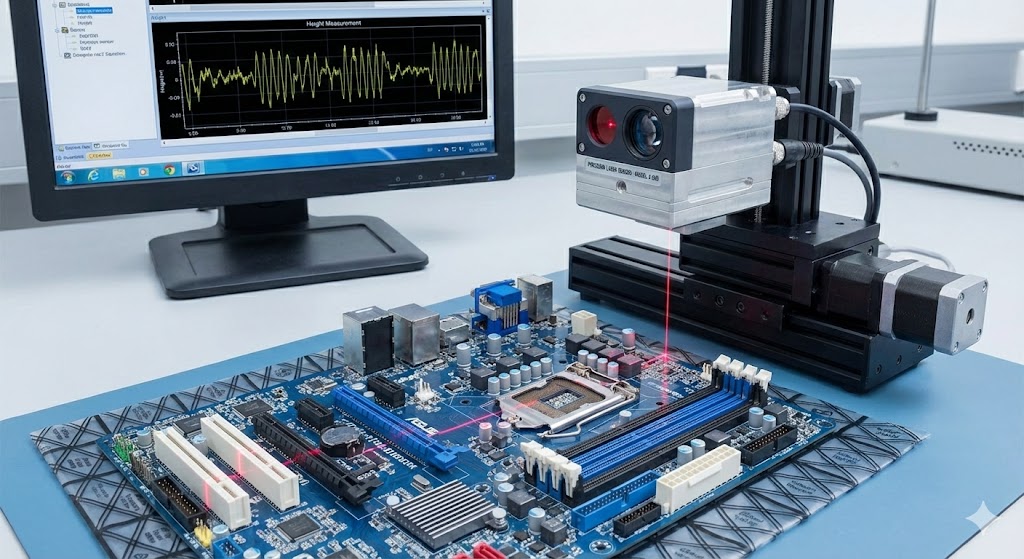
Laser sensors have become indispensable tools in modern industrial automation, offering unparalleled precision, speed, and reliability. These devices operate on the principle of emitting a focused beam of light—typically from a laser diode—and analyzing the reflected signal to measure distance, detect presence, or profile objects. The core technology hinges on methods like time-of-flight (ToF), triangulation, and confocal measurement, each suited to specific accuracy and range requirements. In manufacturing, laser sensors are the backbone of quality control, performing non-contact inspections of dimensions, surface defects, and alignment with micron-level accuracy. They enable robotic arms to navigate and handle objects with exact positioning, crucial in automotive assembly and electronics production. Beyond the factory floor, laser sensors enhance safety systems through light curtains and area scanning, protecting personnel from machinery. They also play a vital role in logistics, automating warehouse inventory management and guiding autonomous vehicles. The evolution towards smarter Industry 4.0 ecosystems sees laser sensors integrated with IoT platforms, providing real-time data analytics for predictive maintenance and process optimization. However, selecting the right sensor involves balancing factors like measurement range, environmental robustness against dust or vibrations, and output compatibility. As technology advances, trends like miniaturization, higher resolution, and reduced power consumption are expanding applications into fields like medical devices and aerospace. Ultimately, mastering laser sensor capabilities allows engineers to drive efficiency, reduce waste, and innovate in automation, solidifying their role as a cornerstone of industrial innovation.