Focus laser sensors represent a pivotal advancement in industrial measurement technology, offering unparalleled accuracy, speed, and reliability. These non-contact sensors operate by emitting a focused laser beam onto a target surface and analyzing the reflected light to determine precise distance, displacement, height, or thickness. Unlike traditional contact probes or diffuse reflection sensors, the tightly collimated beam of a focus laser sensor minimizes spot size, enabling high-resolution measurements even on small, complex, or highly reflective surfaces. This makes them indispensable in applications demanding micron-level precision.
The core operating principle typically involves triangulation or confocal measurement methods. In triangulation-based sensors, the position of the reflected light spot on a dedicated detector changes with the target's distance, allowing for calculation. Confocal sensors, often using chromatic aberration principles, provide even higher accuracy for transparent or multi-layered materials. Key performance metrics include measuring range, resolution, linearity, and sampling speed. Modern focus laser sensors can achieve sub-micron resolutions and sampling rates in the kilohertz range, facilitating real-time process control.
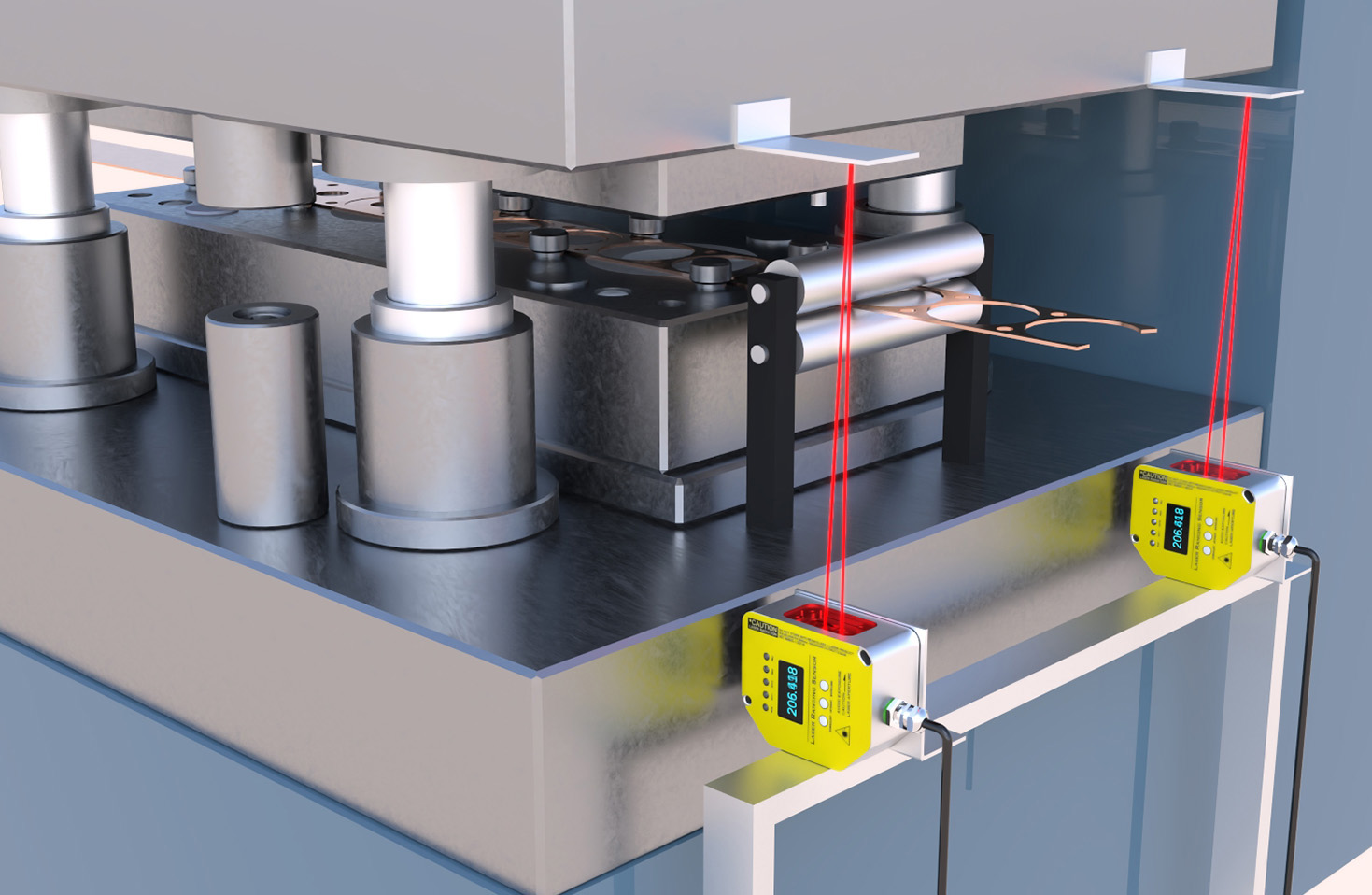
Industrial applications are vast and critical. In electronics manufacturing, these sensors inspect solder paste height, component coplanarity, and wafer thickness. Automotive manufacturers rely on them for gap and flush measurement between body panels, brake disc thickness monitoring, and fuel injector nozzle inspection. Within precision machining, they verify part dimensions, tool wear, and surface profiles. Furthermore, they play a vital role in the burgeoning field of additive manufacturing (3D printing), where they scan layer heights and surface topography to ensure print quality and consistency.
Selecting the right focus laser sensor requires careful consideration of the application environment. Factors such as target material (color, reflectivity, transparency), surface texture, required stand-off distance, ambient temperature, and potential exposure to dust or coolant must be evaluated. For instance, a sensor with automatic exposure control or multiple operating modes may be necessary for highly reflective or dark surfaces. Integration is another crucial aspect; most modern sensors offer digital interfaces (Ethernet/IP, PROFINET, EtherCAT) and analog outputs for seamless connection to PLCs, PCs, or robotic controllers, enabling automated feedback loops.
The benefits over alternative technologies are significant. Non-contact measurement eliminates mechanical wear, avoids deformation of delicate parts, and allows for high-speed inspection impossible with tactile methods. Focused laser sensors are also largely immune to ambient light interference and can measure challenging surfaces that confound vision systems. However, limitations exist. Transparent materials like glass or clear films can pose challenges unless using specialized confocal models. Extremely rough or absorptive surfaces may scatter the beam excessively. Proper installation, alignment, and periodic calibration are essential to maintain stated accuracy.

Future trends point toward even greater miniaturization, higher speeds, and enhanced intelligence. The integration of onboard processors for edge computing allows sensors to perform preliminary data analysis, reducing the load on central controllers. Advances in blue laser technology offer improved performance on organic materials like rubber or dark plastics. Additionally, the synergy with Industrial IoT (IIoT) platforms enables predictive maintenance, where sensor data trends can forecast calibration needs or potential failures, maximizing uptime.
In conclusion, focus laser sensors are a cornerstone technology for modern industrial automation and quality assurance. Their ability to deliver precise, repeatable, and rapid non-contact measurements solves complex inspection challenges across diverse sectors. As manufacturing tolerances tighten and smart factory initiatives accelerate, the role of these sophisticated sensors will only expand, driving efficiency, reducing waste, and ensuring product excellence in an increasingly competitive global market. Engineers and system integrators must stay abreast of these developments to leverage the full potential of focus laser sensing technology.