In the realm of industrial automation and control systems, sensors are the fundamental components that bridge the physical and digital worlds. Among the diverse sensor families, contact sensors and proximity sensors are two pivotal categories, each serving distinct operational principles and application niches. A clear understanding of their differences is crucial for engineers tasked with selecting the optimal sensing solution for reliability, efficiency, and cost-effectiveness.
Fundamental Operating Principle
The core distinction lies in the very nature of detection. A contact sensor, as the name implies, requires physical touch or mechanical contact with the target object to initiate a signal change. Common examples include limit switches, tactile sensors, and micro-switches. These devices typically have an actuator (lever, plunger, roller) that is physically displaced by the target, thereby closing or opening an electrical circuit internally. The sensing action is inherently mechanical-electrical.
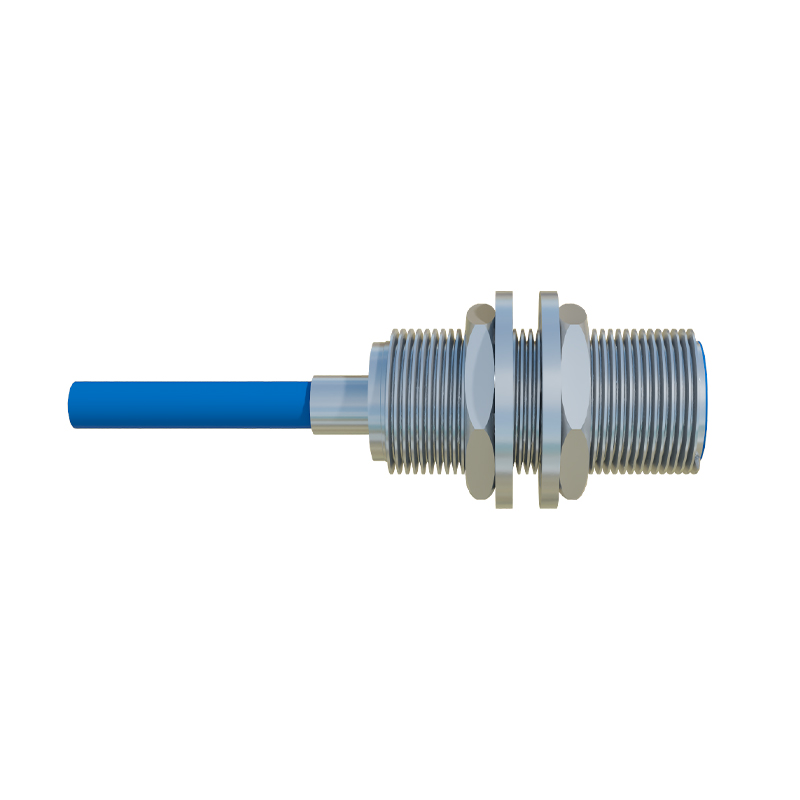
In stark contrast, a proximity sensor detects the presence or absence of a target object without any physical contact. It achieves this by emitting a field or beam (electromagnetic, electrostatic, or optical) and monitoring changes in that field caused by the approaching target. Inductive proximity sensors generate an oscillating electromagnetic field to detect metallic objects. Capacitive sensors create an electrostatic field to detect both metallic and non-metallic materials. Photoelectric sensors use light beams. Ultrasonic sensors employ sound waves. The common thread is the non-contact, wear-free operation.
Key Performance and Application Differences
The operational principle leads to several critical practical differences:
1. Wear and Maintenance: Contact sensors involve moving parts that physically impact the target. This mechanical action leads to eventual wear and tear of both the sensor actuator and, in some cases, the target object itself. This necessitates periodic maintenance and replacement. Proximity sensors, having no moving parts and requiring no contact, are virtually wear-free in standard environments, offering significantly higher longevity and reduced maintenance.

2. Response Speed and Frequency: The mechanical movement in contact switches limits their operating speed. There is physical travel time for the actuator and debounce time for the electrical contacts. Proximity sensors, being solid-state devices, can respond at much higher frequencies, making them suitable for high-speed counting, sorting, or positioning applications where contact-based systems would be too slow or would wear out rapidly.
3. Object Sensitivity and Material: Contact sensors are generally insensitive to the material of the target; they react to its physical presence and sufficient force. A proximity sensor's effectiveness is highly dependent on the target material and the sensor type. An inductive sensor will not detect plastic, while a capacitive sensor might. The sensing distance (rated operating distance) is a precise specification for proximity sensors and varies with material type, size, and shape.
4. Environmental Considerations: Contact sensors can be robust against certain environmental factors like dust, spray, or strong electromagnetic interference (EMI), depending on their enclosure. However, they can be susceptible to failure from jamming due to debris. Proximity sensors can be affected by environmental conditions: inductive sensors by adjacent metal, capacitive sensors by humidity or contaminant buildup, and optical sensors by fog, dust, or ambient light. Their non-contact nature, however, makes them ideal for sterile environments or for sensing fragile objects that could be damaged by touch.
5. Output and Wiring: Both types commonly provide digital (ON/OFF) outputs. Modern versions of both can offer analog or IO-Link capabilities for more data. Wiring is often similar, though proximity sensors are typically 3-wire (DC) or 2-wire (AC/DC) devices, while basic contact switches are simple 2-wire devices acting as a direct switch in a circuit.
Typical Application Scenarios
Contact Sensors (Limit Switches): Ideal for position verification where positive mechanical actuation is required or desired as a safety backup. Examples include end-of-travel limits on linear actuators, door-open/close status detection on heavy machinery cabinets, or as manual emergency stop buttons. They provide a definitive, physically-guaranteed state.
Proximity Sensors: The go-to choice for high-speed, non-contact detection. Used extensively for object counting on conveyor belts, precise positioning of metal parts in CNC machines, detecting fill levels in non-metallic containers (capacitive), jam detection in packaging machinery, and presence detection of components on pallets. They enable automation in clean, high-cycle, or delicate processes.
Selection Guideline for Engineers
The choice is not merely technical but also economic. For an application, ask:
Is physical contact with the target acceptable or problematic?
What is the required operating speed and lifecycle?
What is the composition of the target material?
What are the environmental conditions (dust, moisture, temperature, EMI)?
What