In the rapidly evolving landscape of electronic warfare (EW), laser countermeasure sensors have emerged as pivotal components for both defensive and offensive operations. These sophisticated systems are designed to detect, analyze, and neutralize threats posed by laser-guided weapons, rangefinders, and target designators. Operating across various spectral bands, primarily in the infrared (IR) and visible spectra, these sensors provide critical capabilities for military platforms, including aircraft, naval vessels, and ground vehicles.
The core functionality of laser warning systems (LWS) hinges on their ability to identify laser emissions with high precision. Upon detection, the sensor analyzes parameters such as wavelength, pulse repetition frequency (PRF), and direction of arrival (DOA). This data is processed in real-time to classify the threat type—whether it is a laser-guided missile, a targeting system, or surveillance equipment. Advanced systems integrate with onboard countermeasure dispensers, such as flare launchers or directed infrared countermeasures (DIRCM), to automatically deploy responses that disrupt or deceive incoming threats.
Technological advancements have significantly enhanced sensor performance. Modern laser countermeasure sensors employ wide-angle detection arrays and high-sensitivity photodetectors, enabling 360-degree coverage with minimal blind spots. Signal processing algorithms, often leveraging artificial intelligence (AI) and machine learning (ML), improve discrimination between hostile lasers and ambient optical noise, such as sunlight or civilian laser sources. This reduces false alarm rates and increases system reliability in complex environments.

Integration with multi-spectral sensor suites is another key trend. By combining laser warning data with inputs from radar warning receivers (RWR) and missile approach warners (MAW), platforms achieve a comprehensive situational awareness picture. This sensor fusion allows for coordinated countermeasure strategies, optimizing resource allocation and increasing survivability. For instance, upon detecting a laser-guided threat, the system might initiate evasive maneuvers while simultaneously deploying infrared decoys.
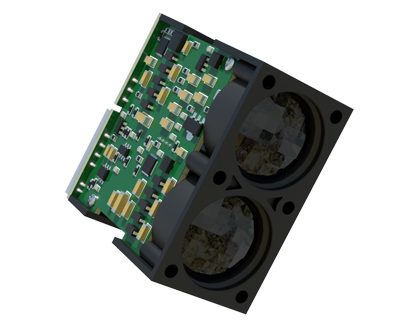
The development of compact, low-power laser sensors has expanded their applicability to smaller unmanned aerial vehicles (UAVs) and dismounted soldiers. These portable systems offer lightweight, ruggedized designs capable of operating in harsh conditions. Furthermore, advancements in quantum sensing technologies promise future enhancements in detection range and sensitivity, potentially revolutionizing laser countermeasure capabilities.
Challenges remain, including the need to counter emerging threats like low-power lasers and multi-spectral stealth technologies. Adversaries are continuously developing methods to obscure laser signatures or employ novel guidance techniques. Consequently, research and development efforts focus on adaptive sensors that can learn and evolve in response to new threat profiles. International collaborations and standardized testing protocols are also crucial to ensure interoperability and effectiveness across allied forces.
In conclusion, laser countermeasure sensors represent a critical frontier in electronic warfare, providing essential protection against laser-based threats. As technologies advance, these systems will become more intelligent, integrated, and indispensable for modern military operations, ensuring platform survivability and mission success in contested environments.