Metal proximity sensors are essential components in modern industrial automation, security systems, and consumer electronics. These devices detect the presence or absence of metallic objects without physical contact, relying on changes in an electromagnetic field. The core of such a system is its electronic circuit, which typically operates on the principle of electromagnetic induction or eddy current generation.
A basic inductive proximity sensor circuit consists of an oscillator, a demodulator, a trigger, and an output stage. The oscillator generates a high-frequency electromagnetic field from a coil. When a metal object enters this field, eddy currents are induced on the metal's surface. These currents draw energy from the oscillator, causing a reduction in its amplitude. The demodulator converts this amplitude change into a DC voltage signal. This signal is then compared to a predefined threshold by the trigger circuit—often a Schmitt trigger—to produce a clean, digital output. Finally, the output stage, which may include a transistor or relay, switches the load accordingly.
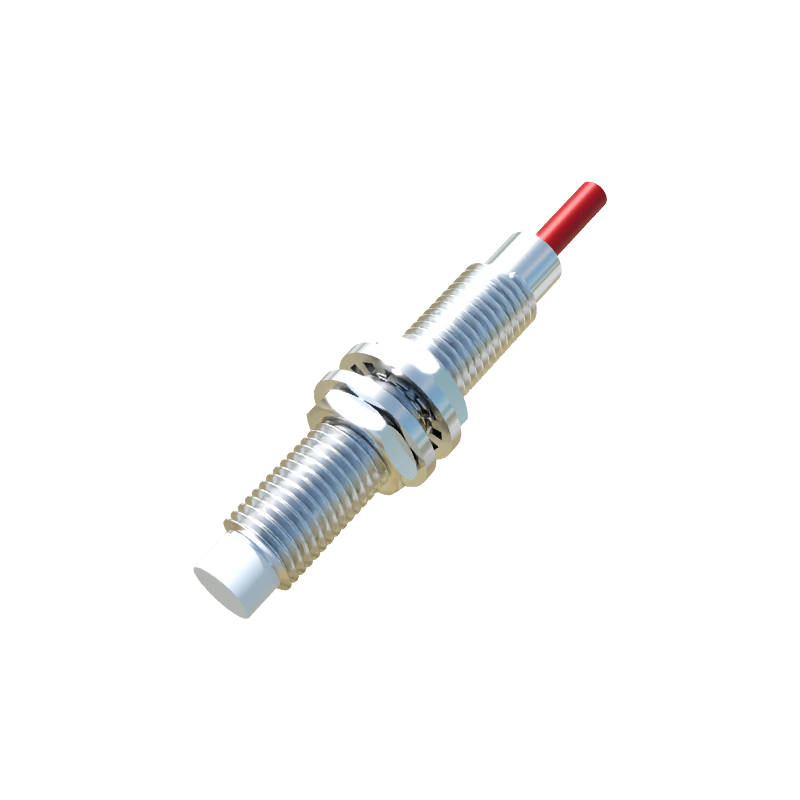
Design considerations for these circuits are critical for reliable operation. The oscillator frequency, typically ranging from 100 kHz to 1 MHz, influences detection range and sensitivity to different metals. Ferrous metals like iron generally cause a larger amplitude drop and are detectable at greater distances compared to non-ferrous metals such as aluminum or copper. The coil design, including its size, shape, and number of turns, directly affects the sensor's sensing range and electromagnetic field shape. Shielding is another vital aspect; shielded sensors have a focused frontal sensing field, making them suitable for flush mounting in metal, while unshielded types offer a longer range but require non-metallic surroundings.
Power supply stability is paramount. Voltage regulators or filtering capacitors are commonly integrated to mitigate noise from industrial environments, which can cause false triggering. Many circuits also incorporate hysteresis via the trigger stage to prevent output oscillation when the target is at the exact detection threshold. For advanced functionality, some designs include microcontrollers for programmability, allowing adjustments to sensitivity, output delay, or the implementation of teach-in modes for setting detection thresholds.
The applications of metal proximity sensor circuits are vast. In manufacturing, they count products on conveyor belts, detect machine part positions, and ensure robotic end-effectors are correctly aligned. Automotive systems use them for gear position sensing, brake wear monitoring, and non-contact tachometers. In security, they form the basis of metal detectors for weapons screening. Daily life examples include automatic doors, touchless faucets with metal activation, and smartphone features like automatic screen turn-off when placed near the ear during a call.
When implementing these circuits, engineers must balance factors like detection range, response time, environmental robustness (against temperature, humidity, and chemicals), and power consumption. For instance, a sensor in a high-speed packaging line requires a fast response time measured in milliseconds, while a battery-powered device prioritizes low quiescent current. Modern trends lean towards miniaturization, integration with IoT for predictive maintenance, and the development of sensors capable of discriminating between different metal types.
Troubleshooting common issues often involves checking the oscillator activity with an oscilloscope, verifying power integrity, and ensuring the target metal is within the specified size and material characteristics. Interference from adjacent sensors or large metal structures can be resolved by proper spacing, shielding, or frequency selection. Understanding the underlying circuit principles enables tailored solutions for specific challenges, making metal proximity sensors a versatile and indispensable tool in electronic design and automation.