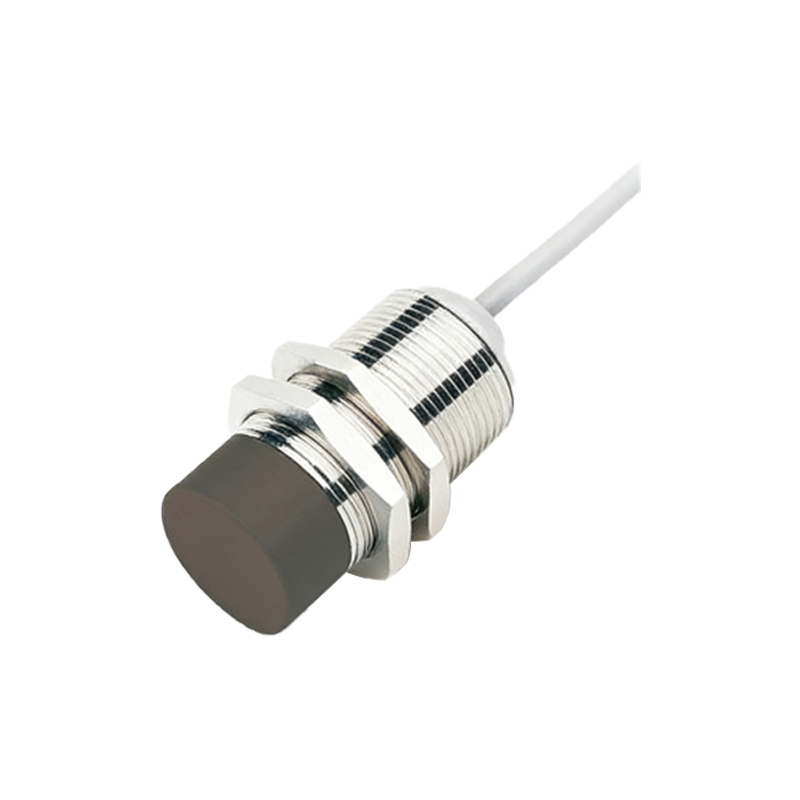
In the realm of modern engineering and automation, precise measurement of rotational or linear speed is paramount. Among the various technologies enabling this, the Hall effect speed sensor stands out for its reliability, durability, and versatility. This solid-state device has become a cornerstone in numerous industries, from automotive to industrial manufacturing, fundamentally changing how motion is monitored and controlled.
The operational principle of a Hall effect speed sensor is rooted in a discovery made by Edwin Hall in 1879. The Hall effect describes the generation of a voltage difference—the Hall voltage—across an electrical conductor when a magnetic field is applied perpendicular to the current flow. A Hall effect speed sensor leverages this phenomenon. The core component is a semiconductor chip, often made of materials like gallium arsenide or indium antimonide. This chip is integrated into a circuit. When a ferromagnetic target, such as a gear tooth, a vane, or a ring magnet with alternating poles, passes near the sensor, it disrupts the magnetic field from a permanent magnet also housed within the sensor assembly. This changing magnetic field causes a proportional variation in the Hall voltage generated by the chip. The sensor's electronics then condition this analog signal, typically converting it into a clean, digital square-wave output. The frequency of this output pulse train is directly proportional to the speed of the target. By counting these pulses over a known time interval, the rotational speed (RPM) or linear velocity can be accurately calculated.
The advantages of Hall effect speed sensors over other technologies, such as inductive or optical sensors, are significant. Firstly, they are true zero-speed sensors. Unlike variable reluctance sensors that require motion to generate a signal, Hall sensors can detect the presence of a magnetic field even when the target is stationary. This capability is crucial for applications like crankshaft positioning in engines, where knowing the exact position at startup is essential. Secondly, they are largely immune to environmental contaminants like oil, dirt, dust, and moisture. Since the sensing element is sealed within a package, it performs reliably in harsh conditions where optical sensors would fail. Thirdly, they offer excellent accuracy and repeatability across a wide temperature range. Their digital output is less susceptible to electrical noise compared to the small analog signals from some inductive sensors, leading to more robust system performance. Furthermore, they have no moving parts, resulting in virtually infinite lifespan and exceptional durability against vibration and shock.
The applications of Hall effect speed sensors are vast and critical. In the automotive industry, they are ubiquitous. They measure wheel speed for Anti-lock Braking Systems (ABS) and Traction Control Systems (TCS), monitor crankshaft and camshaft position and speed for engine management, and track transmission output shaft speed. In industrial automation, they are used on conveyor belts to monitor line speed, on motors and turbines for RPM feedback, and in CNC machines for spindle speed control. They are also found in consumer appliances like washing machines to control drum speed, in fitness equipment for measuring cadence, and in aerospace systems for monitoring turbine and propeller speeds.
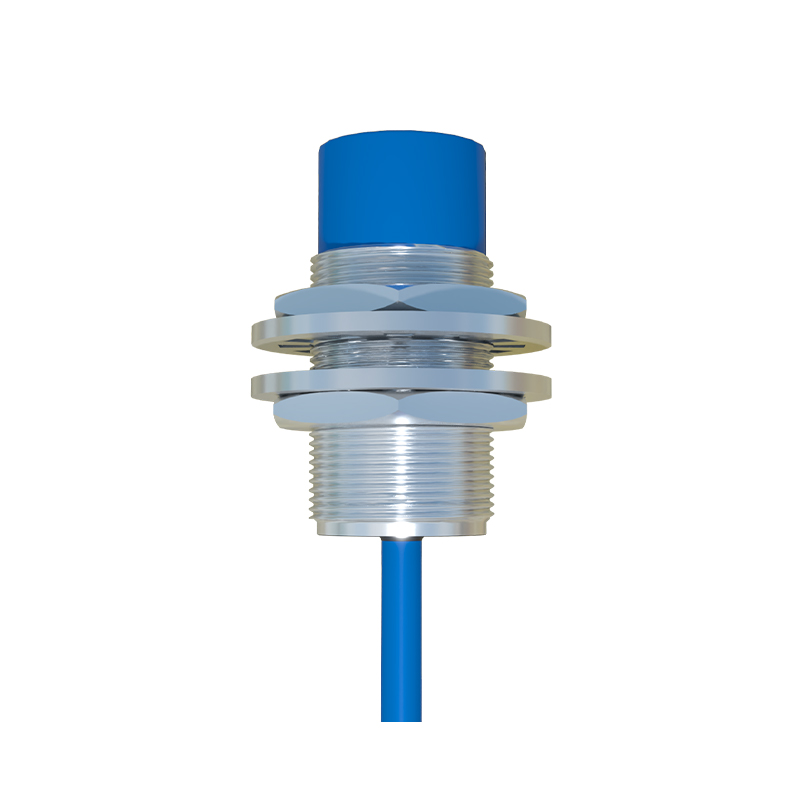
When selecting and implementing a Hall effect speed sensor, several factors must be considered. The sensing distance, or air gap between the sensor and the target, is crucial and specified by the manufacturer. The target geometry—the size and shape of gear teeth or magnetic poles—directly affects the signal strength and quality. Engineers must also consider the electrical requirements: supply voltage, output type (current sinking or sourcing), and signal compatibility with the control unit. Proper installation is key; the sensor must be aligned correctly to ensure consistent magnetic field interruption. Shielding may be necessary in environments with high electromagnetic interference.
Looking forward, the evolution of Hall effect speed sensors continues. Integration is a major trend, with sensors now combining the Hall element, signal conditioning, and protection circuits into a single, compact Integrated Circuit (IC). This reduces size, cost, and complexity for end-users. The development of more sensitive materials and advanced signal processing algorithms is pushing the limits of resolution and accuracy, enabling their use in even more precise applications. As industries push for greater efficiency, safety, and connectivity, the humble Hall effect speed sensor will undoubtedly remain an indispensable component in the intelligent systems of tomorrow, quietly and reliably translating physical motion into the digital language of control.