In the realm of industrial automation, where precision, reliability, and speed are non-negotiable, photoelectric limit switches stand as a cornerstone technology. These sophisticated sensors, often simply called photoelectric sensors, perform the critical function of detecting the presence, absence, or position of an object without any physical contact. Their operation is elegantly simple yet profoundly effective, harnessing the properties of light to provide accurate feedback for control systems.
At their core, photoelectric switches consist of two fundamental components: an emitter and a receiver. The emitter projects a beam of light—typically infrared, visible red, or laser—towards the receiver. The receiver continuously monitors this light beam. The detection principle hinges on the interruption or reflection of this beam. When an object enters the sensing field, it alters the light's path, either by blocking it (in through-beam mode) or reflecting it back to the receiver (in retro-reflective or diffuse modes). This change is instantly converted into an electrical signal, triggering a switch action that can start, stop, or alter a machine's operation.
The versatility of photoelectric sensors is largely defined by their three primary operating modes. Through-beam sensors, featuring separate emitter and receiver units, offer the longest sensing ranges and highest reliability, as they are less susceptible to object color or surface finish. They are ideal for precise positioning on assembly lines or detecting small objects. Retro-reflective models combine the emitter and receiver in a single housing, using a reflector to bounce the beam back. This design provides a good balance of range and convenience, commonly used in packaging and material handling. Finally, diffuse or proximity sensors have both elements in one unit and detect objects by the light reflected directly from the target's surface. While offering the easiest installation, their range is shorter and performance can vary with the object's color and texture.
The advantages of choosing photoelectric limit switches over mechanical alternatives are substantial. The absence of physical contact means no wear and tear on the sensor from the target object, leading to exceptionally long service life and minimal maintenance. They can detect virtually any material—metal, plastic, glass, wood, or liquid—as long as it affects the light beam. Furthermore, their response time is remarkably fast, often in microseconds, enabling high-speed counting, sorting, and positioning tasks that mechanical switches could never achieve. They are also immune to issues like contact bounce, a common problem with mechanical switches.
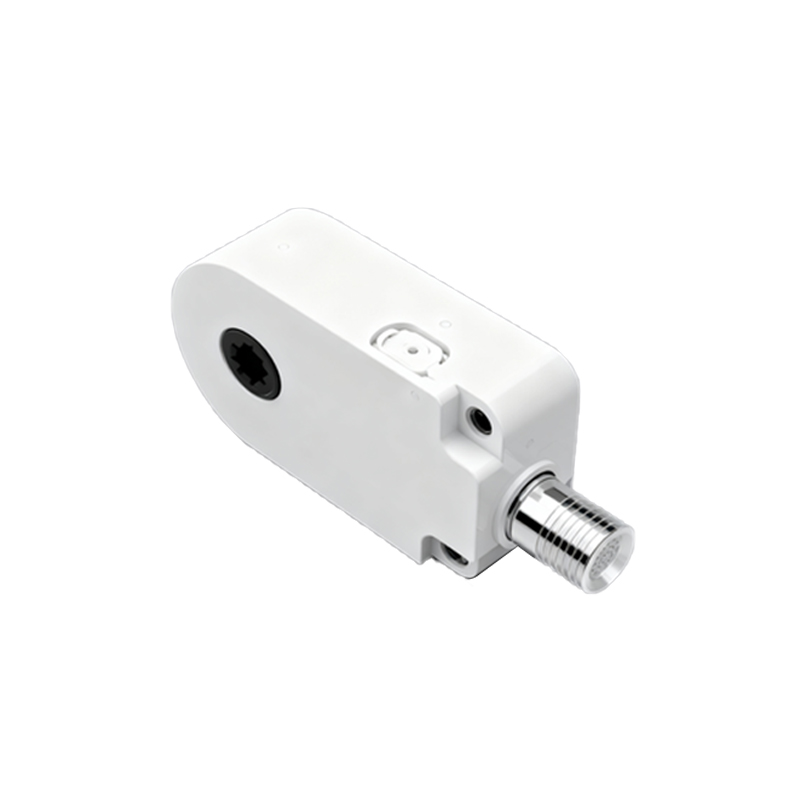
Modern photoelectric switches are engineered for resilience. Housings are typically constructed from rugged materials like nickel-plated brass or stainless steel, with ingress protection (IP) ratings such as IP67 or IP69K ensuring reliable operation in harsh environments filled with dust, moisture, oils, and vibrations. Advanced models incorporate features like background suppression, which allows them to ignore objects beyond a set distance, and teach-in functionality for easy configuration. The output signals are compatible with all standard industrial control systems, including PLCs (Programmable Logic Controllers).
The applications are virtually limitless across manufacturing and logistics. In automotive plants, they ensure robotic welders are in the correct position. On bottling lines, they count containers and verify fill levels. In warehouse automation, they detect parcels on conveyors and control sorting gates. They safeguard operators by acting as safety curtains around dangerous machinery. From monitoring paper breaks in printing presses to aligning silicon wafers in semiconductor fabrication, photoelectric limit switches provide the essential "eyes" for automated systems.
Selecting the right photoelectric switch requires careful consideration of several factors. The sensing distance needed, the size and material of the target object, the required response speed, and the environmental conditions (temperature, contaminants, ambient light) all play a crucial role. Understanding the specific application challenge is key to specifying the correct sensor type, housing, and output configuration.
As Industry 4.0 and smart manufacturing evolve, photoelectric sensors are becoming even more intelligent. Integrated IO-Link communication allows for remote parameter setting, continuous condition monitoring, and predictive maintenance data, feeding valuable information into larger digital ecosystems. This connectivity transforms a simple switch into a smart node in an interconnected factory.
In conclusion, photoelectric limit switches are indispensable tools in modern industrial automation. Their non-contact operation, versatility, durability, and speed provide a level of control and efficiency that mechanical devices cannot match. By converting a beam of light into a decisive control signal, they enable the precise, reliable, and high-speed automation that defines contemporary manufacturing, logistics, and beyond. Their continued innovation ensures they will remain a fundamental component in the automated factories of the future.