In the realm of precision measurement and spatial awareness, the laser rangefinder sensor module stands as a pivotal technology. These compact, integrated units are engineered to calculate distances with remarkable accuracy by emitting a laser beam towards a target and measuring the time it takes for the reflection to return. This fundamental time-of-flight (ToF) principle, often enhanced with phase-shift analysis for even greater precision, forms the core of their operation. Unlike ultrasonic or infrared alternatives, laser-based modules offer superior resolution, longer effective ranges, and minimal interference from ambient environmental factors, making them indispensable in both industrial and consumer applications.
A typical laser rangefinder module comprises several key components: a laser diode emitter, a photodetector or sensor (like an APD or SPAD), a precision timing circuit, and a processing microcontroller. The laser diode, usually operating in the near-infrared spectrum for safety and efficiency, pulses a coherent light beam. The photodetector captures the faint reflected signal. The timing circuit, often capable of picosecond-resolution measurements, is the heart of the system, calculating the elapsed time. Finally, the onboard processor converts this time data into a precise distance reading, compensating for factors like signal strength and ambient light. Modern modules integrate these elements into a single, robust package, often with serial communication interfaces (like UART, I2C, or USB) for easy integration into larger systems.
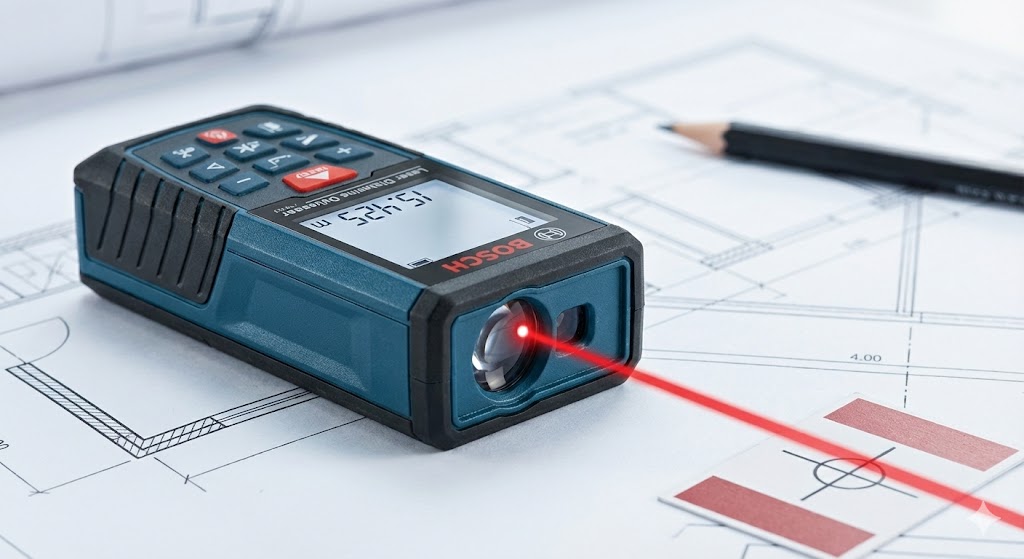
The advantages of using a dedicated module are manifold. They provide a turnkey solution, eliminating the need for complex optical and electronic design. Manufacturers calibrate them for high accuracy and repeatability, often within a millimeter or less over distances of tens or even hundreds of meters. Their compact size and low power consumption enable deployment in mobile and battery-operated devices. Furthermore, advanced modules now incorporate eye-safe designs, automatic filtering of background noise, and multi-echo detection capabilities—the latter being crucial for distinguishing a true target from foreground obstacles like glass or foliage.
Applications for laser rangefinder sensor modules are vast and continually expanding. In industrial automation, they are crucial for robotics, providing real-time positioning for automated guided vehicles (AGVs), robotic arms, and collision avoidance systems. They enable precise leveling, profiling, and alignment in construction and surveying equipment. The consumer electronics market leverages them in smartphones for camera autofocus and augmented reality features, and in smart home devices for spatial mapping. Drones utilize them for terrain following and obstacle detection, while the automotive industry integrates them as core sensors in Advanced Driver-Assistance Systems (ADAS) and the development of autonomous vehicles. Even in forestry and sports, they are found in handheld rangefinders for measuring tree height or calculating golf distances.
Selecting the appropriate module requires careful consideration of several parameters. The required measurement range and accuracy are primary drivers. Indoor applications may only need a range of a few meters with centimeter accuracy, while outdoor surveying demands hundreds of meters with millimeter-level precision. The measurement rate, or how many readings per second the module can provide, is critical for dynamic applications like scanning or high-speed robotics. Environmental robustness, including operating temperature range, resistance to dust and moisture (often indicated by an IP rating), and vibration tolerance, must match the deployment conditions. Finally, the interface protocol, power requirements, and physical dimensions must align with the host system's design.
Looking ahead, the evolution of laser rangefinder sensor modules points toward greater miniaturization, reduced cost, and enhanced intelligence. The integration of single-photon avalanche diode (SPAD) arrays and silicon photomultipliers (SiPMs) is pushing the boundaries of sensitivity and enabling 3D depth mapping. The fusion of lidar data with other sensors like cameras and IMUs through sophisticated sensor fusion algorithms will create more perceptive and context-aware systems. As core technologies mature and scale, these modules will become even more ubiquitous, finding new roles in logistics, healthcare, security, and the ever-expanding Internet of Things (IoT), solidifying their position as a fundamental enabler of the automated and data-driven world.