In modern industrial environments, laser sensors are integral components for precision measurement, object detection, and automation control. However, their operation involves inherent risks, particularly during maintenance, repair, or installation activities. Implementing a robust lockout procedure is not merely a regulatory compliance measure but a critical safety protocol to prevent accidental energization, which could lead to severe injuries or equipment damage. This article outlines the essential steps and considerations for effectively locking out laser sensors, ensuring a zero-energy state and safeguarding personnel.
The foundation of any lockout procedure begins with a comprehensive risk assessment. For laser sensors, this involves identifying all energy sources. While the primary concern is electrical energy from the power supply, other forms must not be overlooked. Some laser sensors may utilize pneumatic lines for cooling or actuation, or they might be integrated into systems with potential stored energy in capacitors or mechanical springs. A detailed review of the manufacturer's manual and system schematics is imperative to map all energy isolation points.
Once energy sources are identified, the next step is the controlled shutdown. The authorized employee must follow the organization's established lockout/tagout (LOTO) policy and the equipment-specific procedure. Typically, this involves notifying all affected personnel that the laser sensor and its associated machinery will be shut down for servicing. The equipment is then turned off using its normal operating controls. It is crucial to verify that the shutdown is complete and that all moving parts have come to a full stop.
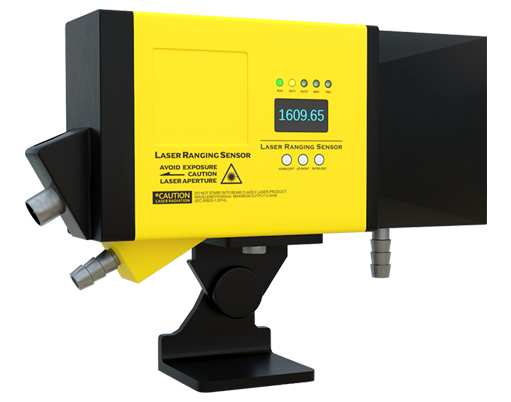
Isolation is the core of the lockout process. Every identified energy source must be physically isolated. For electrical power to the laser sensor controller, this means operating the main circuit breaker or disconnect switch to the "OFF" position. For other energy types, appropriate isolation devices like line valves or blank flanges are used. Following isolation, the application of lockout devices is mandatory. Each authorized employee working on the system must place their personal safety lock and tag on every energy isolation point. This practice ensures that the equipment cannot be re-energized until that individual removes their lock. Group lockout procedures, using a lockbox for multiple personnel, are highly effective for complex systems involving several laser sensors.
After locks and tags are applied, the critical step of verifying a zero-energy state must be performed. This involves attempting to restart the equipment using the normal controls to ensure it does not operate. For laser sensors, it is also essential to verify that the laser emission has ceased. This can be done using a laser power meter or by following manufacturer-recommended verification methods. Only after confirming that all energy—electrical, optical, pneumatic, and stored—has been effectively neutralized, can work safely commence.
Upon completion of the service tasks, the restoration process must be equally methodical. The work area must be inspected to ensure all tools are removed, guards are reinstalled, and employees are clear. Each authorized employee then removes their personal lock and tag from the isolation points. Finally, the energy isolation devices are returned to their operational "ON" position, and the equipment can be restarted. Continuous training and periodic audits of lockout procedures are vital to maintaining a culture of safety and ensuring that all personnel, from engineers to technicians, understand and adhere to these life-saving protocols when working with laser sensor systems.