In the rapidly evolving landscape of industrial automation, the emergence of Meta Laser Vision Sensors represents a paradigm shift in precision measurement and quality control. These advanced sensors integrate cutting-edge laser technology with sophisticated vision systems, offering unparalleled accuracy and reliability in diverse manufacturing environments. Unlike traditional sensors that rely on single-point measurement, Meta Laser Vision Sensors capture comprehensive 3D data, enabling real-time analysis of complex surfaces and geometries. This capability is particularly transformative for industries such as automotive, aerospace, and electronics, where micron-level precision is non-negotiable.
The core technology behind Meta Laser Vision Sensors involves the projection of structured laser patterns onto target objects. High-resolution cameras then capture the deformation of these patterns, allowing the sensor to calculate depth and surface characteristics with exceptional detail. This process, often referred to as laser triangulation, is enhanced by proprietary algorithms that filter noise and compensate for environmental variables like ambient light or vibration. As a result, these sensors maintain consistent performance even in harsh conditions, such as foundries or assembly lines with high particulate matter.
One of the most significant advantages of Meta Laser Vision Sensors is their versatility. They can be deployed for a wide range of applications, including dimensional inspection, defect detection, and robotic guidance. For instance, in automotive manufacturing, these sensors verify the precise alignment of body panels, ensuring gaps are uniform and within specified tolerances. In electronics, they inspect solder joints on circuit boards, identifying voids or cracks that could lead to device failure. The integration of artificial intelligence and machine learning further amplifies their utility, enabling predictive maintenance and adaptive calibration based on historical data.
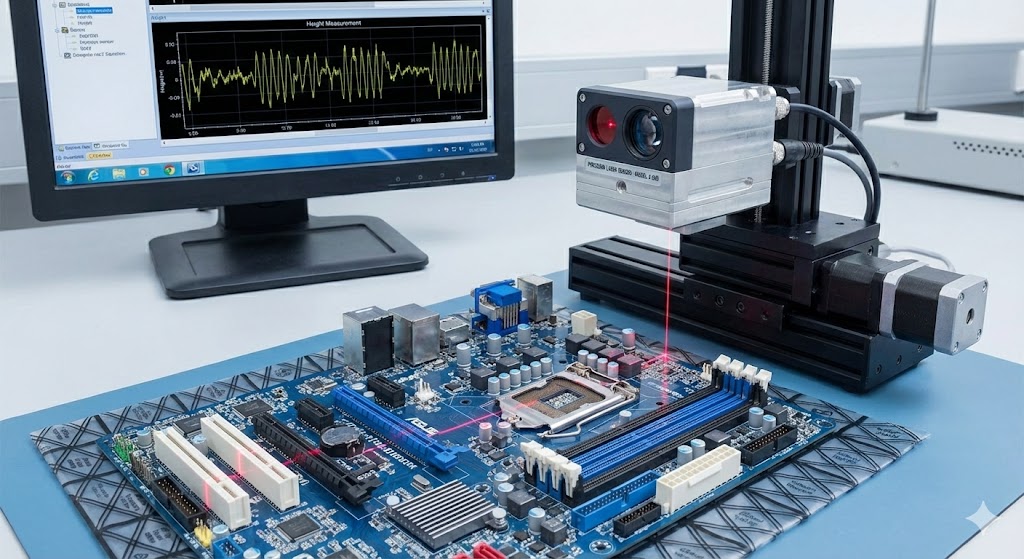
Moreover, the connectivity features of Meta Laser Vision Sensors align with Industry 4.0 principles. They support standard industrial protocols like EtherCAT, PROFINET, and IO-Link, facilitating seamless communication within smart factories. Data collected by these sensors can be streamed to centralized control systems, providing actionable insights for optimizing production workflows. This interoperability reduces downtime and enhances overall equipment effectiveness (OEE), contributing to a more agile and responsive manufacturing ecosystem.
Despite their advanced capabilities, the adoption of Meta Laser Vision Sensors requires careful consideration of factors such as installation geometry, material reflectivity, and calibration procedures. Engineers must conduct thorough feasibility studies to determine optimal sensor placement and configuration. Regular maintenance, including lens cleaning and software updates, is also essential to sustain long-term accuracy. However, the return on investment is substantial, as these sensors minimize scrap rates, reduce manual inspection labor, and accelerate throughput.
Looking ahead, ongoing research in photonics and computational imaging promises to expand the frontiers of Meta Laser Vision Sensors. Innovations like multi-wavelength laser systems and hyperspectral imaging could enable even finer material discrimination and subsurface analysis. As industries continue to prioritize quality and efficiency, these sensors will undoubtedly play a pivotal role in shaping the future of automated manufacturing, driving progress toward fully autonomous, zero-defect production lines.