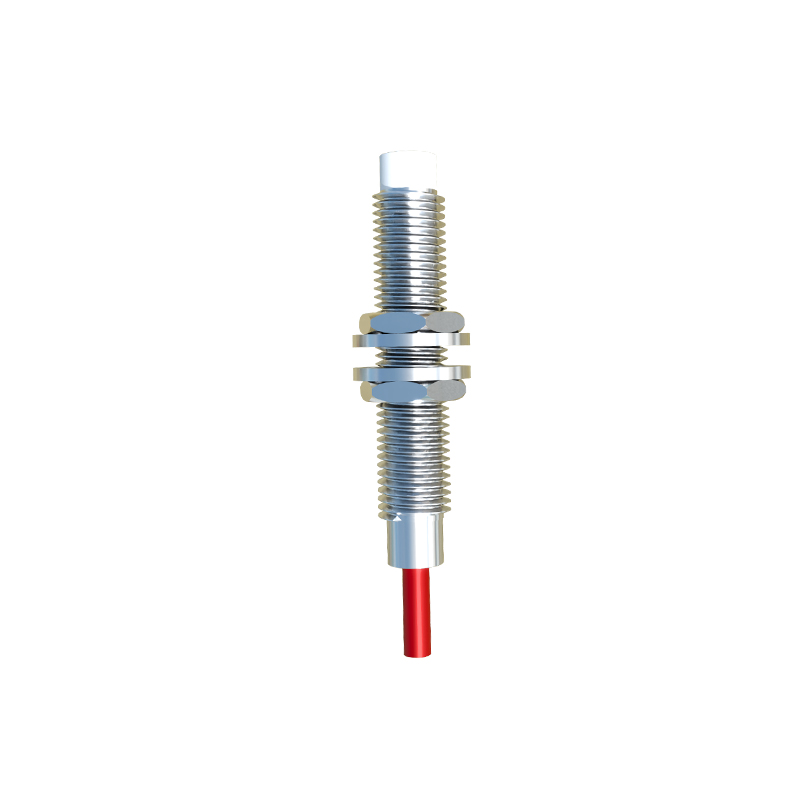
In the vast landscape of industrial automation and process control, liquid level monitoring stands as a critical function across numerous sectors, including water treatment, chemical processing, pharmaceuticals, food and beverage, and oil & gas. Among the diverse technologies employed for this purpose, liquid level proximity sensors have carved out a significant niche due to their reliability, non-contact operation, and adaptability. This article delves into the fundamental operating principles of these sensors, exploring the core technologies that enable precise and robust level detection.
At its essence, a liquid level proximity sensor is a device designed to detect the presence or absence of a liquid at a predetermined point without making physical contact with the medium. This non-invasive characteristic is paramount, as it prevents contamination, minimizes wear, and allows for use with corrosive, abrasive, or sterile liquids. The underlying principle hinges on the sensor's ability to sense a change in a physical field or wave pattern caused by the proximity of the liquid. The most prevalent technologies can be categorized into capacitive, inductive, and ultrasonic principles, each with distinct mechanisms and ideal applications.
Capacitive proximity sensors operate based on the principle of capacitance change. The sensor essentially forms one plate of a capacitor, with the tank wall or a reference electrode acting as the other plate. The dielectric material between these "plates" is crucial. Air has a low dielectric constant (approximately 1), while most liquids, especially water-based ones, have a significantly higher constant. When the liquid rises to the level of the sensor, it displaces the air, altering the dielectric properties in the sensing zone. This change increases the capacitance of the system. The sensor's internal oscillator circuit is tuned to detect this specific capacitance shift. Once the change exceeds a set threshold, the sensor's output state switches, signaling the presence of the liquid. This technology is highly effective for non-metallic tanks and can detect a wide range of liquids, including oils, pastes, and granular materials, provided they have a sufficient dielectric constant difference from air.
Inductive proximity sensors, in contrast, are primarily used for detecting conductive liquids, such as water, acids, or metal melts. Their operation is based on electromagnetic induction. The sensor generates a high-frequency oscillating electromagnetic field from its active face. When a conductive material enters this field, eddy currents are induced on the surface of the liquid. These eddy currents draw energy from the sensor's oscillator, causing a measurable drop in the oscillation amplitude. The sensor's evaluation circuit monitors this amplitude reduction. Upon reaching a predefined level, it triggers a change in the output signal. It is important to note that standard inductive sensors require the liquid to be electrically conductive; they are not suitable for distilled water or most hydrocarbons. For non-conductive tanks, a special variant often called a "capacitive inductive" or "all-metal" sensor is used, which can detect the liquid through thin-walled non-metallic containers by sensing the change in the resonant frequency of the circuit caused by the conductive target (the liquid).
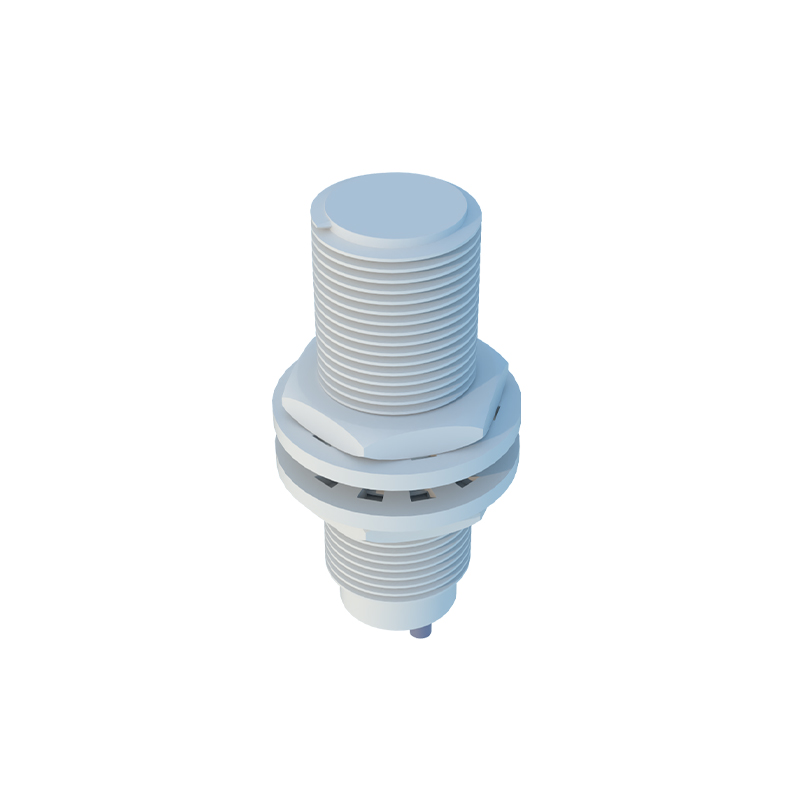
Ultrasonic liquid level proximity sensors represent a different approach, utilizing sound waves. These sensors emit high-frequency ultrasonic pulses (typically beyond 20 kHz) from a transducer. The pulses travel through the air gap towards the liquid surface. Upon striking the surface, they are reflected back to the sensor. An internal electronic timer measures the time-of-flight (ToF)—the interval between pulse emission and echo reception. Since the speed of sound in air is known, the distance to the liquid surface can be calculated precisely using the formula: Distance = (Speed of Sound × Time-of-Flight) / 2. By knowing the total height of the tank, the liquid level is easily derived. While often used for continuous level measurement, they can be configured as proximity switches for point-level detection. Their major advantage is true non-contact sensing from above the liquid, making them ideal for applications with aggressive media or where no tank penetration is desired. Factors like foam, vapor, turbulence, and extreme temperature gradients can affect ultrasonic performance and must be considered during installation.
Beyond these primary types, other technologies like optical (using infrared light and prisms) and tuning fork sensors (vibrating forks whose frequency dampens upon immersion) also serve as proximity-level detectors for specific scenarios. The selection of the appropriate sensor technology depends on a thorough analysis of the application parameters: the chemical and physical properties of the liquid (conductivity, dielectric constant, viscosity, corrosiveness), the tank material and construction, process conditions (pressure, temperature, presence of foam or vapor), required accuracy, and installation constraints.
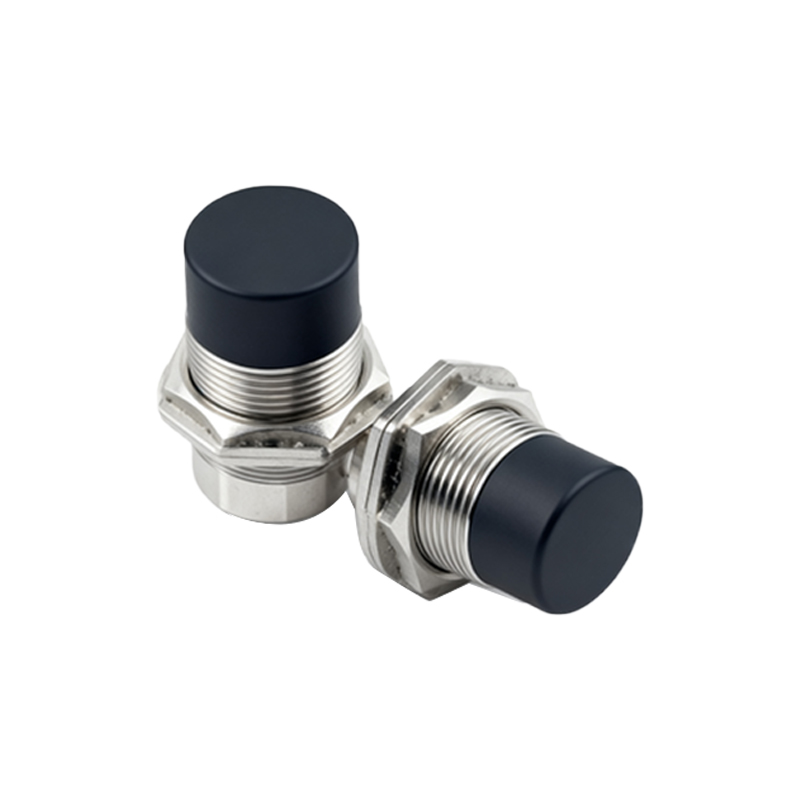
In conclusion, liquid level proximity sensors are indispensable tools in modern industrial systems. Their operation, whether based on capacitive, inductive, ultrasonic, or other physical principles, provides a dependable means to safeguard processes, optimize operations, and ensure safety. Understanding these core principles is the first step for engineers and technicians in selecting