In the world of automation and smart technology, proximity sensors are the silent, unseen workhorses. They detect the presence or absence of an object within a specific range without any physical contact. This fundamental capability makes them indispensable across countless industries, from manufacturing and automotive to consumer electronics and security systems. Understanding how these devices work, the different types available, and their practical applications is key to appreciating their role in modern engineering.
At its core, a proximity sensor converts information about the presence or distance of a target object into an electrical signal. The "proximity" is defined by the sensor's sensing range or standoff distance. The primary advantage is non-contact detection, which eliminates mechanical wear and tear, allows for high-speed operation, and enables use in harsh environments where contact is impossible or undesirable.
Several technologies power proximity sensors, each with its own strengths and ideal use cases.
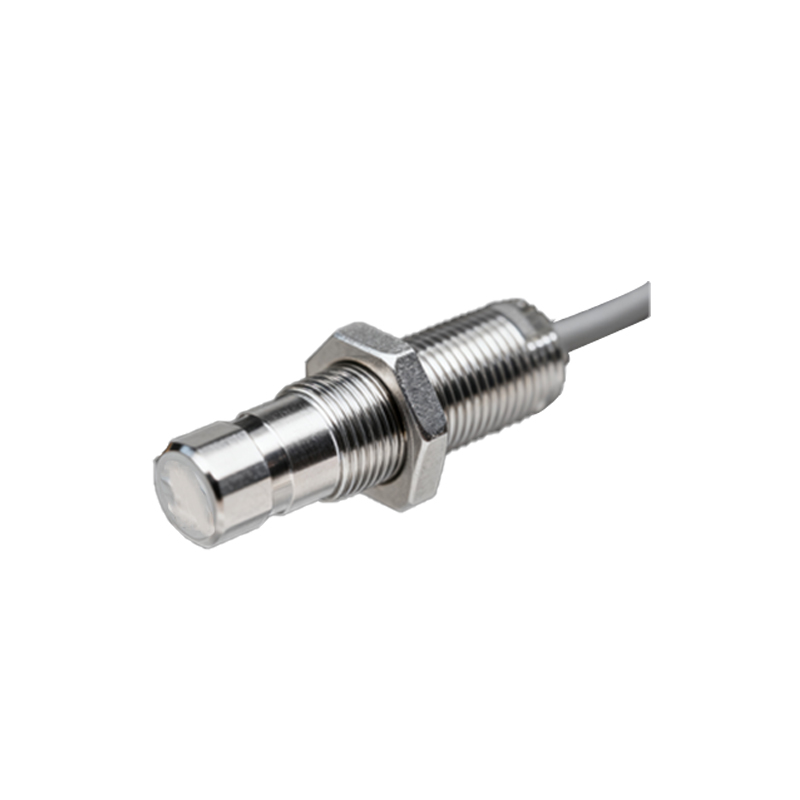
Inductive Proximity Sensors are among the most common in industrial settings. They generate an electromagnetic field. When a metallic object (the target) enters this field, it induces eddy currents within the metal, causing a change in the sensor's own oscillation amplitude. This change is detected and triggers a switch. These sensors are robust, resistant to dirt and moisture, and excel at detecting only metals, making them perfect for machine automation, position sensing in motors, or counting metal parts on a conveyor belt.
Capacitive Proximity Sensors operate by generating an electrostatic field. They can detect both metallic and non-metallic objects—liquids, plastics, wood, or granules—by sensing changes in capacitance. When any material with a dielectric constant different from air enters the sensing field, it alters the capacitance of the circuit, triggering the output. This makes them versatile for applications like liquid level detection in tanks, material handling, or detecting non-metallic container fills.
Photoelectric Sensors use light, typically infrared, LED, or laser. They consist of an emitter and a receiver. There are three main configurations. The through-beam type has separate emitter and receiver units; detection occurs when the object breaks the light beam. The retro-reflective type uses a single unit and a reflector; the object is detected when it interrupts the reflected beam. The diffuse (or reflective) type has the emitter and receiver in one housing, detecting light reflected directly off the target object. Photoelectric sensors offer long sensing ranges and are excellent for detecting small objects or colors.
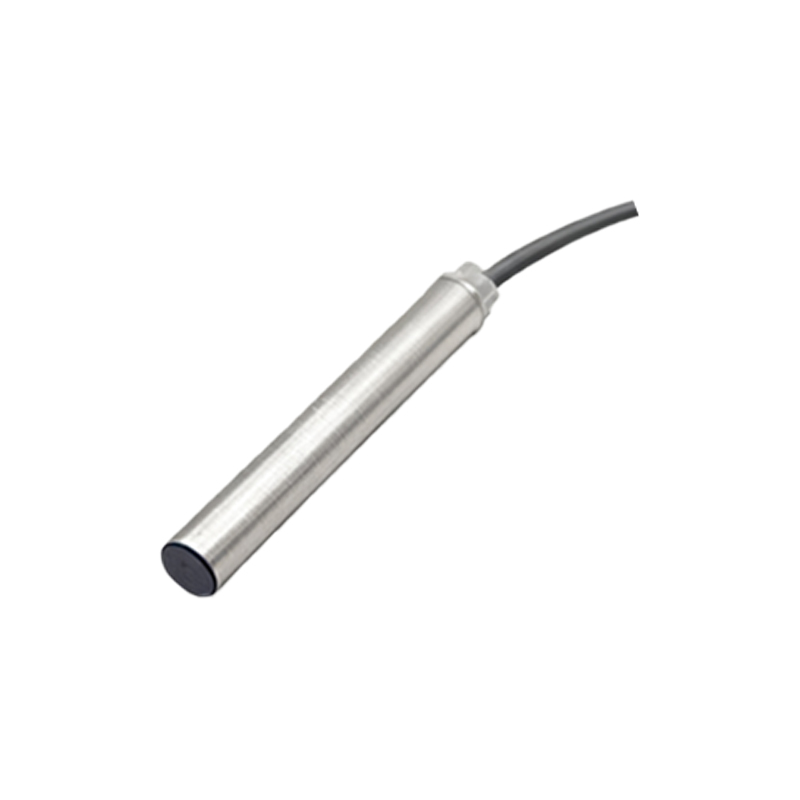
Ultrasonic Proximity Sensors work on a principle similar to sonar. They emit high-frequency sound waves and evaluate the echo received back. The time lapse between sending the signal and receiving the echo is used to calculate the distance to the object. These sensors are effective for detecting objects of virtually any material, shape, or color, and are particularly useful for distance measurement, level sensing of bulk materials, and in challenging environments with dust or vapor.
Magnetic Proximity Sensors (Reed Switches or Hall Effect sensors) detect the presence of a permanent magnet. Reed switches use ferromagnetic reeds that close when a magnetic field is applied. Hall Effect sensors produce a voltage when exposed to a magnetic field. They are simple, reliable, and often used for door/window position sensing, cylinder position detection in pneumatic systems, and in low-power applications.
Choosing the right sensor depends on several factors: the target material (metal, plastic, liquid), the required sensing distance, the operating environment (temperature, presence of contaminants), the output type needed (digital on/off, analog signal for distance), and response speed.
The applications are vast. In a smartphone, a capacitive or infrared proximity sensor turns off the screen during a call to save power and prevent accidental touches. In an automotive assembly line, inductive sensors verify the presence of engine blocks. In a warehouse, photoelectric sensors count boxes on a conveyor. In a food processing plant, capacitive sensors monitor liquid levels in stainless steel vats. In building security, magnetic sensors monitor door positions.
In conclusion, proximity sensors are a foundational technology enabling automation, safety, and efficiency. Their ability to provide reliable, contactless detection solves myriad engineering challenges. From the simple magnetic switch on a cabinet door to the complex ultrasonic system guiding an autonomous vehicle, these sensors extend our capabilities to perceive and interact with the physical world, making processes smarter, safer, and more responsive.