In the world of automation, robotics, and smart devices, proximity sensors are the silent sentinels that enable machines to "see" and interact with their environment without physical contact. A fundamental and often misunderstood specification of these sensors is their "length" or, more accurately, their sensing range. This parameter is not merely a number on a datasheet; it is the core determinant of a sensor's capability, directly influencing system design, reliability, and cost. Understanding proximity sensor length is crucial for selecting the right component for any application.
At its essence, the sensing range of a proximity sensor is the maximum distance at which it can reliably detect a standard target. This is not an absolute, fixed value but a performance characteristic defined under specific conditions. For inductive sensors, which detect metallic objects, the standard target is typically a square of mild steel (Fe360) with a side length equal to the sensor's rated diameter or the sensing range, whichever is larger. For capacitive sensors, which can detect both metallic and non-metallic materials like liquids or plastics, the target material itself becomes a critical variable affecting the effective range. Ultrasonic and photoelectric sensors have their own sets of defining parameters, such as target size, reflectivity, and opacity.
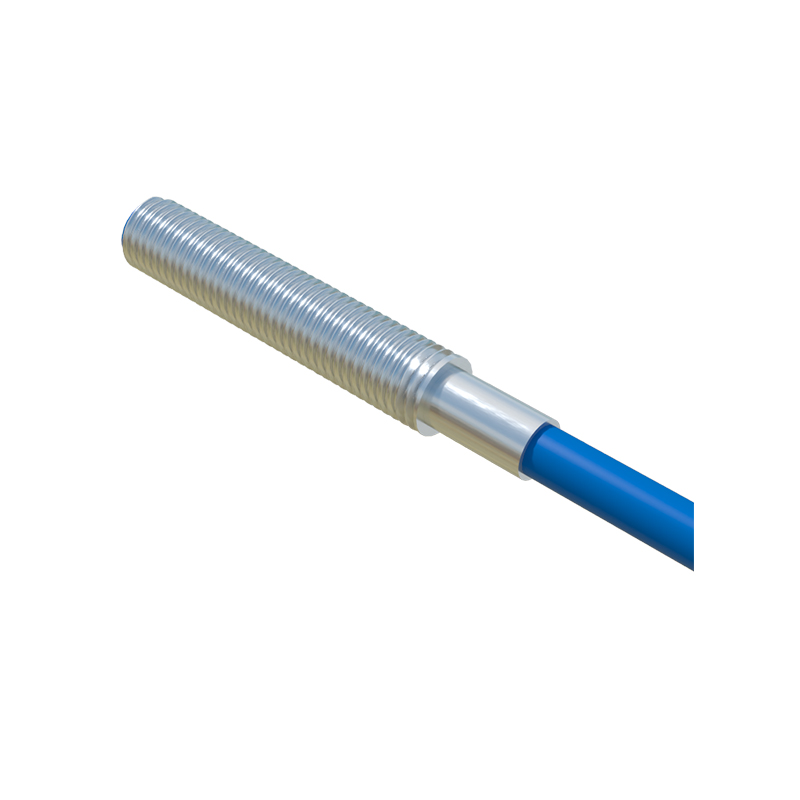
Several key factors directly influence the effective sensing length. First is the sensor's technology. Inductive sensors generally offer shorter ranges, from 1-2 mm for miniature models up to 60-70 mm for large-diameter shielded types. Capacitive sensors have similar physical range limitations but are adjustable to compensate for different material dielectric constants. Photoelectric sensors, using infrared or laser light, can achieve ranges from a few centimeters to several meters, while ultrasonic sensors can span from centimeters to over ten meters. Second, the target characteristics are paramount. A larger, thicker, or more conductive/metallic target will be detected at a greater distance than a smaller, thinner, or less detectable one. The third major factor is environmental conditions. Temperature extremes, humidity, dust, oil, and ambient light (for optical sensors) can all attenuate the sensing signal, effectively reducing the reliable operating range.
The concept of "effective" versus "nominal" range is vital. Manufacturers specify a nominal sensing distance (Sn). However, to ensure stable operation despite supply voltage fluctuations, temperature changes, and component tolerances, a derated operational distance is used in practice. This is often 70-80% of the nominal range. For instance, a sensor with a 10mm nominal range should be installed so the target passes within 7-8mm. Ignoring this derating factor is a common source of application failure.
Selecting the appropriate sensing length is a balancing act. A longer-range sensor provides more installation flexibility and clearance but may be more expensive, physically larger, and potentially more susceptible to false triggers from background objects. A sensor with a very short range offers high precision and immunity to interference but requires precise mechanical alignment. The golden rule is to choose a sensor with a nominal range approximately 1.5 to 2 times the required application gap. This provides a safety margin for mechanical tolerances and ensures long-term reliability.
Real-world applications vividly illustrate the importance of this specification. In a packaging machine, a short-range inductive sensor verifies the presence of a metal lid on a conveyor with millimeter precision. In an automated warehouse, a long-range photoelectric sensor monitors the fill level of a tall storage bin from several meters away. In a smartphone, a miniature infrared proximity sensor with a range of just a few centimeters detects when the phone is held to the user's ear to turn off the display. Each scenario demands a specific sensing length optimized for its unique constraints.
Installation and calibration are the final steps to realizing the specified length. Sensors must be mounted securely to prevent vibration from altering the critical gap. For adjustable sensors, like many capacitive types, careful calibration on the actual target material in its operating environment is necessary. It's also crucial to consider the sensor's hysteresis—a small difference between the switch-on and switch-off points—which prevents chatter as a target lingers at the edge of the detection zone.
In conclusion, the "length" or sensing range of a proximity sensor is a deceptively simple specification with profound implications. It is a gateway parameter that dictates the sensor's physical size, technology choice, application suitability, and ultimate performance. By moving beyond the basic nominal value to understand the factors of target material, environment, derating, and installation, engineers and designers can harness the full potential of proximity sensing, creating systems that are not only functional but robust, efficient, and intelligent. The right sensing length is the bridge between a theoretical circuit component and a reliable real-world solution.