Optical sensors represent a cornerstone of modern industrial measurement and control systems. These devices convert light or changes in light properties into electrical signals, enabling non-contact, high-precision detection of various physical parameters such as position, displacement, temperature, and composition. Among the diverse light sources employed, laser technology stands out for its unique properties—coherence, monochromaticity, and high intensity—making it indispensable for advanced sensing applications.
The fundamental principle of an optical sensor involves a light source, a sensing region, and a photodetector. Ambient or generated light interacts with the target or medium in the sensing region. This interaction—be it reflection, refraction, absorption, scattering, or interference—alters the light's characteristics (e.g., intensity, wavelength, phase, or polarization). The photodetector, such as a photodiode or CCD, then converts these modulated optical signals into measurable electrical currents or voltages. Lasers enhance this process significantly. Their coherent light produces sharp interference patterns, enabling extremely precise measurements like those in Laser Interferometry for nanometer-scale displacement. Their focused beams allow for long-range, high-spatial-resolution sensing, crucial in LiDAR (Light Detection and Ranging) systems.
The integration of lasers has catalyzed the development of several sophisticated optical sensing techniques. Laser Doppler Vibrometry measures vibration velocity and displacement by detecting the frequency shift in light scattered from a moving surface. Tunable Diode Laser Absorption Spectroscopy (TDLAS) uses a laser's wavelength tunability to target specific gas absorption lines, allowing for highly selective and sensitive gas concentration analysis in process control or environmental monitoring. Confocal laser sensors utilize precise axial discrimination to perform high-resolution surface topography and thickness measurements. Furthermore, Fiber Bragg Grating (FBG) sensors, often interrogated using laser light, detect strain and temperature changes through shifts in the reflected wavelength, forming the backbone of structural health monitoring in civil engineering and aerospace.
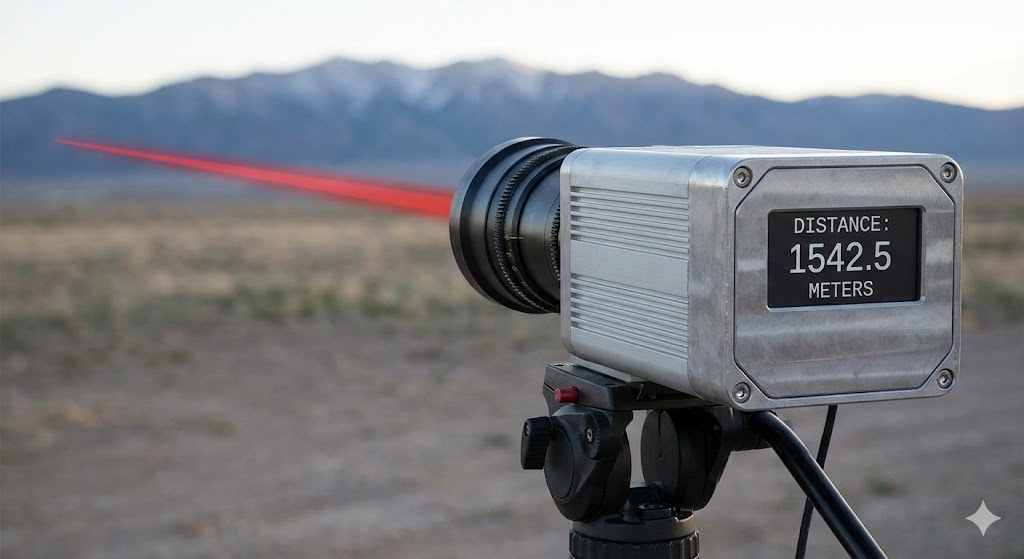
In industrial automation, the applications are vast and transformative. On production lines, laser-based optical sensors perform non-contact inspection tasks—verifying dimensions, detecting surface defects, or ensuring correct component placement with speed and accuracy unattainable by mechanical probes. In robotics, laser scanners and time-of-flight sensors create detailed 3D maps of the environment, enabling autonomous navigation, bin-picking, and precise object manipulation. For alignment and positioning in semiconductor manufacturing or precision assembly, laser alignment systems provide micron-level guidance. Process industries rely on laser spectroscopy for real-time, in-situ monitoring of chemical compositions, ensuring product quality and safety.
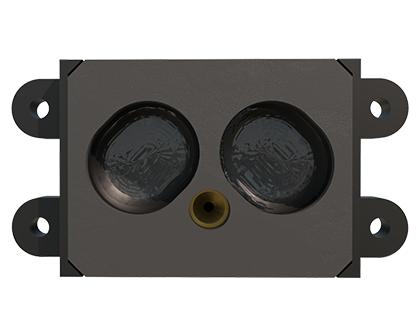
The future trajectory of laser-based optical sensing is geared towards greater integration, intelligence, and miniaturization. The emergence of photonic integrated circuits (PICs) promises to combine lasers, waveguides, modulators, and detectors on a single chip, leading to smaller, more robust, and cost-effective sensor systems. The synergy with Artificial Intelligence and Machine Learning is unlocking predictive analytics, where sensors not only collect data but also identify complex patterns and predict failures. Advances in quantum sensing, leveraging laser-cooled atoms or quantum states of light, hint at future sensors with sensitivities far beyond classical limits for magnetic fields, gravity, or rotation. Additionally, the development of new laser materials and wavelengths will expand sensing capabilities into new spectral regions for novel applications.
However, challenges persist. Environmental factors like ambient light, dust, fog, or temperature fluctuations can interfere with optical signals. Designing robust housings, employing specialized filters, and implementing advanced signal processing algorithms are critical for reliable operation in harsh industrial settings. Safety remains paramount when using high-power lasers, necessitating strict adherence to classification standards and protective measures. Furthermore, the cost of high-end laser systems can be a barrier, though ongoing research and mass production are steadily driving prices down.
In conclusion, optical sensors, particularly those empowered by laser technology, are pivotal drivers of innovation in industrial automation and beyond. Their ability to deliver precise, non-contact, and often real-time data is fundamental to enhancing productivity, ensuring quality, and enabling new levels of operational intelligence. As laser and photonic technologies continue to evolve, we can anticipate a new generation of smarter, more connected, and more capable sensing solutions that will further redefine the boundaries of measurement and control in the industrial landscape.