In the realm of industrial automation and precision measurement, laser photoelectric sensors stand as a cornerstone technology. These devices, which utilize a focused laser beam as their light source, offer unparalleled accuracy, speed, and reliability compared to conventional LED-based sensors. Their operation is grounded in the principles of photoelectric sensing, where a transmitted light beam is modulated and its interaction with a target object is detected to determine presence, distance, position, or other physical characteristics.
The core working principle involves three primary components: a laser emitter, a receiver, and control electronics. The laser diode emits a highly collimated, coherent beam of light. This beam is directed towards a target. Depending on the sensor type, the system measures changes in the beam. In a through-beam (or opposed) configuration, the receiver detects the beam directly from the emitter; an object is sensed when it interrupts this beam. In a retro-reflective setup, the beam bounces off a reflector back to the receiver housed in the same unit. The most versatile type is the diffuse reflective sensor, where the receiver detects light scattered directly off the target object itself. For precise distance measurement, time-of-flight or triangulation methods are employed, calculating distance based on the time delay or angle of the reflected beam.
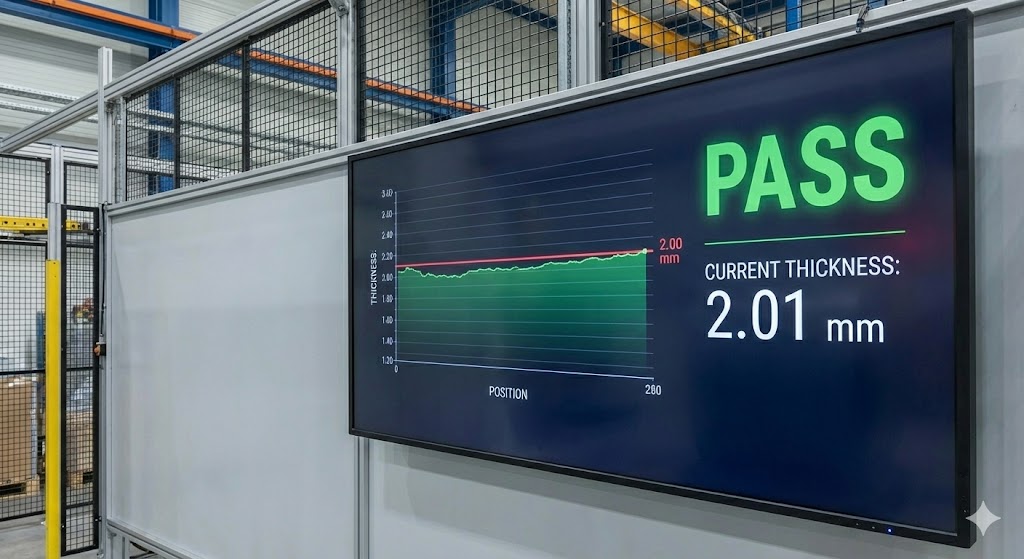
The advantages of laser sensors are significant. Their extremely small, intense light spot enables the detection of minute objects and allows for precise edge detection or positioning. They offer long sensing ranges, often several meters even in diffuse mode. The coherent nature of laser light provides excellent resistance to ambient light interference, ensuring stable operation in challenging environments. Furthermore, high switching speeds make them ideal for high-throughput production lines, counting applications, and robotics.
Applications span across diverse industries. In manufacturing, they are indispensable for object detection on conveyor belts, wafer handling in semiconductor fabrication, and fill-level control. In logistics, they facilitate package dimensioning, barcode reading, and automated guided vehicle (AGV) navigation. The automotive industry relies on them for robotic welding seam tracking, part verification, and assembly precision. Additionally, they are crucial in electronic device assembly for component placement and inspection.
Selecting the appropriate laser photoelectric sensor requires careful consideration of several parameters. First, define the application: Is it for simple presence detection, precise positioning, or distance measurement? The required sensing range and the size/reflectivity of the target object will dictate the necessary laser power and receiver sensitivity. Environmental factors such as dust, fog, or intense ambient light must be countered with sensors featuring appropriate housing ratings (IP67/IP69K) and specialized filters. The output type (PNP/NPN, analog, IO-Link) must be compatible with the control system. Finally, form factor and mounting options are practical concerns for integration.
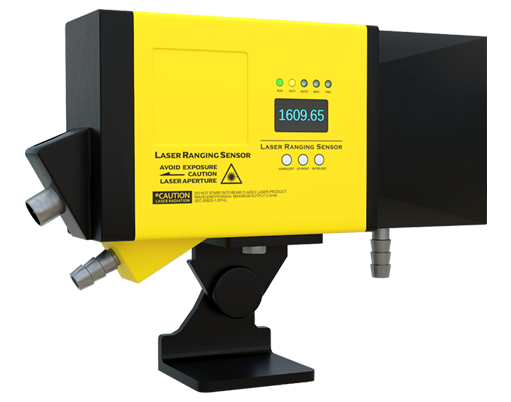
Modern advancements continue to push the boundaries. The integration of CMOS imaging technology with laser line projection enables sophisticated 2D and 3D profiling. Smart sensors with IO-Link communication provide detailed diagnostic data, parameterization, and condition monitoring, facilitating predictive maintenance and Industry 4.0 connectivity. Safety-rated laser sensors are also developed for applications where functional safety is paramount.

In conclusion, laser photoelectric sensors are a critical enabling technology for modern automation. Their precision, speed, and versatility solve complex sensing challenges that other technologies cannot. A thorough understanding of their operating principles, key features, and application requirements is essential for engineers and system integrators to harness their full potential, thereby enhancing efficiency, quality, and reliability in automated systems. As technology evolves, these sensors will undoubtedly become even more intelligent and integral to the smart factories of the future.