In the realm of industrial automation and electrical engineering, the terms "proximity sensor" and "proximity switch" are frequently encountered, often leading to confusion regarding their definitions and applications. While they share fundamental principles of operation, key distinctions exist that impact their functionality, design, and use in various systems. This article aims to clarify these differences and provide a comprehensive understanding for professionals in the field.
At its core, both devices are non-contact electronic components designed to detect the presence or absence of an object within a specified range without physical contact. They operate based on electromagnetic fields, capacitive effects, or ultrasonic waves, with inductive and capacitive types being the most common in industrial settings. Inductive sensors detect metallic objects by generating an electromagnetic field, while capacitive sensors can detect both metallic and non-metallic materials by sensing changes in capacitance.
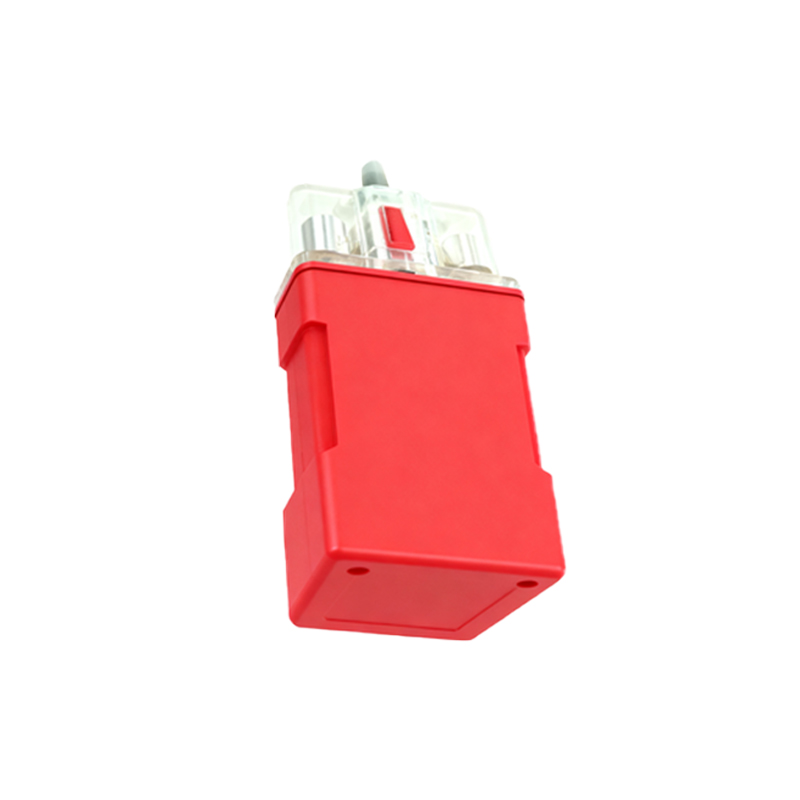
The primary distinction lies in their output characteristics and internal circuitry. A proximity switch is essentially a binary device. It functions as a switch that changes its output state (typically open or closed) when an object enters its sensing range. This output is usually in the form of a discrete signal, such as a relay contact or a solid-state switch (e.g., PNP or NPN transistor output). The term "switch" emphasizes its role in directly controlling a circuit—turning it on or off—much like a mechanical limit switch but without physical contact. It is often used in applications requiring simple presence detection to initiate or halt a process, such as in conveyor systems, machine guarding, or counting parts.
On the other hand, a proximity sensor is a broader category that includes devices capable of providing more than just a simple on/off signal. While many proximity sensors do function as switches, the term "sensor" can imply the ability to offer analog outputs, digital communication, or varying signals proportional to the distance or characteristics of the detected object. For instance, an analog proximity sensor might output a voltage or current signal that changes continuously as an object moves closer or farther away, enabling precise positioning or measurement. Additionally, sensors may incorporate advanced features like programmability, diagnostics, or integration with network protocols (e.g., IO-Link). In practice, however, the terms are often used interchangeably in casual conversation, especially when referring to standard inductive or capacitive models with discrete outputs.
From a design perspective, both devices share similar housings, often made of metal or plastic to withstand harsh industrial environments. They are rated by standards such as IEC 60947-5-2, which defines their performance, including sensing distance, repeat accuracy, and environmental immunity. Key specifications include nominal sensing distance (Sn), hysteresis, and output type. Whether labeled as a sensor or switch, installation considerations remain critical: factors like mounting flush or non-flush, material of the target object, and environmental interference (e.g., temperature, humidity, or adjacent metal) must be accounted for to ensure reliable operation.
In application, the choice between a proximity sensor and switch depends on the system requirements. For basic detection tasks—such as verifying a part is in place, triggering an actuator, or providing a safety interlock—a proximity switch with a simple discrete output is typically sufficient and cost-effective. In contrast, applications demanding continuous monitoring, such as controlling the gap in a winding machine, measuring thickness, or integrating with a programmable logic controller (PLC) for complex feedback loops, may necessitate a proximity sensor with analog or smart capabilities. It is worth noting that many manufacturers catalog these products under the umbrella term "proximity sensors," with subcategories specifying output types, leading to the common interchangeable usage.
In summary, while all proximity switches can be considered a subset of proximity sensors, not all proximity sensors are merely switches. The critical difference hinges on output functionality: switches provide discrete on/off control, whereas sensors can offer a range of outputs, including analog and digital data. For engineers and technicians, understanding this nuance is essential for selecting the appropriate device to optimize system performance, ensure safety, and reduce costs. Always refer to technical datasheets and application notes to confirm the specific capabilities of a product, regardless of its labeled name, to align with your project's demands in automation, manufacturing, or process control environments.