In the rapidly evolving landscape of industrial automation and smart systems, the emergence of software-virtualized proximity light sensors represents a paradigm shift. Traditionally, proximity detection relied on physical hardware—photoelectric sensors, ultrasonic sensors, or inductive sensors—each with inherent limitations in cost, maintenance, physical footprint, and adaptability. A software virtual proximity light sensor, however, is a sophisticated algorithmic model that mimics the functionality of its physical counterpart by processing data streams from existing, often multipurpose, sensing systems like standard cameras, LiDAR point clouds, or time-of-flight (ToF) modules. This digital twin approach leverages advanced computational techniques to infer the presence, distance, and sometimes even the profile of objects within a defined field, all without a dedicated, single-function photoelectric device.
The core principle hinges on machine vision and signal processing algorithms. Consider a standard industrial machine vision camera, a ubiquitous component in modern factories. Its raw video feed contains a wealth of spatial and luminance data. A virtual proximity sensor algorithm can be trained to monitor specific regions of interest (ROIs) within this feed. By analyzing changes in pixel intensity, contrast, edge detection patterns, or depth information (if using a stereo or ToF camera), the software can determine if an object has breached a predefined virtual "beam" or threshold. For instance, instead of aligning a physical light beam across a conveyor belt to detect a passing item, a virtual line is drawn in the software analyzing the camera feed. When the item's visual signature crosses this line, a digital output signal is triggered, identical to the discrete signal from a physical sensor.
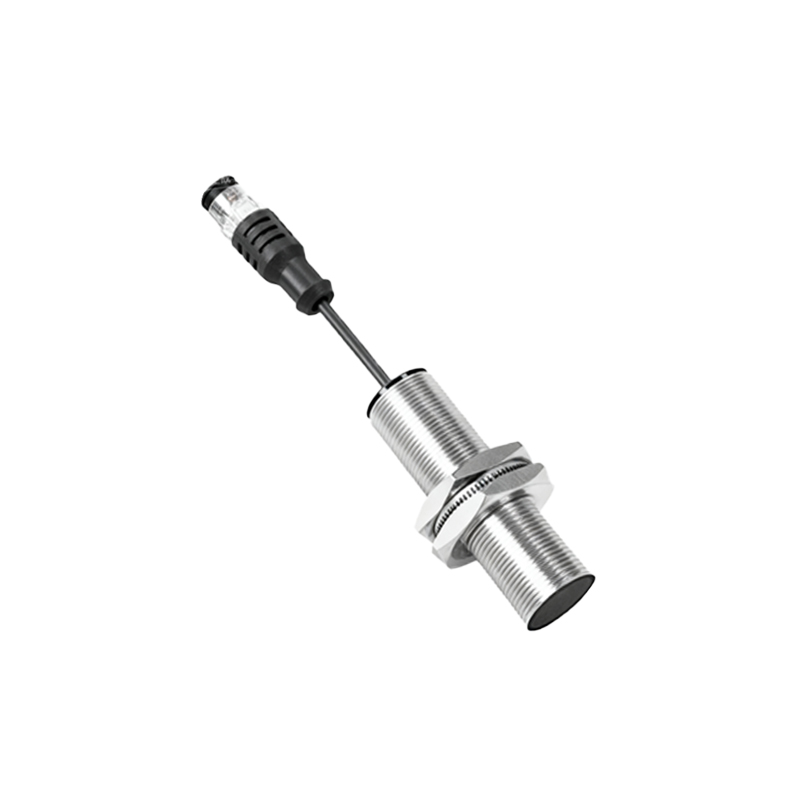
The advantages of this virtualization are profound. First, it drastically reduces hardware dependency and associated costs. There's no need to purchase, install, wire, and calibrate numerous individual sensors. A single, strategically placed vision system can host dozens of virtual sensors, each configured for different tasks—object detection at a pick-and-place station, part presence verification in an assembly jig, or safety guarding around robotic arms. This consolidation simplifies system architecture and minimizes points of failure. Second, it offers unparalleled flexibility and reconfigurability. Changing the sensing range, beam pattern, or logic (e.g., from light-on to dark-on operation) is a matter of software parameter adjustment, not physical rewiring or component replacement. This is invaluable for flexible manufacturing lines that handle multiple product variants.
Third, it enables predictive analytics and richer data integration. A physical sensor provides a simple on/off signal. A virtual sensor, as part of a broader data-processing pipeline, can extract additional metadata: object size, approximate speed, orientation, or even anomalies in appearance. This data can feed into higher-level systems for process optimization, predictive maintenance, or quality control, creating a more intelligent and interconnected automation environment. For example, a virtual sensor monitoring a robotic gripper could not only confirm part presence but also flag misaligned parts based on their visual profile, preventing downstream errors.
However, the implementation of virtual proximity sensors is not without its challenges. Its performance is intrinsically tied to the quality and reliability of the primary sensing data. Lighting conditions, optical obstructions, dust, or vibrations can affect camera-based systems, potentially leading to false triggers or missed detections. Therefore, robust algorithm design with features like adaptive thresholding, background subtraction, and noise filtering is critical. Computational load is another consideration; running complex vision algorithms in real-time requires sufficient processing power, often at the edge or on industrial PCs. Latency must be meticulously managed to meet the stringent timing requirements of high-speed automation, where millisecond delays are unacceptable.
From an engineering perspective, the development lifecycle involves several key stages. It begins with a precise definition of the sensing requirement: detection range, resolution, response time, and environmental operating conditions. The next step is selecting the appropriate primary sensor (e.g., global shutter camera, IR ToF sensor) and computing platform. Then comes the algorithmic development, often utilizing libraries like OpenCV or frameworks such as TensorFlow Lite for machine learning models, followed by rigorous simulation and testing in a digital environment. Finally, deployment involves careful calibration in the physical world, where the virtual sensor's parameters are tuned to match the actual scene, ensuring high reliability and accuracy.
The future trajectory points towards deeper integration with Industrial IoT (IIoT) and AI. Virtual sensors will become cognitive agents, capable of self-calibration based on environmental changes and learning from historical data to improve detection accuracy over time. They will form the sensory layer of digital twins, providing real-time, data-rich feedback to perfectly mirror physical operations. In safety applications, virtual light curtains created by arrays of software-defined sensors can protect hazardous areas with reconfigurable zones, adapting to different operational modes.
In conclusion, the software virtual proximity light sensor is more than a mere emulation; it is a transformative tool that decouples functionality from dedicated hardware. It embodies