Selecting the ideal laser sensor for an industrial application is a critical decision that directly impacts operational efficiency, measurement accuracy, and long-term system reliability. With a vast array of technologies, specifications, and manufacturers available, navigating the selection process requires a methodical approach grounded in technical understanding. This guide outlines the key parameters and considerations to ensure you choose a laser sensor that perfectly aligns with your specific needs.
The first and most fundamental step is to clearly define the application's primary requirement. Are you measuring distance, detecting the presence or absence of an object, profiling a surface contour, or gauging thickness? Laser sensors are broadly categorized by their operating principle. For precise distance measurement, laser triangulation sensors are highly popular. They work by projecting a laser spot onto the target; a receiver lens captures the reflected light at an angle, and the position of the spot on the receiver's detector changes proportionally with the target's distance. These sensors offer high resolution and accuracy for short to medium ranges. For longer ranges, time-of-flight (ToF) sensors, which calculate distance based on the time it takes for a laser pulse to reflect back, are more suitable. Contrast sensors, on the other hand, are optimized for detecting marks, labels, or color differences based on the intensity of reflected light, rather than precise distance.
Once the technology type is narrowed down, performance specifications become paramount. Measurement Range is the span within which the sensor can operate reliably. Always select a sensor with a range that comfortably encompasses the expected minimum and maximum distances in your application, with some margin for variability. Resolution refers to the smallest change in distance the sensor can detect. High-precision tasks like semiconductor inspection demand sub-micron resolution, while logistics sorting may only need millimeter-level resolution. Accuracy indicates how close the sensor's reading is to the true value, and it is often specified as a percentage of the full scale or a fixed value. It is crucial to understand the difference between resolution and accuracy; a high-resolution sensor is not necessarily highly accurate if it has significant systematic error.
The Repeatability of a sensor—its ability to produce the same output under identical conditions—is often more critical in industrial settings than absolute accuracy. A sensor with excellent repeatability ensures consistent process control. Response Time or sampling rate determines how quickly the sensor can take and output measurements. For high-speed production lines or moving targets, a fast response time is essential to avoid missing data points.
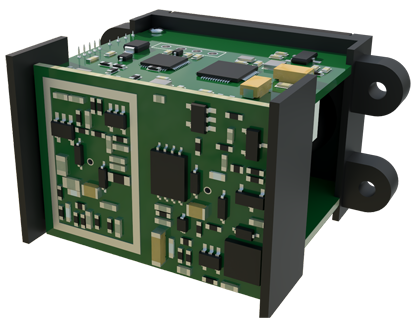
Environmental factors are non-negotiable considerations. Industrial settings can be harsh. Evaluate the sensor's Ingress Protection (IP) rating to ensure it is shielded against dust and water spray common in washdown areas or outdoor use. The operating temperature range must match the ambient conditions of the installation site. Vibration and shock resistance are vital for sensors mounted on moving machinery. Furthermore, the target characteristics heavily influence sensor choice. The material (metal, plastic, glass, rubber), color (black absorbs light, white reflects it), surface texture (matte, glossy, transparent), and even the angle of the target relative to the sensor beam can affect performance. Many modern laser sensors feature automatic teaching functions or software algorithms to compensate for different surface colors and materials, enhancing versatility.
Finally, consider integration and support. The output interface (analog voltage/current, digital IO, serial communication like RS-485, or industrial Ethernet protocols like EtherNet/IP or PROFINET) must be compatible with your PLC or control system. The physical housing size and mounting options must fit the spatial constraints. Equally important are the manufacturer's reputation, availability of technical documentation, and quality of customer support. A sensor from a reliable supplier with strong application engineering support can prevent costly downtime and integration headaches.
In conclusion, there is no universal "best" laser sensor. The optimal choice is a balance of technology, performance specifications, environmental robustness, and target compatibility, all filtered through the lens of your specific application goal and budget. Investing time in a thorough requirement analysis and consulting with technical specialists will yield a solution that delivers precision, reliability, and value for years to come.