In the rapidly evolving landscape of industrial automation, precision measurement, and advanced manufacturing, laser accessory sensors have become indispensable components. These sophisticated devices extend the functionality of core laser systems, enabling a wide array of non-contact sensing, detection, and control applications. For electrical and automation engineers, a deep understanding of these sensors is crucial for designing efficient, reliable, and innovative systems.
Fundamentally, laser accessory sensors are devices that utilize laser light to detect, measure, or respond to specific physical parameters. Unlike the laser source itself, which generates the coherent light, these accessories interpret the interaction of that light with a target or environment. The core principle often involves emitting a laser beam and then analyzing the reflected or transmitted signal. Changes in the beam's properties—such as its intensity, phase, position, or time-of-flight—are meticulously measured to derive critical data.
Several key types dominate the market, each suited for specific tasks. Laser Distance Sensors, often based on time-of-flight or triangulation principles, provide high-accuracy measurements of position, thickness, or presence. They are vital in robotics for obstacle detection and in logistics for dimensioning packages. Laser Displacement Sensors offer sub-micron resolution for profiling surface contours, detecting minute vibrations, or ensuring precise gap control in assembly lines. Laser Photoelectric Sensors are workhorses for presence detection. They can be configured in through-beam, retro-reflective, or diffuse reflection modes to detect objects regardless of color or material at high speeds, making them perfect for counting, sorting, and jam detection. Laser Marking Sensors are specialized for vision-guided systems, reading barcodes, 2D codes, or alignment marks on products to ensure correct processing or routing. Finally, Laser Safety Sensors, such as light curtains and scanner systems, are critical for personnel protection, creating invisible barriers that halt machinery if breached.
The applications are vast and cross-industry. In automotive manufacturing, laser displacement sensors ensure panel fit and weld seam quality. In electronics, they measure component coplanarity and board warpage. In food and packaging, photoelectric sensors control filling levels and verify label placement. Logistics centers rely on distance sensors for automated guided vehicle (AGV) navigation and warehouse inventory management. Furthermore, in renewable energy, these sensors assist in the precise alignment of solar panels and inspection of wind turbine blades.

Selecting the right laser accessory sensor requires a careful analysis of several engineering parameters. Measurement Range and Standoff Distance define the operational envelope. Resolution and Repeatability determine the sensor's precision and consistency, which are paramount for quality control. Response Time and Sampling Rate are critical for high-speed production lines. The Spot Size of the laser affects the minimum detectable feature and influences accuracy on rough or curved surfaces. Environmental factors cannot be ignored; engineers must consider specifications for Ambient Light Immunity, Temperature Stability, and Ingress Protection (IP) Ratings to ensure performance in harsh conditions with dust, coolant, or outdoor exposure. The Output Signal type—analog (4-20mA, 0-10V), digital (PNP/NPN), or serial communication (RS-485, Ethernet/IP)—must seamlessly integrate with the existing PLC or control architecture.
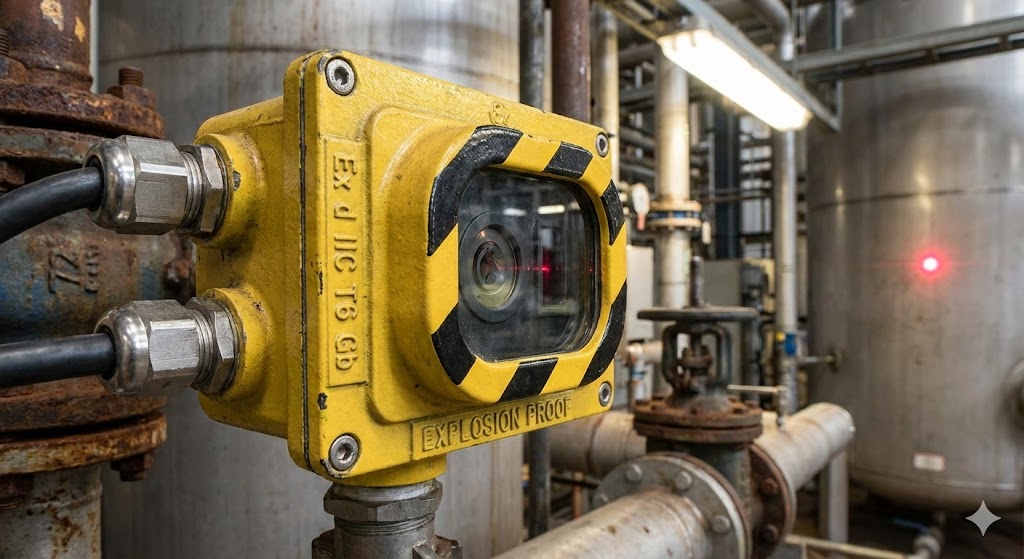
Integration and calibration are pivotal steps. Proper mechanical mounting to minimize vibration, correct alignment of the emitter and receiver, and stable power supply are basic yet essential. Many modern sensors feature built-in teach-in functions or sophisticated software for easy setup and parameterization. Regular maintenance, primarily keeping the lens clean from contaminants, is necessary for sustained accuracy.
Looking ahead, the trend is toward greater intelligence, miniaturization, and connectivity. Sensors with integrated IO-Link capability are becoming standard, allowing for detailed parameter setting, remote monitoring, and predictive maintenance data exchange. The fusion of laser measurement with 2D/3D vision systems is creating powerful hybrid sensors for complex inspection tasks. Furthermore, advancements in blue laser technology offer better performance on challenging surfaces like transparent glass or shiny metals.
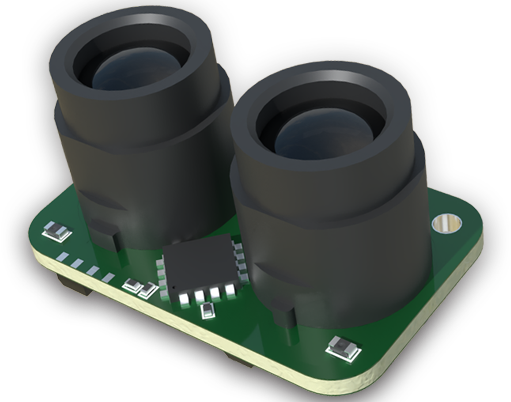
For the practicing engineer, mastering laser accessory sensors is not merely about choosing a component from a catalog. It involves a systems-thinking approach: understanding the physical measurement principle, meticulously defining the application requirements, and foreseeing the integration challenges. By leveraging the precise, fast, and versatile capabilities of these sensors, engineers can drive significant improvements in automation efficiency, product quality, and operational safety, solidifying their role as enablers of next-generation industrial solutions.