Magnetic proximity sensors are fundamental components in modern industrial automation, offering reliable non-contact detection of ferromagnetic objects. Their operation is based on the principle of detecting changes in a magnetic field. A typical sensor consists of a permanent magnet or an electromagnet that generates a stable magnetic field. When a ferromagnetic target, such as a steel gear tooth or a machine part, enters this field, it causes a distortion or a change in the magnetic flux density. This change is detected by a sensing element, most commonly a reed switch or a Hall-effect integrated circuit.
The reed switch type is a classic and robust design. It contains two ferromagnetic reeds sealed within a glass envelope filled with inert gas. In the presence of the sensor's own magnetic field, the reeds remain separated. When a ferromagnetic target approaches, it concentrates the magnetic flux, causing the reeds to attract each other and close the electrical contact. This provides a simple, low-power switching signal. Reed switches are highly resistant to environmental contaminants like dust, oil, and moisture, making them suitable for harsh conditions. However, they have limitations in switching speed and mechanical lifespan due to moving parts.
In contrast, solid-state Hall-effect sensors have become the industry standard for most applications. These sensors utilize a semiconductor chip that generates a voltage proportional to the strength of an applied magnetic field perpendicular to its surface. In a proximity sensor, the Hall-effect IC is positioned to sense the magnetic field from a built-in permanent magnet. The approaching ferromagnetic target alters this field, and the IC's output state changes (e.g., from high to low voltage) at a precise threshold. This design offers several advantages: extremely fast response times (in microseconds), virtually infinite operational life due to no moving parts, high switching frequency capability, and excellent repeatability. Modern Hall-effect sensors often include integrated signal conditioning, protection circuits, and various output types (NPN, PNP, analog, or IO-Link).
Another important variant is the magnetoresistive sensor, which detects changes in electrical resistance of a material under the influence of a magnetic field. These sensors offer very high sensitivity and can detect weaker magnetic fields or smaller changes, useful for precise position sensing.
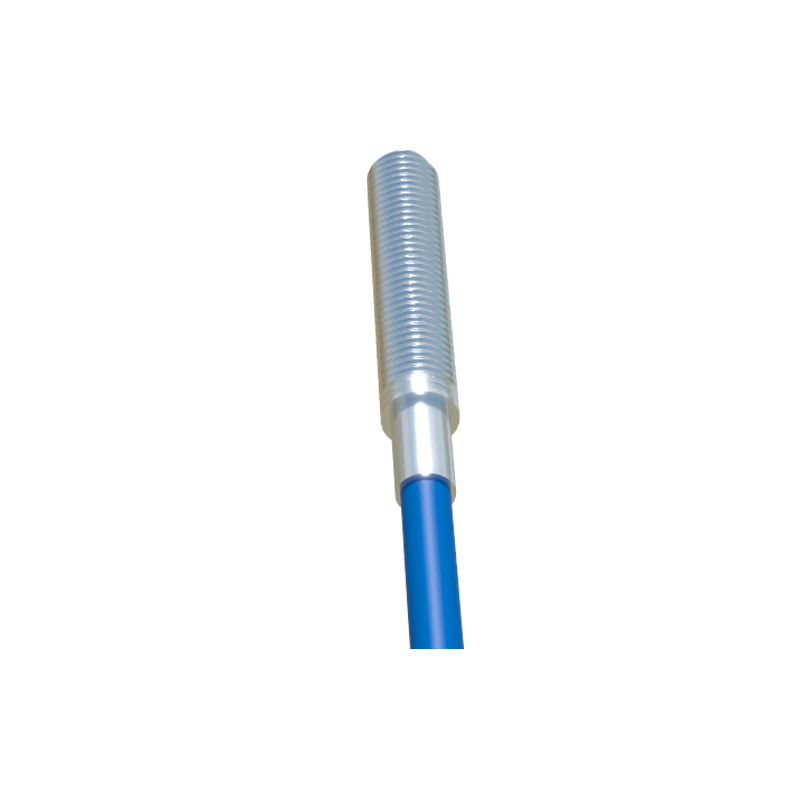
The performance of a magnetic proximity sensor is characterized by its sensing distance, which is standardized as the nominal operating distance (Sn). This distance is typically short, ranging from a few millimeters to about 60 mm, and is specified for a standard mild steel target of a defined size and thickness. Factors like target material, size, temperature, and the presence of other magnetic fields can influence the actual sensing range. Shielding is often employed to make the sensor directionally sensitive, preventing false triggers from side-approaching objects.
Installation and application considerations are critical. These sensors are predominantly used for position detection—confirming the presence, absence, or passage of machine components like cylinder pistons, valve actuators, gear teeth, or conveyor pallets. They are immune to non-ferrous materials like aluminum, plastic, or liquids, allowing for detection through non-magnetic walls or covers. This makes them ideal for sealed, wash-down, or explosive environments where optical or capacitive sensors might fail. Common industrial applications include monitoring hydraulic and pneumatic cylinder end positions, rotary speed sensing on shafts, part counting on conveyors, and safety interlock systems.
When selecting a magnetic proximity sensor, engineers must evaluate the required sensing distance, switching frequency, output configuration, electrical load, supply voltage, environmental protection rating (IP or NEMA), and temperature range. The choice between reed and Hall-effect types often hinges on the need for ultimate ruggedness versus high speed and precision. With the advent of Industry 4.0, smart sensors with diagnostic capabilities and digital communication protocols are increasingly integrated into networked control systems, providing predictive maintenance data.
In summary, magnetic proximity sensors provide a vital, robust sensing solution by leveraging fundamental magnetic interactions. Their simplicity, reliability, and adaptability to challenging environments ensure their continued essential role in factory automation, automotive systems, and machinery safety.