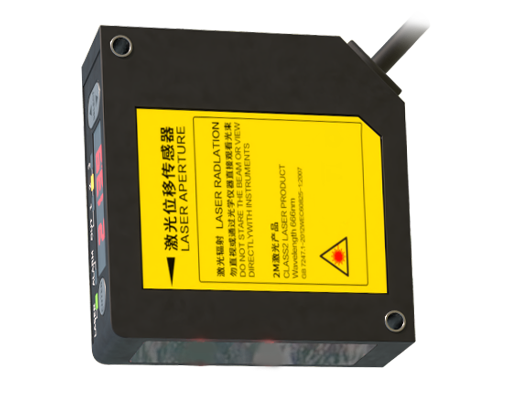
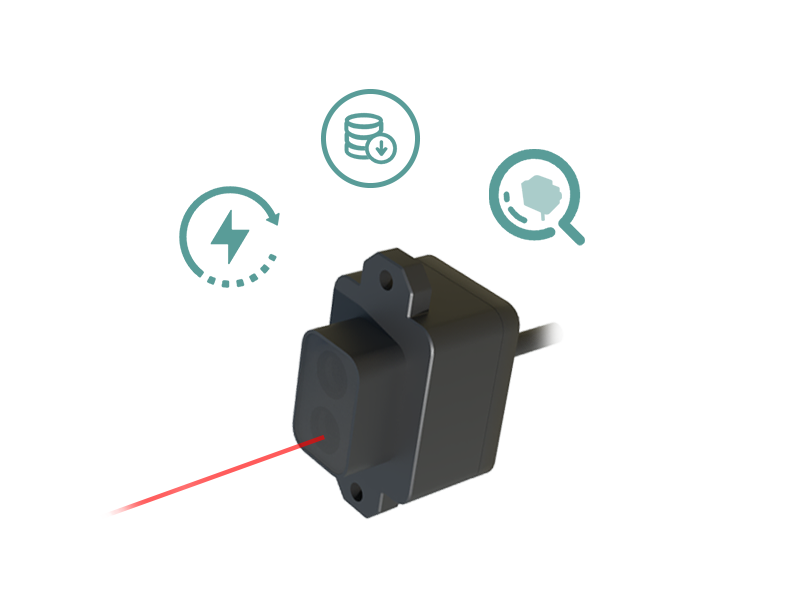
In the realm of industrial automation and precision measurement, coaxial laser sensors represent a cornerstone technology, enabling non-contact, high-accuracy detection across diverse applications. Unlike traditional sensors, their unique optical design integrates the laser emission and reception paths along the same axis, offering significant advantages in challenging environments. This article delves into the operational principles, key benefits, common applications, and critical factors for selecting the right coaxial laser sensor for your needs.
The fundamental principle of a coaxial laser sensor revolves around its integrated optical path. A laser diode emits a focused beam of light towards the target object. The reflected light, instead of being collected from a separate, angled receiver, travels back along the exact same central axis to a photodetector (typically a Position Sensitive Device or CMOS array). This coaxial alignment is achieved through the use of a beam splitter or semi-transparent mirror within the sensor head. This design is paramount. It ensures that the received light signal is consistent regardless of the target's surface angle or texture, to a much greater degree than triangulation-based sensors. The sensor's controller calculates the distance to the target by analyzing the position of the reflected light spot on the detector, often using the optical triangulation principle internally but without the external baseline separation.
The advantages conferred by this coaxial design are substantial. First and foremost is exceptional reliability on unstructured or highly reflective surfaces. Whether measuring a shiny metal surface, a transparent glass pane, or a dark, absorbent material, the coaxial sensor maintains stable performance with minimal signal loss or "drop-out." This eliminates the need for complex recalibration or external lighting adjustments. Secondly, it allows for a very compact sensor head design, as the emitter and receiver are essentially co-located. This compact form factor facilitates integration into tight spaces on robotic end-effectors, machine tools, or assembly lines. Thirdly, measurement accuracy and repeatability are exceptionally high, often in the micron range, making them ideal for demanding tasks like gap measurement, thickness profiling, and precision part presence verification.
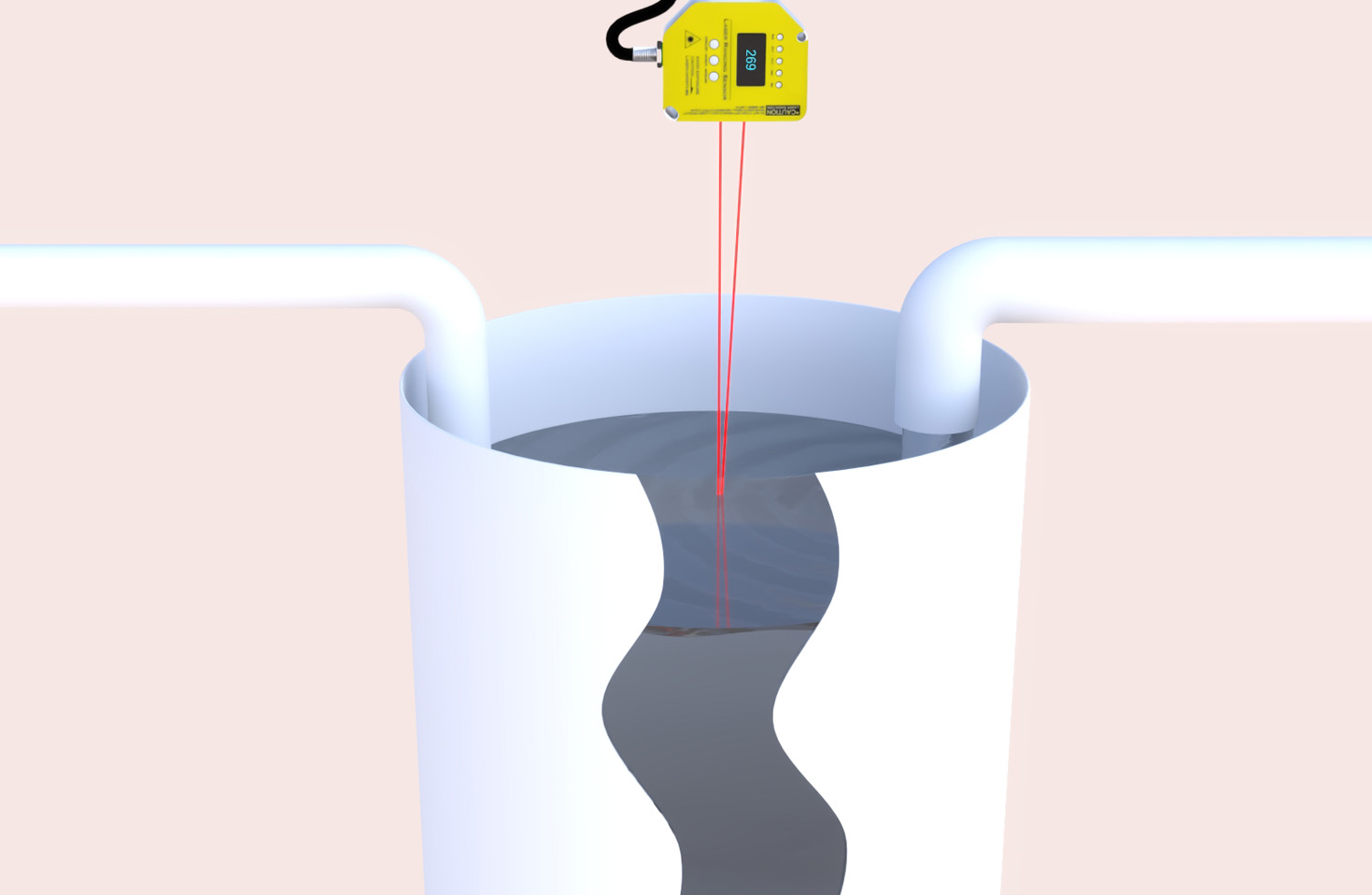
The applications for coaxial laser sensors are vast and span multiple industries. In automotive manufacturing, they are deployed for precise weld seam inspection, body panel gap measurement, and robot guidance during assembly. In electronics, they verify component coplanarity (e.g., BGA balls), measure solder paste height, and inspect micro-connectors. The semiconductor industry relies on them for wafer mapping, chip thickness measurement, and lead frame inspection. Furthermore, they are indispensable in general automation for tasks such as precise bottle fill level control, cardboard thickness monitoring in packaging, and detecting minute defects on continuous web materials like films and foils.
Selecting the appropriate coaxial laser sensor requires careful consideration of several parameters. The primary specification is the measuring range, which defines the minimum and maximum distances over which the sensor can operate accurately. Closely tied to this is the stand-off distance, the optimal working distance from the sensor head to the target. Resolution, the smallest detectable change in distance, and linearity, the deviation from a perfect straight-line output, determine the sensor's precision. The laser spot size is critical for applications requiring measurement of small features or edges. Environmental factors cannot be ignored; sensors are rated with an Ingress Protection (IP) code for dust and water resistance and must withstand operational temperature ranges and potential vibrations. Finally, the output interface (analog voltage/current, digital IO, Ethernet, PROFIBUS, etc.) must be compatible with the existing control system.
In conclusion, coaxial laser sensors are a powerful and versatile solution for non-contact displacement and distance measurement. Their inherent design robustness against surface variations, combined with high accuracy and a compact footprint, makes them a preferred choice for solving complex measurement challenges in modern industrial settings. By understanding their operating principles and carefully matching sensor specifications to the application requirements, engineers can significantly enhance process reliability, quality control, and overall automation efficiency. As Industry 4.0 and smart manufacturing evolve, the role of precise, reliable sensing technologies like coaxial lasers will only become more central to operational success.