In the realm of industrial automation and precision measurement, the choice between conventional sensors and laser sensors is pivotal for optimizing performance, accuracy, and cost-efficiency. Conventional sensors, such as inductive, capacitive, and photoelectric types, have long been the backbone of automation systems. These sensors operate on established principles: inductive sensors detect metallic objects via electromagnetic fields, capacitive sensors respond to changes in capacitance from non-metallic materials, and photoelectric sensors use light beams to sense presence or distance. They are renowned for their robustness, simplicity, and affordability, making them suitable for a wide range of applications like object detection, level monitoring, and position control in manufacturing environments. However, their limitations often include lower resolution, susceptibility to environmental interference (e.g., dust, moisture, or ambient light), and restricted range, which can hinder performance in demanding scenarios.
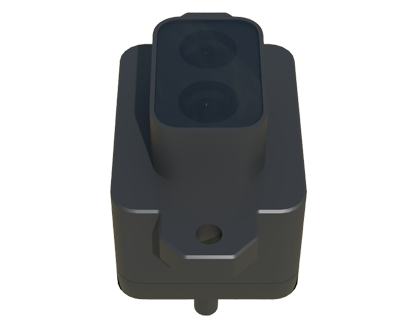
In contrast, laser sensors represent a technological leap, leveraging focused laser beams to achieve unparalleled precision and versatility. These sensors typically employ time-of-flight, triangulation, or interferometry methods to measure distance, displacement, or profile with micron-level accuracy. For instance, laser triangulation sensors project a laser spot onto a target and use a receiver to calculate distance based on the reflected angle, enabling high-resolution measurements even for small or fast-moving objects. Laser sensors excel in applications requiring extreme accuracy, such as semiconductor inspection, 3D scanning, and alignment tasks in aerospace or automotive industries. Their advantages include long sensing ranges, minimal sensitivity to environmental factors when properly shielded, and the ability to detect minute details or transparent materials that conventional sensors might miss. Yet, they come with higher costs, greater complexity in setup and maintenance, and potential safety concerns requiring compliance with laser regulations.
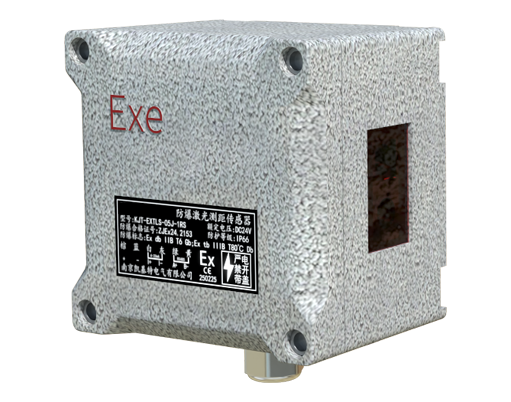
The decision between these sensor types hinges on specific operational needs. Conventional sensors are ideal for general-purpose tasks where cost-effectiveness and durability are paramount, such as in packaging lines or conveyor systems. They offer reliable performance with minimal technical overhead, but may fall short in precision-critical roles. Laser sensors, while more expensive, provide superior solutions for high-accuracy measurements, non-contact inspection, and challenging environments like high-temperature zones or reflective surfaces. In practice, many modern industrial setups integrate both: using conventional sensors for basic detection and laser sensors for fine-tuning quality control. As technology advances, hybrid systems and smart sensors with IoT connectivity are emerging, blending the strengths of both to enhance automation efficiency. Ultimately, understanding the core differences—conventional sensors for robustness and economy versus laser sensors for precision and adaptability—empowers engineers to design optimized systems that drive innovation and productivity in the electrical and automation sectors.