In the world of automation and smart technology, devices that can detect the presence or absence of objects without physical contact are fundamental. These devices are known as proximity sensors. They are ubiquitous, found in smartphones that turn off the screen during a call, in factory assembly lines where they count products, and in vehicles assisting with parking. But what exactly is a proximity sensor, and what principles allow it to function?
At its core, a proximity sensor is a sensor able to detect the presence of nearby objects without any physical contact. It emits an electromagnetic field or a beam of electromagnetic radiation, often infrared light, and looks for changes in the field or return signal. The object being sensed is often referred to as the sensor's target. The key advantage is the non-contact operation, which eliminates mechanical wear and tear, allows for high-speed detection, and enables use in harsh environments where physical contact is impractical or unsafe.
Proximity sensors are categorized based on the technology they employ. The most common types include inductive, capacitive, ultrasonic, and photoelectric sensors. Each type has distinct operating principles and ideal applications.

Inductive proximity sensors are widely used in industrial settings. They generate an oscillating electromagnetic field from a coil located at the sensing face. When a metallic object, their primary target, enters this field, it induces eddy currents on the metal's surface. This causes a change in the oscillation amplitude, which the sensor's circuit detects, triggering a solid-state output switch. These sensors are robust, reliable for detecting metals, and unaffected by non-metallic materials like dirt or water. They are perfect for tasks like counting metal parts, detecting the position of a machine component, or as safety interlocks.
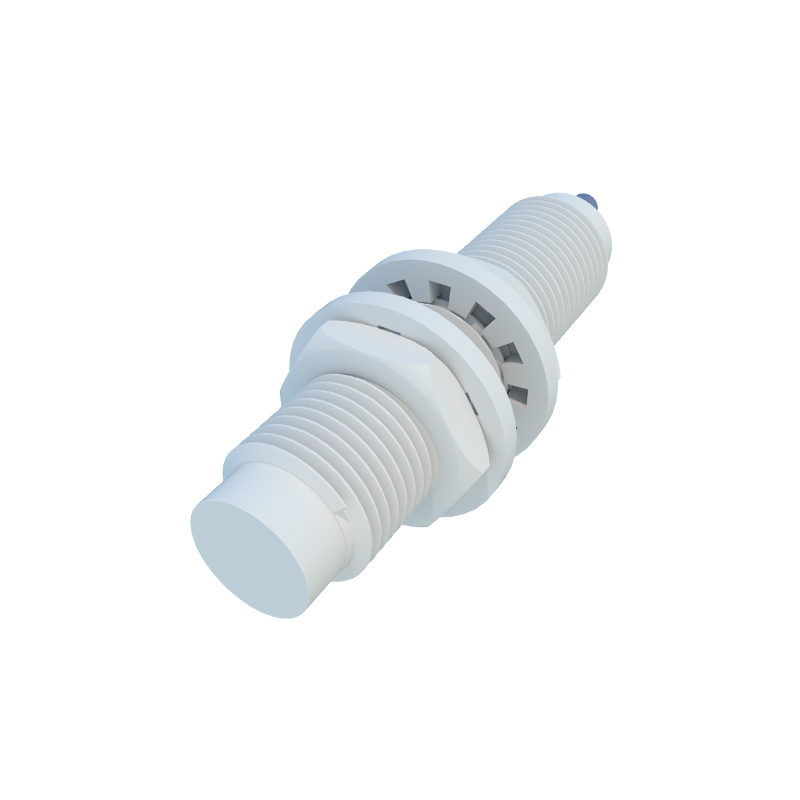
Capacitive proximity sensors, on the other hand, can detect both metallic and non-metallic materials, including liquids, powders, and plastics. They operate by generating an electrostatic field. When any object with a dielectric constant different from air enters this field, it changes the sensor's capacitance. This change is measured, and once it reaches a preset threshold, the sensor activates its output. This makes them versatile for applications like liquid level detection in tanks, monitoring material levels in hoppers, or detecting the presence of a glass bottle on a conveyor.
Ultrasonic sensors work on a principle similar to sonar. They emit high-frequency sound waves (ultrasound) and evaluate the echo received back. By calculating the time interval between sending the signal and receiving the echo, the sensor can determine the distance to an object. They are effective for detecting objects of various materials, shapes, and colors, and can operate reliably in environments with dust, smoke, or fog. Common uses include distance measurement, obstacle detection in robotics, and level sensing for bulk materials.
Photoelectric sensors use light, typically infrared or laser, to detect objects. They consist of a light emitter and a receiver. There are three main configurations: through-beam (where the object breaks a beam between separate emitter and receiver units), retro-reflective (where the object breaks a beam reflected back from a reflector), and diffuse (where the sensor detects light reflected directly off the object itself). These sensors offer long sensing ranges and can detect very small objects. They are essential in packaging, material handling, and automated door systems.
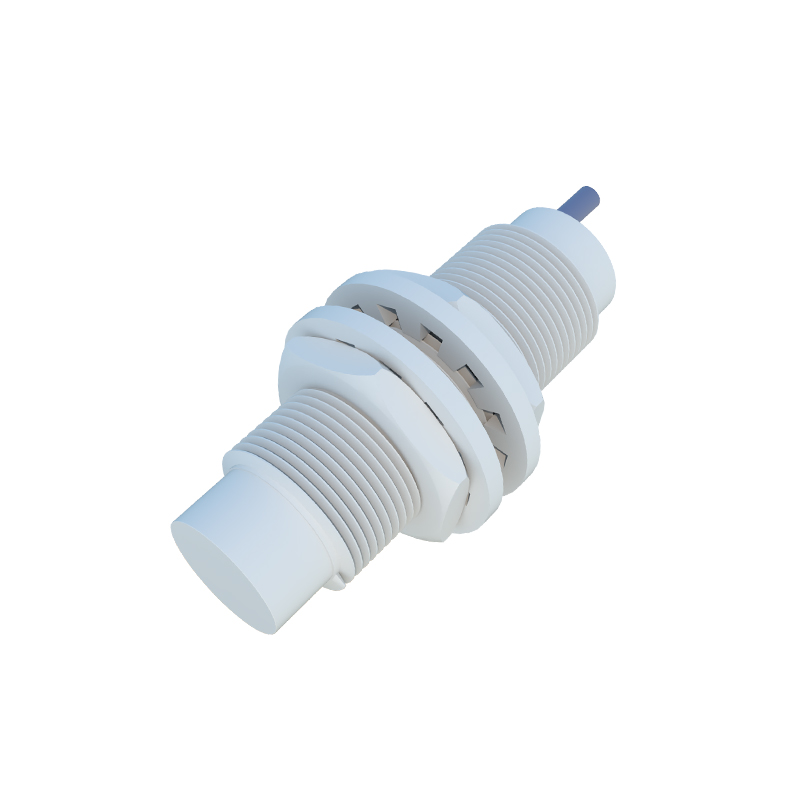
The output of a proximity sensor is typically a simple on/off digital signal. This signal is used to control other devices, such as a programmable logic controller (PLC), a motor starter, or an alarm. The choice of sensor depends on several factors: the material of the target object, the required sensing distance (range), the environmental conditions (temperature, presence of contaminants), the required response speed, and installation constraints.
In consumer electronics, the most familiar example is the proximity sensor in smartphones and tablets. Usually an infrared-based sensor, it detects when the device is held close to the user's face during a call. It then signals the operating system to turn off the touchscreen display to prevent accidental cheek-presses and save battery power. This seamless interaction is a direct application of proximity sensing.
From enhancing safety in automotive systems to optimizing efficiency in manufacturing and enabling intuitive user interfaces in personal devices, proximity sensors are silent workhorses of the modern technological landscape. Their ability to provide reliable, non-contact detection makes them indispensable in building smarter, more responsive, and more automated systems across virtually every industry.