In the rapidly evolving landscape of industrial automation and precision measurement, laser sensor kits have emerged as indispensable tools. These kits, often referred to as a "four-piece set" or starter kit, provide engineers and technicians with a foundational suite of components to implement accurate, non-contact sensing solutions. A standard laser sensor kit typically includes the laser sensor itself, a mounting bracket or fixture, necessary cabling and connectors, and sometimes a controller or amplifier module. This article delves into the core components, operational principles, key applications, and critical selection factors for these versatile systems.
The heart of any kit is the laser sensor. These devices operate primarily on two principles: triangulation and time-of-flight (ToF). Triangulation-based sensors project a laser spot onto a target. The reflected light is captured by a receiver at a known angle, and displacement or distance is calculated using trigonometric principles. They offer exceptional resolution, often in the micrometer range, making them ideal for high-precision tasks like thickness gauging, vibration analysis, and profile scanning. Time-of-flight sensors, on the other hand, measure the time it takes for a laser pulse to travel to the target and back. They are suited for longer-range applications, such as level detection in large silos or vehicle detection, with typical accuracies in the millimeter range. Modern sensors often integrate advanced features like background suppression (BGS) to ignore irrelevant objects, analog and digital outputs, and teach-in functionality for easy setup.
The supporting components in a kit are equally crucial. A robust mounting bracket ensures stable and repeatable sensor positioning, which is vital for measurement consistency. Vibration or misalignment can introduce significant error. The provided cabling, usually M8 or M12 connectors for industrial durability, connects the sensor to a power supply and a PLC (Programmable Logic Controller) or data acquisition system. Some advanced kits include a compact controller that allows for parameter configuration, signal conditioning, and switching output management, simplifying integration into a broader control network.
The applications for laser sensor kits span virtually every manufacturing and R&D sector. In electronics assembly, they verify component placement and solder paste height. In automotive manufacturing, they inspect panel gaps, measure tire tread depth, and control robot positioning. In packaging, they detect label presence, measure fill levels, and count objects on high-speed conveyors. Their non-contact nature makes them perfect for measuring delicate, hot, or moving objects where physical probes would fail. Furthermore, they are fundamental in quality control labs for dimensional analysis and surface defect detection.
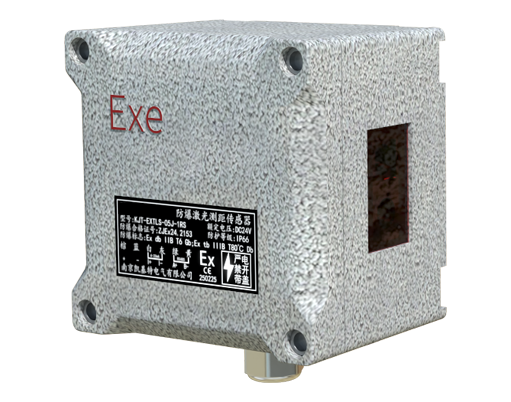
Selecting the right laser sensor kit requires careful consideration of several parameters. First, define the measurement objective: Is it distance, displacement, presence detection, or profile scanning? Next, consider the required measuring range, resolution, and repeatability. The target's properties—its color, material, surface texture (shiny, matte, transparent)—profoundly affect the sensor's performance. A dark, matte surface absorbs more light than a bright, shiny one, which may require a sensor with higher output power. Environmental conditions like ambient light, dust, moisture, and temperature extremes dictate the necessary ingress protection (IP) rating. Finally, evaluate the output requirements: Does the application need a simple on/off switch signal, a 4-20mA analog output proportional to distance, or a high-speed digital data stream via IO-Link or Ethernet?
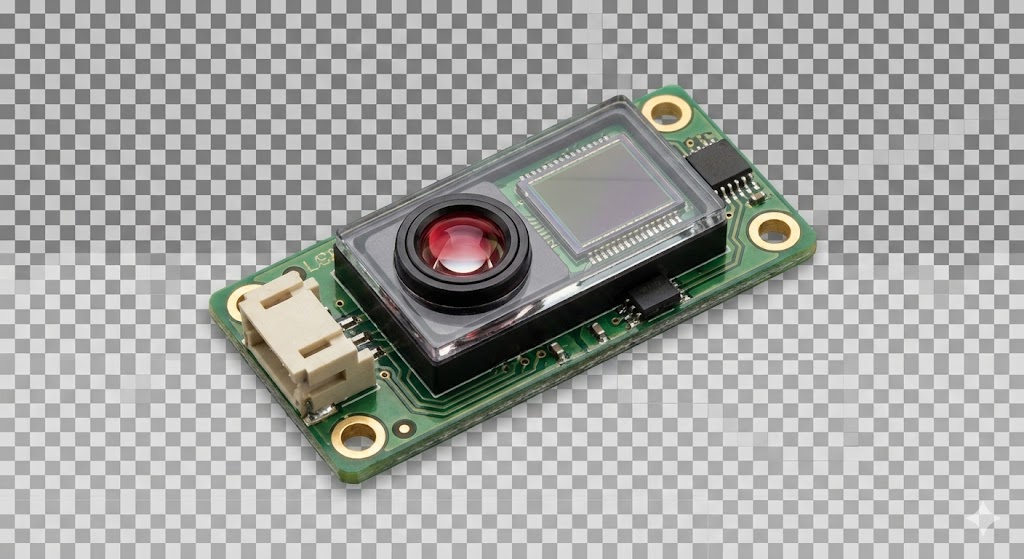
Installation and calibration are straightforward but demand attention. Ensure the sensor is mounted securely perpendicular to the target surface for optimal reflection. Use the teach-in function, if available, to set the reference distance and switching thresholds. Always consult the datasheet for minimum and maximum sensing distances and the optimal spot size. Regular maintenance involves cleaning the lens with appropriate materials to prevent dust accumulation, which can scatter the laser beam and degrade performance.
In conclusion, a laser sensor kit is more than just a collection of parts; it is a tailored solution for bringing high-precision optical measurement capability to the factory floor or laboratory. By understanding the core technology—triangulation vs. ToF—matching sensor specifications to the application's demands, and following proper installation practices, engineers can leverage these kits to enhance automation, improve product quality, and drive operational efficiency. As Industry 4.0 advances, the integration of smart sensors with IoT platforms will further expand the diagnostic and predictive capabilities of these fundamental tools.