Laser multi-point sensors represent a significant advancement in non-contact measurement technology, offering high precision and versatility for industrial automation and quality control. Unlike single-point laser sensors that measure at one discrete location, these systems simultaneously capture distance or profile data across multiple predefined points on a target surface. The core principle often involves the emission of a laser line or a structured pattern, which is then captured by a high-resolution CMOS or CCD array. By analyzing the deformation or displacement of this pattern, the sensor's processor calculates the distance to each point using triangulation or time-of-flight methods, depending on the design. This capability enables real-time, multi-dimensional inspection, making them indispensable in dynamic production environments.
A primary application is in automotive manufacturing, particularly for panel gap and flushness measurement. Here, sensors are mounted on robotic arms or fixed stations to scan door, hood, and trunk alignments against the car body at several critical points in a single pass. This ensures consistent build quality and eliminates manual gauging errors. In electronics assembly, these sensors verify the coplanarity of ball grid array (BGA) components or measure the height of solder paste deposits across a circuit board. The food and packaging industry utilizes them for container fill-level monitoring, checking the profile of stacked products on pallets, or inspecting seal integrity by measuring multiple points along a package's seam.

The advantages over traditional methods are substantial. They provide dramatically increased inspection speed, as a single sensor replaces an array of single-point devices or complex mechanical fixtures. Data from multiple points offers a richer context, allowing for the calculation of derived parameters like flatness, angle, or step height directly. Furthermore, non-contact operation prevents damage to delicate surfaces and allows measurement of hot, moving, or inaccessible targets. Modern units integrate sophisticated software for easy point configuration, data logging, and seamless communication via Ethernet/IP, PROFINET, or EtherCAT for integration into Industry 4.0 frameworks.
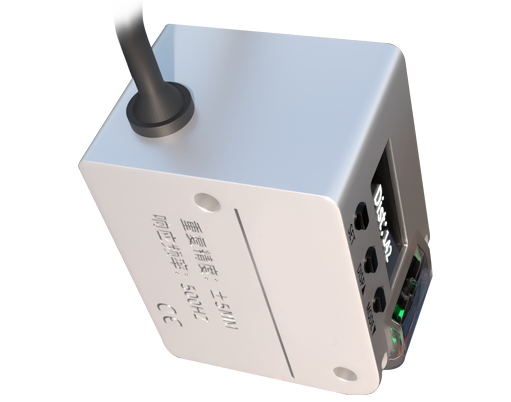
Selecting the appropriate laser multi-point sensor requires careful consideration of several technical parameters. Measurement range and standoff distance must suit the physical setup. The number of measurement points and their spacing, often configurable via software, should match the feature density of the target. Resolution and repeatability specifications are critical for the application's tolerance requirements; sub-micron resolution is available for metrology-grade tasks. Environmental factors like ambient light, dust, vibration, and temperature swings necessitate sensors with robust housings (typically IP67), specialized filters, and stable thermal compensation. Finally, the processing speed, often given as a sampling rate, must be high enough to keep pace with production line speeds without creating a data bottleneck.
Integration and calibration are key to achieving stated accuracy. Proper mounting to minimize vibration, alignment perpendicular to the target surface, and referencing to a known master part are essential steps. The accompanying software suite is crucial for defining measurement zones, setting tolerances, and outputting pass/fail signals or detailed profile data. Looking ahead, trends point towards sensors with even higher point densities, effectively blurring the line with full 3D profilometers, and enhanced AI capabilities for adaptive inspection and predictive quality analytics. As manufacturing demands greater flexibility and precision, laser multi-point sensors will continue to evolve as a foundational tool for smart, automated quality assurance.