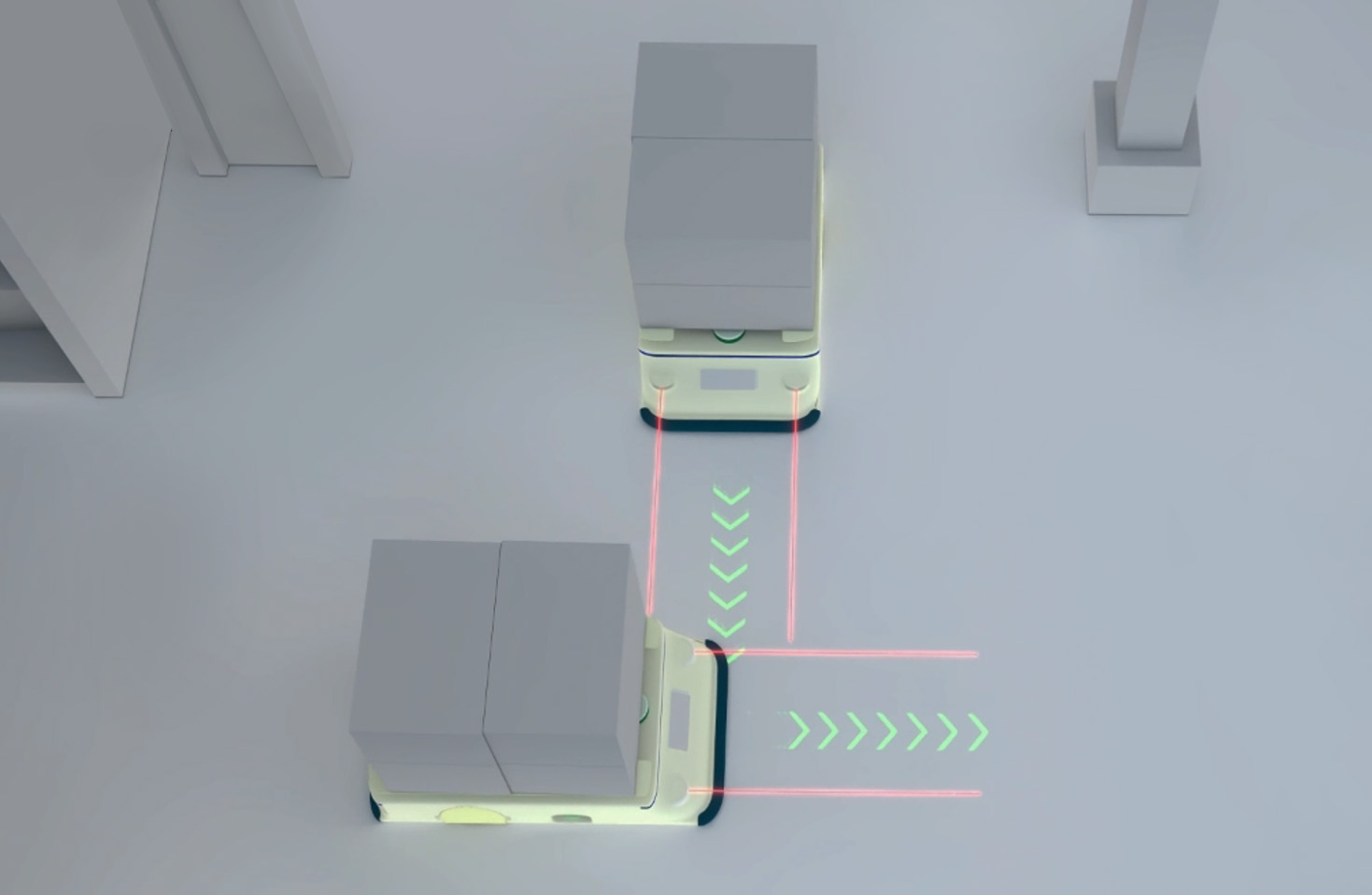
In the rapidly evolving landscape of industrial automation and precision measurement, hollow laser sensors have emerged as a pivotal technology. Unlike conventional solid-beam laser sensors, these devices utilize a ring-shaped or "hollow" laser beam, creating a unique detection zone. This fundamental design shift unlocks superior capabilities for applications where traditional sensors fall short, particularly in measuring transparent, reflective, or complex-shaped objects. The core principle involves projecting a conical or cylindrical hollow beam. When an object interrupts this beam, the system detects the change in light pattern—either through direct reception on the opposite side or via retro-reflective methods—to determine presence, position, or dimensional characteristics. This non-contact methodology ensures zero physical impact on delicate targets, a critical advantage in industries like electronics manufacturing and pharmaceuticals.
The operational advantages of hollow laser sensors are manifold. Their primary strength lies in exceptional reliability when detecting challenging materials. Transparent objects, such as glass vials, plastic films, or clear bottles, which often confuse standard photoelectric sensors, are reliably sensed because the hollow beam's geometry causes a detectable diffraction or refraction pattern. Similarly, highly reflective surfaces like polished metals or mirrors are less problematic, as the sensor's design can mitigate the specular reflection that leads to false readings in other laser systems. Furthermore, the consistent beam profile ensures stable detection independent of surface color or texture, enhancing performance in variable environments. Many advanced models incorporate integrated microprocessors for real-time signal conditioning, automatic background suppression, and programmable logic functions, allowing for seamless integration into sophisticated control systems.
Applications span a diverse range of sectors. In packaging and bottling lines, hollow laser sensors excel at verifying the presence of transparent containers, counting items on high-speed conveyors, and monitoring fill levels through clear walls. The semiconductor and electronics industry leverages them for precise wafer handling, component placement verification, and detecting the presence of tiny, reflective connectors. Automotive assembly lines use them for robot guidance, part positioning, and quality checks on glossy painted surfaces or glass components. Beyond manufacturing, they find roles in logistics for parcel dimensioning and in security systems for intrusion detection through glass barriers.
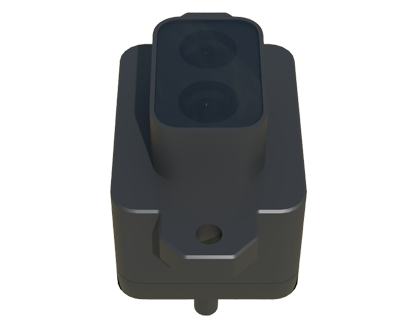
Looking forward, the trajectory for hollow laser sensor technology points toward greater miniaturization, enhanced intelligence, and network integration. The integration of Industrial Internet of Things (IIoT) capabilities is a key trend, enabling sensors to transmit rich diagnostic data—such as health status, environmental conditions, and performance metrics—directly to cloud platforms for predictive maintenance and process optimization. Advances in laser diode and optics design are yielding sensors with even smaller footprints, higher resolution, and extended working ranges. Furthermore, the fusion of vision-based analytics with hollow laser triangulation principles is creating hybrid systems capable of not just detection but also detailed 3D profiling. As Industry 4.0 and smart factory concepts mature, the demand for robust, versatile, and data-rich sensing solutions like hollow laser sensors will undoubtedly accelerate, solidifying their role as indispensable tools for precision, efficiency, and quality control in the automated world.