In the rapidly evolving landscape of industrial automation, sensing technology serves as the critical bridge between the physical and digital worlds. Among the various sensing modalities, Direct Time-of-Flight (DToF) laser sensors have emerged as a powerful and versatile solution for precise distance measurement and 3D imaging. This article delves into the core principles, key advantages, diverse industrial applications, and future outlook of DToF technology.
At its heart, a DToF laser sensor operates on a straightforward yet highly accurate principle. It emits a short pulse of laser light towards a target object. A small fraction of this light is reflected back to the sensor. A highly sensitive photodetector, such as a Single-Photon Avalanche Diode (SPAD), captures this returning signal. The fundamental measurement is the time interval between the emission of the laser pulse and the detection of its reflection. Since the speed of light is a known constant, the distance to the target can be calculated with exceptional precision using the formula: Distance = (Speed of Light × Time of Flight) / 2. This direct measurement of time is what distinguishes DToF from indirect methods like phase-shift measurement.

The advantages of DToF laser sensors are numerous, making them suitable for demanding industrial environments. First and foremost is their high accuracy and long-range capability. They can measure distances from a few centimeters to several hundred meters with millimeter-level precision, largely independent of the target's color or surface texture. Secondly, DToF sensors excel in performance under varying ambient light conditions. Their pulsed operation and precise timing electronics allow them to filter out background illumination effectively. Thirdly, they offer high measurement speed. The ability to complete a distance calculation from a single pulse enables fast frame rates, which is crucial for dynamic applications like robotics and autonomous vehicles. Finally, their system architecture can be relatively simple and power-efficient compared to some complex imaging systems, especially for single-point or small-array sensors.
The industrial applications for DToF laser sensors are vast and growing. In robotics and logistics, they are indispensable for navigation, obstacle avoidance, and palletizing. Mobile robots use DToF sensors to create real-time maps of their surroundings and plan collision-free paths. In automated warehouses, they ensure precise positioning of robotic arms for picking and placing items. Another significant domain is level monitoring and bulk material measurement in sectors like mining, agriculture, and chemical processing. DToF sensors provide non-contact, reliable measurements of silo contents or material piles, even in dusty or harsh conditions.
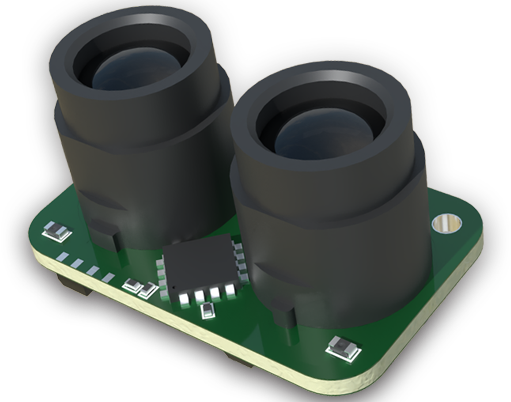
Furthermore, DToF technology is a cornerstone for Light Detection and Ranging (LiDAR) systems used in autonomous guided vehicles (AGVs), autonomous mobile robots (AMRs), and emerging autonomous industrial machinery. These systems, often using arrays of DToF pixels, generate detailed 3D point clouds of the environment. In manufacturing, DToF sensors facilitate quality control through dimensional inspection, verifying part sizes and assembly clearances without physical contact. They also play a role in personnel safety, creating protective fields around dangerous machinery where any intrusion triggers an immediate shutdown.
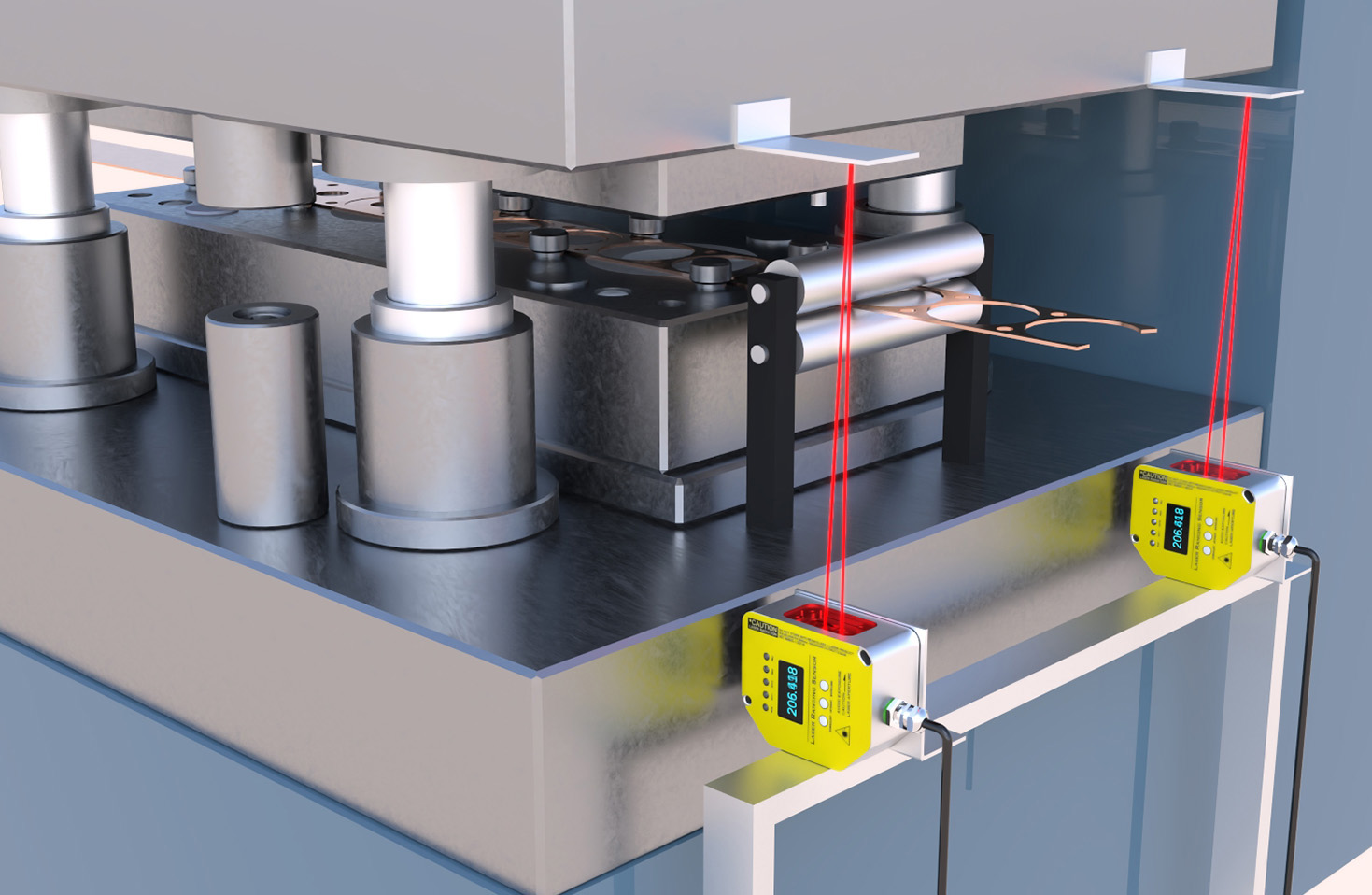
Looking ahead, the future of DToF laser sensors is intertwined with advancements in semiconductor technology. The trend is towards higher levels of integration, moving from single-point sensors to dense one-dimensional or two-dimensional arrays on a single chip. This miniaturization, driven by Complementary Metal-Oxide-Semiconductor (CMOS) integration of SPAD arrays and timing circuitry, is reducing the size, power consumption, and cost of DToF systems. This, in turn, is unlocking new applications in compact consumer electronics, advanced driver-assistance systems (ADAS), and sophisticated collaborative robots (cobots). Another frontier is the improvement of resolution and the development of multi-wavelength systems to gain additional information about the target material. The integration of DToF data with other sensor inputs like RGB cameras and inertial measurement units (IMUs) through sensor fusion algorithms will create even more robust and intelligent perception systems for Industry 4.0.
In conclusion, DToF laser sensors represent a mature yet continuously advancing technology that provides a critical layer of spatial awareness for modern industry. Their combination of accuracy, speed, and robustness makes them a preferred choice for a wide spectrum of applications, from simple distance checking to complex 3D environmental modeling. As integration improves and costs decrease, their adoption is set to expand further, solidifying their role as a key enabler in the intelligent automation of factories, warehouses, and beyond.